Laundry & repair
Keeping White Cotton Pajamas From Yellowing: Diagnose Before Treating
As an Amazon Associate I earn from qualifying purchases. Purchases take place on Amazon.
A pale yellow collar, a cream-colored waistband and an evenly dull pajama top may look like one problem in a laundry basket. They can require different decisions. Repeated whitening without examining the pattern risks treating permanent damage as removable dirt, or changing the color of trim while trying to brighten the body. The useful aim is to recover a wearable garment and prevent recurrence, not force every white set to match a new sheet. This guide works through that decision using location, timing, fabric construction and a short treatment record. It does not promise that an aged or chemically damaged white can be restored.
Quick Answer
Yellowing needs a diagnosis before a whitening product. Note where the color appeared and whether it followed wear, storage or a bleach treatment. Start with a garment-compatible wash for removable soil or residue; escalate only to a treatment permitted for every component. White fabric, cotton wording and a matching set do not establish that chlorine bleach is appropriate.
In this guide
Map the yellow before changing the laundry routine
Lay the clean, dry pajamas on a neutral surface near ordinary daylight. Compare the outside and inside of the collar, the underarm area, the waistband and a sheltered hem allowance. Photograph the difference once. Warm bulbs and a nearby yellow wall can alter how white appears, so use the same location for later comparisons. If both pieces always had a warm ivory tone, laundering toward bright white may be chasing a color change rather than fixing a fault.
| Pattern you see | History to investigate | Do not assume |
|---|---|---|
| Collar or underarm patch | Repeated contact with skin products or accumulated soil | That the whole set needs a whitening soak |
| Even cast across several garments | The shared load, detergent and rinse process | That each garment has the same permanent damage |
| Change after a bleach treatment | The product, concentration and component restrictions | That repeating bleach will reverse the result |
| Discoloration after seasonal storage | Condition when packed and contact with packaging | That stronger washing is automatically appropriate |
These patterns are clues rather than a chemical identification test. Note when the change first appeared and whether it was visible before drying.
If several unrelated white garments changed in the same load, examine the shared wash process before treating each individually. If only the elastic casing discolored, inspect the casing and its contents as distinct materials. Do not assume that the visible cotton shell describes the elastic, sewing thread, piping or label. The cotton label guide explains how to separate body-fabric wording from the rest of a garment.
Three different starting points
For pajamas yellowed mainly around contact areas, first ask whether the regular wash has been removing the accumulated soil. A garment-compatible pretreatment may be a reasonable next step, using the product's directions and a discreet test. Keep the treatment localized initially. A whole-garment soak exposes unaffected trim and fabric to a process they may not need. If lotion is the obvious trigger, follow the separate body oil and lotion stain guidance for that specific problem.
For an overall cast after washing, review detergent measurement, load size and rinse performance. Whirlpool identifies excess detergent, body-soil interactions and washer buildup among possible causes of visible residue. That does not prove that every yellow garment has detergent deposits; it supports investigating the process when multiple items change together. A compatible rewash or rinse can be a lower-risk experiment than immediate bleach. Whirlpool's residue troubleshooting gives the appliance context.
For a set that changed after storage, inspect before deciding it simply needs stronger detergent. Was it put away freshly cleaned and completely dry? Is the discoloration concentrated along exposed folds or next to packaging? Remove it from the old storage environment, photograph its condition and attempt only a permitted cleaning process. An unexplained mark that survives a careful first treatment is a reason to pause, not permission for increasingly aggressive mixtures.
Why bleach is not a default answer for white cotton
The question is not merely whether cotton tolerates a particular product. The complete pajama garment must tolerate it. Elastic, stretch fibers, printed decoration and contrasting piping may change the answer. The FTC's care-label guidance covers relevant laundering warnings; use the instruction attached to the actual item rather than a general cotton setting from memory.
Clorox specifically warns that spandex and misuse of chlorine bleach can cause yellowing, and says yellowing caused by misuse may be permanent. That is a reason to avoid another chlorine treatment when the discoloration began after the first one. It is not evidence that every yellow patch is bleach damage, nor that another stain-removal product will reverse it. Clorox explains bleach-related yellowing here.
Oxygen-based stain removers are another category, but the word oxygen does not make a product suitable for every pajama. Read its fabric restrictions, dilution and contact time alongside the garment instructions. Choose one compatible process at a time. Do not combine cleaners, add an acid to a bleach treatment or substitute an internet recipe for the product directions. A quiet, controlled trial makes it possible to see what helped and stop if the fabric changes.
A treatment trial you can actually evaluate
Use a small inconspicuous area when a product calls for testing, and let it dry before judging color or texture. Wet fabric can hide a mismatch. Record the treatment name and duration, then inspect for a change in the yellow mark, the surrounding white, the printed detail and the hand of the fabric. A brighter patch surrounded by unchanged cloth may be a cosmetic problem of its own.
When proceeding with a permitted treatment, work within its stated limits and rinse or wash as directed. Examine the pajamas before returning them to their normal drying routine. Do not increase temperature merely because the first result looks disappointing. The item may have a drying restriction unrelated to whitening, and unnecessary heat can create a second fit problem. Compare fully dry cloth with the original photograph before declaring the treatment successful or unsuccessful.
Stop if stitching weakens, the surface roughens, a colored detail fades or the elastic behaves differently. Also stop when two careful observations show no meaningful improvement. A still-yellow but comfortable pair can remain useful; a weakened bright-white pair may not. Keeping an imperfect garment for private wear is a legitimate outcome, especially if no odor, residue or fabric failure remains.
White, pale pink and printed white are different purchases
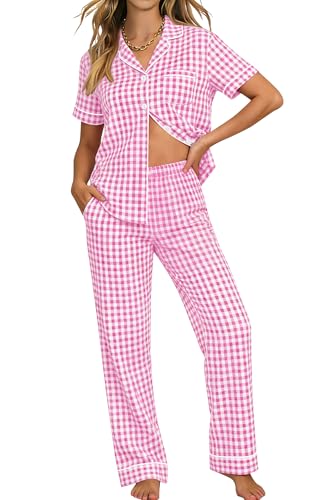
The verified SWOMOG short-sleeve button-down set is listed as 100% cotton in pink-and-white plaid. Its white areas do not turn the set into an all-white bleach candidate. Treat the pink pattern as part of the garment's care decision. The Amazon Essentials women's stretch-poplin set is listed in pale pink; neither its color nor its stretch wording supports treating it like undyed pure cotton. The catalog does not provide bleach instructions for either example.
These distinctions matter when selecting a replacement. If maintaining a perfectly bright white causes more work than you want, consider a color or print you actually like rather than buying white and hoping it will behave like a hotel towel. If true white is the priority, seek a clear component label and a care routine you can perform. The pure-cotton collection narrows body-fiber claims, but still cannot substitute for trim and treatment instructions.
Also distinguish yellowing from transparency. A light fabric may reveal a warm-colored underlayer without having changed color. Evaluate the pajamas off the body as well as while worn. Our opacity assessment covers that separate concern. Buying a thicker or darker garment solves a coverage preference; it does not diagnose a laundry stain.
Prevent the same problem from returning
Keep a simple baseline after a successful clean: usual detergent quantity, compatible load grouping and the drying method that preserved fit. When discoloration recurs, change one variable rather than adding multiple boosters. If the contact pattern points to a particular cosmetic, let that product settle before dressing or choose a designated older set for that routine. This is a practical way to reduce direct transfer, not a claim about the product's ingredients.
Before putting seasonal pajamas away, inspect the collar and waistband, complete any needed compatible wash and confirm that thick seams are dry. Store the set where you can inspect it easily instead of compressing it into the back of a crowded container. After a long storage interval, check condition before wearing. A short inspection can catch a developing problem while the circumstances are still clear in your memory.
Finally, separate brightness from cleanliness. A garment can have an altered white tone without needing ever-stronger laundering, while a visually white garment can still require washing after wear. Use the condition of the cloth and your normal care needs to make that decision. Cosmetic restoration has a limit, and accepting that limit protects useful pajamas from unnecessary treatment.
Questions about this decision
Can yellow cotton pajamas become completely white again?
Sometimes removable soil or residue improves with a compatible treatment, but the original white is not guaranteed. Chemical damage, dye changes and aging can leave a lasting cast. Judge progress only after the fabric dries, and stop if another treatment would threaten the cloth or elastic.
Why is only the waistband yellow?
The casing collects contact soil and encloses components that may differ from the body fabric. Inspect the inside and outside separately and review when the change appeared. A waistband-only mark is not enough evidence to identify one chemical cause or authorize a bleach soak.
Should white pajama tops be washed with white towels?
Matching color is only one requirement. Compare the permitted wash and dry methods and the weight and surface of the items. A delicate knit top may need a different load from heavy towels, even when both are white. Do not select a towel program simply to make the top brighter.
Final Verdict
Give yellowing a short investigation and a controlled treatment budget. Identify the pattern, choose one process the complete garment permits, then compare the dry result with your starting point. Avoid repeating bleach on a set that changed after bleaching, and do not sacrifice a sound waistband for a slightly whiter shirt. Prevention becomes easier when you know whether contact soil, the wash process or storage preceded the change. If the remaining discoloration is purely cosmetic, keeping comfortable pajamas in rotation can be a better decision than pursuing an impossible factory-white finish.
Explore the listed examples
As an Amazon Associate I earn from qualifying purchases. Purchases take place on Amazon.
Cotton; construction not statedSWOMOG 100% cotton short-sleeve button set
A short-sleeve button-front cotton outfit with a named pocket.
Check on Amazon poplin
Amazon Essentials stretch-poplin pajama set
A button-front woven set with stretch identified in its name.
Check on AmazonContinue with the relevant guide
Back to Laundry & repair · Explore cotton pajamas
Sources and editorial method
This is a researched selection guide. We have not performed hands-on wear, washing or laboratory tests on the featured products.