The fitting room
White and Pale Cotton Pajamas: How to Check Opacity
As an Amazon Associate I earn from qualifying purchases. Purchases take place on Amazon.
The mirror beside a bedroom lamp does not show the same thing as a sunny doorway. That difference matters when pale pajamas will be worn at a shared breakfast table, in a vacation rental or while answering the door. Opacity is less about declaring white cotton good or bad than deciding what should remain concealed in your actual setting. This guide offers a practical inspection process for that decision, including what listing images can tell you before purchase and what requires seeing the garment yourself. No listed pair here has undergone an independent opacity test.
Quick Answer
A pale cotton pajama can look opaque in a product photograph and reveal more in backlighting or when stretched across the body. Check the exact color, fabric construction, lining and fit, then assess a purchased garment in the settings where you will wear it. Cotton content, a dark print or a “double gauze” description alone cannot guarantee privacy coverage.

In this guide
Start by defining the coverage you actually need
There are at least three separate concerns: whether the fabric reveals the color of an underlayer, whether a strong light reveals a silhouette, and whether gaps at a neckline or button opening expose skin. A fabric can handle one well and disappoint on another. A fully lined body will not close a widely spaced button placket, and a loose cut will not necessarily conceal a strongly contrasting underlayer.
For a private bedroom, the acceptable result may simply be that you like how the pajamas look. In shared accommodation, you may want dependable coverage from the side and rear while walking. For photographs, the concern includes whatever light the photographer uses. Make that distinction before comparing products, because the most covered option may involve extra layers or weight you would not otherwise choose for sleeping.
Write one useful requirement rather than a vague demand for “not see-through”: for example, “I want to wear the pants in a naturally lit kitchen without the outline of a patterned underlayer.” This describes an observable task. It also makes clear when a robe would solve the particular situation without requiring your pajamas to perform every role.
Read the photographs as limited evidence
Look for pictures of the exact selected color. A dark navy photograph is not evidence about an ivory version, even when both sit within the same product family. Check whether the modeled fit is loose or stretched across the hips. An image of a hanging garment cannot show how that fabric behaves at the seat when someone sits down.
Pay attention to the background and pose. Front lighting, pale backgrounds and carefully positioned hands can make it difficult to see fine fabric detail. This does not establish that a seller is hiding something; it means the image answers a styling question better than an opacity question. A close-up of the weave or interior can be more useful than another full-length pose.
Customer photographs can add context when they identify the same color and model, but their exposure, filters, camera processing and underlayers are unknown. A review saying “completely opaque” is one person's observation under unspecified conditions. Treat consistent observations as a reason to investigate, not a transferable test result for every variation.
Follow the light through the garment, including its gaps
Fabric density, layers, color and how tightly the cloth is pulled can all change what you see. A useful manufacturer example is LAKE's fabric guide, which specifically acknowledges potential sheerness in lighter shades of its voile. That is a claim about that fabric range, not proof that every light cotton weave behaves identically. It demonstrates why a brand's more precise fabric notes are worth looking for.
A second layer may obscure what is underneath, but the word “lined” needs location. Is the entire top lined, only the front chest, or only a decorative panel? Similarly, double gauze describes a fabric structure; it does not publish an opacity rating. If privacy is the purchase's deciding factor, ask about the exact panel or region where you need coverage.
Do not overlook openings while focusing on fabric. Side slits may separate when seated. A button-front shirt can gap when the chest pulls against its fastenings. Pale pants may be sufficiently dense through the leg but more revealing at a stretched seat. Those problems need different solutions: a different opening, additional ease or a different cloth.
Three current listing examples, three different unknowns
The Amazon Essentials pale-pink stretch poplin pajama set offers a relevant light-color comparison. Its title identifies a button-down shirt and pants, but does not establish lining, cloth weight or opacity. Stretch in the name should prompt a close look at how the selected size fits across the bust and hips, since a comfortable-looking fabric sample is not the same as a garment under tension.
XINJU's muslin pajama set is described as 100% cotton double gauze and “linen like.” That last phrase describes a resemblance rather than linen fiber content. The two-layer construction is worth investigating, but the available description provides no measured privacy performance. It would be inappropriate to turn “double” into a promise that every light variation can be worn without an additional layer.
SWOMOG's pink-and-white plaid set is listed as 100% cotton, with a short-sleeve button-down top and pants. A print changes the visual surface, yet it cannot certify coverage either. Compare where light blocks appear in the pattern, the selected size and the actual fabric. These models belong in a consideration list, not an untested ranking of the most opaque pajamas.
Use a repeatable fitting-room inspection
- Wear the underlayer you expect to use with the pajamas. A different color or pattern can change the practical result.
- Stand normally in front, side and rear views. Avoid pulling the garment flat against your body for the initial check.
- Repeat beside ordinary daylight and the household lighting relevant to your intended use. Include a light source behind you if that occurs in the room.
- Sit, lean forward and reach. Look at the seat, chest openings, neckline and side vents instead of only the center of a flat panel.
- If photographs are the goal, take a private test photograph under representative lighting and inspect the image rather than assuming it matches the mirror.
This process is a personal coverage check, not a standardized textile test. Keep normal use in mind: shining an unusually powerful lamp through a stretched scrap may demonstrate that light can pass through it, but may not answer whether the pajamas meet your everyday needs. Conversely, a dim room should not be the only check if you plan to wear them in bright shared spaces.
Assess newly received garments before washing or modifying them, consistent with the seller's return conditions. If a later, ordinary wear situation includes damp fabric, reassess coverage then; do not soak a returnable garment merely to stage a test. Changes with moisture can matter, but deliberately changing an unworn item may affect the options available through its seller.
Choose the least cumbersome fix for the actual problem
When the issue is only a bathroom trip or answering a door, a comfortable additional layer can be a simple solution. When it is constant transparency through the seat, you may prefer another color, denser fabric or different size. Buying oversized pajamas solely for opacity can create dragging hems and excessive shoulder width, so check the new proportions as well.
An underlayer close to your skin tone may reduce visible color contrast, but it is not a universal invisibility trick. Texture, seams and lighting can still show. If wearing a separate camisole makes a pajama set hotter or more cumbersome than you want, that is a reason to choose a better-suited top instead of accepting a workaround you will not use.
Our women's collection offers different garment formats to compare; it does not label untested models as opaque. For a trip or shared house, the shared-accommodation guide covers how pajamas and an outer layer can work together. If the problem appears only when seated, revisit garment measurements before abandoning a fabric you otherwise like.
Questions about this decision
Are printed white pajamas always less see-through than plain ones?
No. A pattern may make some details less visually obvious, but pale areas, construction, lighting and tension still matter. Compare the actual garment in its intended setting. A busy print cannot substitute for enough fabric coverage at the chest, hips or seat.
Can I judge opacity by holding the top up to a window?
That can reveal an open structure, but the result is incomplete. The garment is not being worn, and its distance from the body differs from normal use. Follow that observation with an ordinary fit check, including seated positions and the underlayer you plan to wear.
Does choosing navy solve every coverage problem?
A darker color can change the appearance, but it cannot close a button gap, secure an open neckline or add missing lining. If the problem is an opening or a tight panel rather than pale cloth itself, address the construction or fit directly.
Final Verdict
The right pale pajama is the one that meets your own coverage requirement under realistic light and movement. Start with the exact color and openings, use listing photographs cautiously, and check the garment in the room conditions that matter to you. Consider a robe when coverage is needed only briefly; choose a different fabric or cut when it is needed throughout wear. None of the cited cotton listings provides an independent opacity result, so a confident “never see-through” recommendation would go beyond the evidence. Your repeatable, practical inspection is more useful than that kind of promise.
Explore the listed examples
As an Amazon Associate I earn from qualifying purchases. Purchases take place on Amazon.
poplinAmazon Essentials stretch-poplin pajama set
A button-front woven set with stretch identified in its name.
Check on Amazon gauze
gauzeXINJU 100% cotton double-gauze set
A textured cotton set for readers investigating double gauze.
Check on Amazon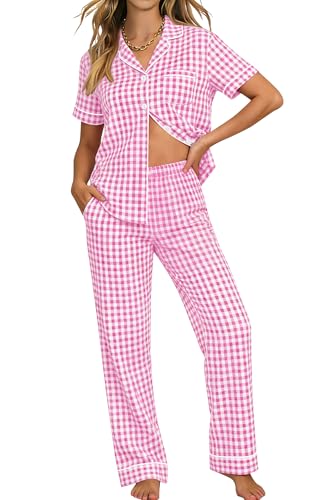 Cotton; construction not stated
SWOMOG 100% cotton short-sleeve button set
A short-sleeve button-front cotton outfit with a named pocket.
Check on AmazonContinue with the relevant guide
Back to The fitting room · Explore cotton pajamas
Sources and editorial method
This is a researched selection guide. We have not performed hands-on wear, washing or laboratory tests on the featured products.