Everyday decisions
Cotton Pajamas for Overnight Guests and Shared Accommodation
As an Amazon Associate I earn from qualifying purchases. Purchases take place on Amazon.
An unfamiliar hallway can reveal a problem that never arises at home: the bathroom is past the kitchen, other people are already awake, and the pajamas you like in a private bedroom feel less suitable for that walk. The answer need not be a completely new sleep outfit. It may be a better-placed layer, different leg coverage or simply knowing the household layout. This guide focuses on the shared-space arrangement for guests and hosts. Packing quantities and travel laundry belong to the travel guide; here the central issue is how sleepwear works when privacy and common rooms meet.
Quick Answer
In shared accommodation, plan what you want to wear between the bed, bathroom and common areas. Check the outfit in the lighting and movements that matter, then add a convenient outer layer if desired. Hosts should provide options and clear practical information rather than choosing a single pajama size or assuming every guest wants supplied sleepwear. Private sleeping comfort remains a separate preference.

In this guide
- Follow the route a guest will actually take
- Assess coverage during movement, not a posed mirror check
- Consider three workable outfit arrangements
- Hosts: make the room usable without assigning a uniform
- A sofa bed deserves its own morning plan
- Keep borrowed clothing and personal preferences straightforward
- Do not confuse guest-ready with formal
- Prepare one useful conversation instead of several assumptions
Follow the route a guest will actually take
Picture the path from the sleeping area to the bathroom, the place to get a drink and the room where breakfast happens. A private ensuite creates a different clothing situation from a sofa bed beside a shared kitchen. The guest needs to know the practical layout, not a set of assumptions about what is socially acceptable to wear. A short explanation from the host can remove more uncertainty than a surprise matching pajama set.
As a guest, identify where you would want extra coverage and when. You may be happy in a short set while sleeping but prefer a longer layer outside the room. Someone else may prefer full-length pants and a simple top throughout the morning. Both approaches can work. Do not turn one person's preference into a rule for every household or assume that covered legs automatically answer concerns about the top's neckline or transparency.
Assess coverage during movement, not a posed mirror check
Sit on a bed edge, reach for an object and bend to pick something up. Look at the top-to-bottom overlap, neckline and hems in those ordinary positions. A shirt that appears long enough when carefully arranged may lift substantially during a reach. A button front may need closer attention between fastenings. These are garment questions that a flattering standing photograph cannot resolve on its own.
Examine opacity under the lighting in which the outfit will be used. A brightly lit bathroom or morning window can give a different impression from a dim bedroom. Do not assume navy is opaque or white is necessarily unusable; the actual cloth and construction matter. The opacity guide owns that full inspection. Here, the practical step is to avoid discovering your personal coverage concern after you have already entered a shared room.
Consider three workable outfit arrangements
The first arrangement is sleepwear you already like plus a separate outer layer. It suits someone whose only concern is crossing common space. Place the layer within reach of the sleeping area and consider whether it provides the coverage you actually want when fastened. It should be easy to use when you are tired; an arrangement that depends on assembling several pieces in a dark room may not feel convenient.
The second is a coordinated full-length outfit. Veseacky B0DGQ97W5N is described as a women's 100% cotton two-piece set with long sleeves. It is relevant to that coverage preference, but the title does not establish opacity, neckline dimensions or the exact drape. U2SKIIN B08P6MS568 offers a men's 100% cotton button-down set as another format to investigate. Its buttons add a closure question, not a guarantee about coverage between them.
The third is a shorter sleep format with an intentional morning change. ENJOYNIGHT B07VRCSHGR pairs a short-sleeve top with capri pants in its cotton description. It may suit a person who does not want full-length legs under the covers. You can keep a separate morning layer or outfit accessible rather than forcing the pajamas to handle every social setting. That is a wardrobe choice, not a failure of the shorter garment.
Hosts: make the room usable without assigning a uniform
Give guests a place to put clothing, a reachable light and clear information about bathroom access. A hook or suitable surface for an outer layer may be more useful than a decorative gift they did not ask for. If you provide sleepwear, make it optional and explain where other options are kept. A guest should not have to wear an unsuitable size to avoid seeming ungrateful.
Avoid choosing one adult size on the assumption that loose clothing fits everyone. Different bodies need different torso, rise and sleeve proportions, and excess length can be inconvenient in a shared space. If keeping spare pajamas for hosting, separate them by the actual available sizes and retain their labels. Do not present an unmeasured oversized set as a universal solution, and do not apply adult roomy-fit preferences to children's snug-fit sleepwear.
A sofa bed deserves its own morning plan
When the sleeping space becomes a common room during the day, a guest may need somewhere private to change and somewhere to store bedding and clothing. Agree on those practical details in advance where possible. The pajama purchase cannot compensate for a setup in which the guest has no convenient transition between sleeping and the room's daytime use. Clear expectations make the clothing decision less pressured.
For the guest, place the next layer or morning clothes where they can be reached without searching through communal space. Think about whether a pocket is useful for moving a small item to the bathroom, but do not assume that pockets can securely store everything. The pocket guide explains the object-specific checks. A small bag or an available shelf may serve the shared-room task better than loaded pajama trousers.
Keep borrowed clothing and personal preferences straightforward
When lending pajamas, provide accurate size and care information and let the borrower decide whether to use them. Describe the garment plainly rather than making claims such as perfect for sensitive skin. Cotton content does not establish that someone will like the fabric, tolerate every component or want to wear another person's clothing. It is reasonable for a guest to prefer their own familiar sleepwear.
If you maintain a guest-clothing basket, inspect each item between uses for condition and make sure its actual care has been followed. The FTC care-label guidance is relevant because different garments may require different handling. This is not a disinfection protocol or a promise about medical suitability. It is ordinary household organization: provide items in an appropriate condition and keep the instructions needed to maintain them.
Do not confuse guest-ready with formal
A coordinated print or a collar may appeal to you, but neither is required for a considerate overnight visit. The more useful questions are whether you feel comfortable, whether the garment moves as expected and whether your arrangement respects the shared space. A plain cotton pant and familiar top can answer those needs just as well as a newly purchased matching set. Appearance is one preference among several.
Equally, a more substantial outfit is not automatically the best hospitality choice. A guest who prefers lighter sleepwear may be less comfortable in a heavy set chosen for how tidy it looks at breakfast. Let the private sleeping outfit remain a personal decision. The pajamas versus loungewear guide addresses using one outfit all day; a short overnight visit does not require solving that broader wardrobe problem.
Prepare one useful conversation instead of several assumptions
Guests can ask a simple practical question: is the bathroom private, and is there somewhere convenient to change? Hosts can mention where the light, towels and clothing hooks are. Those details inform the coverage and layer choice without requiring an intimate discussion of someone's sleep habits. Keep the information focused on the space rather than policing the outfit.
When shopping specifically for visits, browse women's cotton sleepwear or men's cotton sleepwear with that known arrangement in mind. Record the one feature the visit requires that your current pajamas lack. If there is no clear missing feature, a well-placed existing layer may be sufficient. A purchase should address a practical gap rather than an imagined standard of what a guest ought to look like.
Questions about this decision
Should a host buy one oversized cotton set for every guest?
One oversized set cannot account for different heights, proportions and personal preferences. If you provide spare clothing, make it optional and identify its actual size. Practical room setup and space for a guest’s own clothes are usually more adaptable than expecting everyone to use a single garment.
Are button-front pajamas necessarily better for shared spaces?
They offer a particular look and adjustable opening, but their coverage depends on fit, overlap and button spacing. Check them while sitting and reaching. A pullover can also work when its neckline and length match your preferences; the closure type alone does not decide suitability.
What should I keep beside a sofa bed overnight?
Keep the clothing or layer you intend to use in common space within reach, along with whatever personal items the household arrangement requires. Ask where you can change privately. The aim is an easy transition when the room resumes its daytime role, not a mandatory guest outfit.
Final Verdict
Guest-ready sleepwear begins with the room arrangement. Know the route to the bathroom, assess your outfit in ordinary movement and keep any extra layer where you can use it easily. Long-sleeve sets, capri outfits and familiar pajamas with a separate cover can all serve that plan. Hosts help most by providing clear information, practical space and genuine choice. There is no need to assign everyone the same fabric weight, silhouette or size. Buy a new set only when it solves a specific coverage or comfort gap that your existing sleepwear and household setup leave unresolved.
Explore the listed examples
As an Amazon Associate I earn from qualifying purchases. Purchases take place on Amazon.
Cotton; construction not statedVeseacky 100% cotton long-sleeve set
A simple two-piece option where fiber percentage is the first filter.
Check on Amazon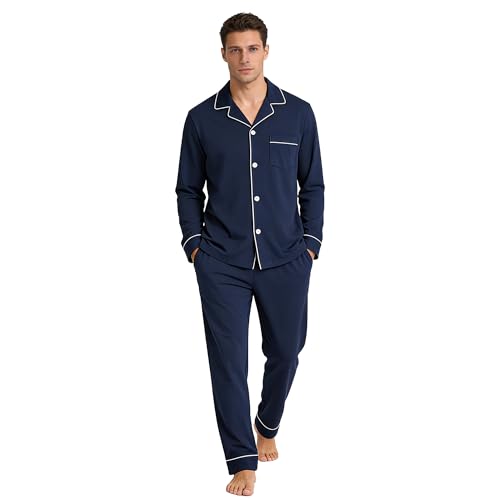 Cotton; construction not stated
U2SKIIN men’s 100% cotton button-down set
A complete button-down cotton outfit for men.
Check on Amazon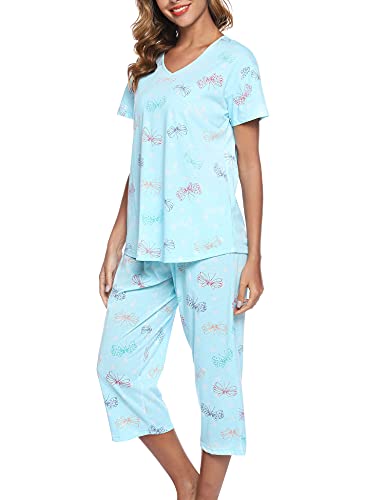 Cotton; construction not stated
ENJOYNIGHT cotton capri pajama set
A coordinated capri outfit with a short-sleeve top.
Check on AmazonContinue with the relevant guide
Back to Everyday decisions · Explore cotton pajamas
Sources and editorial method
This is a researched selection guide. We have not performed hands-on wear, washing or laboratory tests on the featured products.