Everyday decisions
Packing Cotton Pajamas for Travel: A Trip-by-Trip Plan
As an Amazon Associate I earn from qualifying purchases. Purchases take place on Amazon.
The easiest pajama to pack is not always the smallest. A short set can save space yet leave you wanting another layer in a shared apartment; a full-length set may cover that need but occupy more of a compact bag. Travel turns sleepwear selection into a question of constraints: what room you have, what laundry you can actually do and when you can wait for something to dry. This guide builds the packing decision around an itinerary. It assumes ordinary adult travel and makes no promises about a garment drying overnight or improving sleep away from home.
Quick Answer
Pack cotton pajamas according to the trip's laundry opportunities and the coverage you want, not just the number of nights. For a short stay, one familiar outfit plus a reasoned spare may suffice. Longer trips need a workable wash-and-dry plan. Cotton wording does not prove quick drying, and an unfamiliar room is a poor place to discover that a new set fits badly.
In this guide
- Put laundry opportunities on the itinerary first
- A two-night visit: favor the familiar pair
- A longer stay: build a rotation, not a stack
- Shared rooms change coverage, not cotton content
- Check the drying plan against the garment instructions
- Allocate space to the whole sleep arrangement
- A move-every-day itinerary needs a different compromise
- Prepare the return leg, not only departure
Put laundry opportunities on the itinerary first
Before counting outfits, identify the days when you can realistically wash and dry clothing. A hotel advertising laundry service does not tell you its current turnaround, opening times or handling options. A rental listing showing a washing machine does not establish access to a dryer or suitable hanging space. Verify the arrangements with the accommodation when they are essential to your plan, and keep the pajamas' own care requirements in view.
Mark the longest gap between usable clean garments, including the time needed to get a washed set back into service. This is more useful than counting machines along the route. If you move accommodation every morning, even a theoretical washing opportunity may be awkward. If you stay a week in one place with dependable laundry access, you may need fewer outfits than a shorter journey involving several transfers.
A two-night visit: favor the familiar pair
For a brief stay, begin with a set you already know fits and suits its labeled care. Consider a spare according to how you use pajamas and how inconvenient an unexpected spill or damp outfit would be. There is no universal rule that every two-night trip requires exactly one or two sets. The aim is to make the contingency deliberate rather than adding several unfamiliar outfits because they fit in the bag.
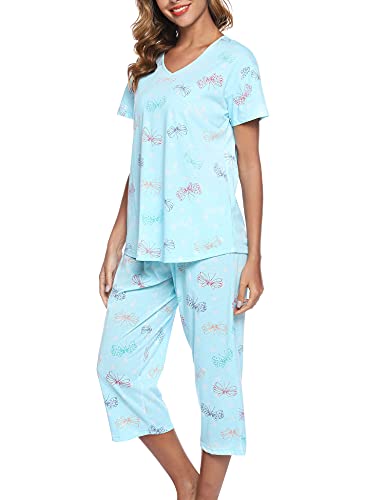
ENJOYNIGHT B07VRCSHGR is a cotton short-sleeve and capri format worth considering if you prefer that amount of coverage. It is not established as a travel-specific or quick-drying product. For a compact itinerary, its relevance lies in the sleeve and leg arrangement. If you already own a comparable format and like it, you can judge whether it meets your room-sharing needs without introducing a new construction solely for the journey.
A longer stay: build a rotation, not a stack
Suppose you plan to change sleepwear every second night and can wash halfway through a six-night stay. Those are your personal assumptions, not hygiene advice. Work out how many clean sets must cover the first half, whether anything can be reused under your usual preferences, and how long washing takes out of circulation. Add a spare only for a disruption you consider plausible, such as a missed laundry window.
Keep top and bottom counts separate if you tend to change one more often. A spare top can sometimes address your actual routine more efficiently than another full matched outfit. Conversely, an extra bottom may be the useful item if that is what becomes unavailable. The rotation guide offers a fuller calculation; travel adds the constraint that laundry access and storage change throughout the trip.
Shared rooms change coverage, not cotton content
Think about the route from sleeping space to bathroom and whether breakfast happens in the same room. You might prefer full-length pants, a top with dependable overlap, or a separate layer kept beside your bed. Do not expect a particular fiber percentage to answer a privacy question. A pale outfit can require closer inspection in daylight regardless of whether its title says pure cotton, while a darker color does not automatically prove opacity.
A traveler wanting a coordinated button-front outfit can investigate U2SKIIN's men's set, B08P6MS568, whose title explicitly names 100% cotton. Amazon Essentials B07JXTWPT9 instead describes a women's cotton poplin short and sleep-tee set. These are different coverage arrangements, not tested travel winners. The short-set description also does not establish identical composition or construction for both pieces; inspect the selected version before making assumptions.
Check the drying plan against the garment instructions
A sink is not a complete laundry plan if you have nowhere appropriate to dry the outfit. Likewise, the presence of a tumble dryer is useful only when its available settings and the garment instructions are compatible. The FTC care-label guidance supports treating those directions as garment-specific. Ask what handling the outfit permits before relying on the accommodation's standard laundry routine.
Do not promise yourself that a cotton set will be dry by morning. Fabric construction, garment bulk and the actual conditions affect the outcome, and the catalog examples here have no measured drying-time evidence. If a damp pair would leave you without sleepwear, retain a dry alternative until the washed outfit is ready. Packing an unavailable garment into a sealed bag does not solve that timing problem; it merely postpones it.
Allocate space to the whole sleep arrangement
Lay out the pajamas with any layer you expect to use outside bed. A tiny set that requires a bulky additional garment may not save space overall. Conversely, a full-length set you would still supplement with the same layer may be unnecessary for your preferences. Judge the complete bundle, including any spare, rather than comparing only the folded dimensions of a top or pair of shorts.
Use your actual bag to make the comparison. Fold each candidate in the way you normally pack, place it in the available compartment and see what has to move. There is no need to invent a universal best packing method or volume measurement. If a collar or substantial waistband creates bulk, position it where it fits naturally rather than forcing the garment into an unrealistic product-photo fold.
A move-every-day itinerary needs a different compromise
Frequent transfers reward predictable clothing more than elaborate laundry plans. If you are leaving early, checking in late and sharing limited space, washing pajamas each evening may be more work than you want. Bring enough usable clothing for the expected gap between genuine laundry opportunities. If that count is incompatible with your bag, reconsider the garment format or the itinerary assumptions before simply dropping the spare.
A lightweight claim by itself cannot resolve that conflict. Choose a smaller coverage format only if you also want to wear it. Our short pajama options can help explore the format, but a short set that you dislike using is not an efficient purchase. Travel efficiency includes how reliably an item serves its purpose, not just how little room it appears to occupy.
Prepare the return leg, not only departure
For an early departure, put the clothing you will change into where it can be reached separately from the packed sleepwear compartment. That small arrangement lets the pajamas be the last item added without unpacking the entire bag. If your final accommodation differs from the earlier stops, reconsider the last night's coverage and laundry assumptions rather than treating the journey as one identical room repeated several times.
Keep clean and worn clothing distinguishable so you can find the usable set without unpacking everything. A simple separate bag or compartment can help organization, but make sure any garment is appropriately dry before longer storage. When the final night falls immediately before departure, plan where that outfit will go in the morning. This avoids discovering that the only available packing space is mixed among items you wanted to keep ready to wear.
Before a major trip, try the new pajamas and follow their care instructions at home when doing so is consistent with the seller's terms and your decision to keep them. A fit issue found before departure is easier to address than one found in a hotel. Use the listing checklist to resolve dimensions and care first, rather than trusting the word travel in an unrelated recommendation.
Questions about this decision
How many pajama sets should I pack for a week?
Base the number on your own change interval and the longest gap before washed garments are ready again. A week with dependable laundry access differs from a week of daily transfers. Count any spare explicitly and explain what disruption it covers rather than adopting a fixed number for every trip.
Are cotton pajamas guaranteed to dry overnight after hand washing?
No. The exact fabric, thickness, amount of retained water and drying conditions matter. These catalog examples have no verified overnight-drying result. Follow the garment instructions and keep a dry alternative when the next night depends on the washed outfit being ready.
Should I take new pajamas on a trip without trying them?
A familiar fit reduces one avoidable uncertainty. Check the new outfit at home, including ordinary seated and resting positions. If you decide to keep and launder it before travel, follow its care instructions and the seller’s applicable terms. Do not assume an untested size label settles the fit.
How much do cotton pajamas weigh in a suitcase?
There is no reliable single weight for all cotton pajamas. A tank-and-shorts set and long-sleeve flannel outfit have different amounts and constructions of cloth. For an existing outfit, weigh the complete dry set on a suitable scale, including its pouch if you pack one. For a new purchase, seek the garment weight rather than assuming a listed shipping weight measures the pajamas alone.
Final Verdict
Let the itinerary determine the sleepwear bundle. Start with a familiar format, count the real gap between laundry opportunities and reserve space for the coverage you expect to use in shared areas. A capri outfit, button-front set or short-and-tee combination can each work when its particular format matches the trip. None earns a quick-dry promise from its cotton label. Your best travel plan keeps one usable outfit available, accommodates the return journey and avoids turning every evening into a race to wash and dry clothing before the next checkout.
Explore the listed examples
As an Amazon Associate I earn from qualifying purchases. Purchases take place on Amazon.
Cotton; construction not statedENJOYNIGHT cotton capri pajama set
A coordinated capri outfit with a short-sleeve top.
Check on Amazon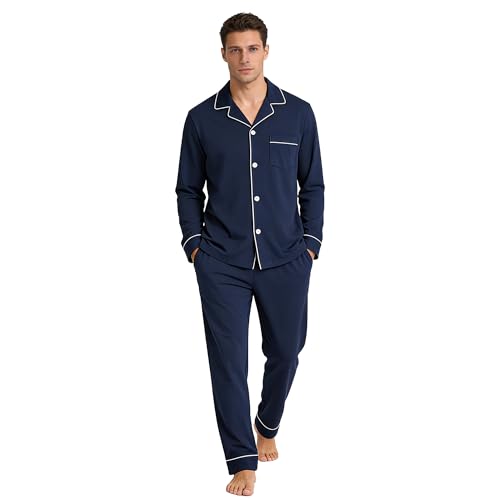 Cotton; construction not stated
U2SKIIN men’s 100% cotton button-down set
A complete button-down cotton outfit for men.
Check on Amazon poplin
Amazon Essentials poplin shorts and sleep tee
A tee-and-shorts outfit instead of a collared matching shirt.
Check on AmazonContinue with the relevant guide
Back to Everyday decisions · Explore cotton pajamas
Sources and editorial method
This is a researched selection guide. We have not performed hands-on wear, washing or laboratory tests on the featured products.