Everyday decisions
How Many Cotton Pajama Sets Do You Need? Build a Realistic Rotation
As an Amazon Associate I earn from qualifying purchases. Purchases take place on Amazon.
A drawer can contain eight pajama sets and still leave you searching for something usable. Two may not fit, one may suit only a much colder room, and several may be waiting for a laundry routine that never catches up. The useful question is therefore not how many pajamas a person ought to own. It is how many suitable garments need to circulate through your actual week. This guide builds that calculation with explicit assumptions, then shows where the arithmetic needs adjustment. It does not tell everyone to wear sleepwear for the same number of nights.
Quick Answer
Count the days from one laundry opportunity until the washed pajamas are ready again, divide by your own intended wears per set and round up. Then decide whether you need a spare for a specific disruption. This is a planning estimate, not a hygiene rule. Count tops and bottoms separately if you change them at different intervals, and count only garments you actually wear.

In this guide
- Count usable sets before counting everything in the drawer
- Use four inputs and make each assumption visible
- Work through three different households
- Multipacks and complete sets solve different shortages
- Keep seasonal and occasional reserves separate
- Test the target for one cycle before expanding it
- Recalculate after a meaningful change
Count usable sets before counting everything in the drawer
Separate the garments you currently wear from those that are unsuitable, damaged or kept for a different season. A matching top and bottom count as a usable set only if both meet your needs. If you routinely pair a favorite top with separate bottoms, count that as a working outfit instead of excluding it because the print does not match. The calculation is about available clothing, not retail packaging.
Note pieces that are often unavailable for a reason other than washing. A set reserved for travel, one stored at another home and one you never choose because of its waistband should not silently inflate the everyday count. This first inventory may explain the shortage without requiring a purchase. Sometimes moving a useful pair into the regular rotation solves more than buying another set similar to those already being avoided.
Use four inputs and make each assumption visible
The first input is the gap between laundry opportunities. Use the schedule you can usually maintain, not an ideal plan that works only in an unusually quiet week. The second is the delay from that laundry opportunity until the garment is ready to wear. That includes washing, drying and any other practical wait in your routine. If you frequently leave clean clothes elsewhere until the next day, count that delay honestly.
The third input is your chosen number of wears per set before washing. This is a personal planning input that may change with activity, spills or how the garment feels. It is not a medical recommendation. The fourth is a deliberate spare allowance. A spare should cover an identifiable uncertainty, such as a missed laundry slot, rather than becoming a vague reason to add several outfits indefinitely.
For a simple estimate, add the laundry gap and the ready-to-wear delay, divide that total by the intended wears per set, and round up to a whole set. Add your chosen spare afterward. The model assumes the sets can be used at the planned interval and that laundry occurs regularly. Real life can violate those assumptions, so use the answer as a starting inventory target rather than an exact law.
Work through three different households
Weekly laundry with a one-day return to service
Suppose your laundry opportunity comes every seven days and washed pajamas are reliably ready one day later. If your own plan is two wears per set, the estimate is eight divided by two, or four sets. If you decide one extra set is useful for an occasional disruption, the total becomes five. None of these numbers prescribes how often someone else should change their pajamas; they simply show the arithmetic for the stated inputs.
Check what the example assumes. All four rotating sets must be suitable for the current conditions, and you must be comfortable using each for the planned interval. If one is too warm to wear now, it cannot fill the same slot. If the laundry delay sometimes becomes two days, rerun the calculation rather than pretending the first total covers every version of the week.
Laundry every three days with no overnight delay
Now consider someone who can wash every three days and has the clothing ready before the next intended use. With a self-chosen one-wear interval, three rotating sets cover the simplified cycle. A fourth can be a discretionary spare if the person wants that buffer. The smaller total comes from the more frequent return of clean clothing, not from a judgment that this household has better or worse habits.
If the drying method changes, the result may change too. A set that cannot use the available drying routine could remain out of service longer than the others. The relevant input is the actual garment's turnaround under its instructions, not a generic claim that cotton dries quickly. You can either allow for that longer delay or choose a garment whose permitted care fits the routine more conveniently.
Tops and bottoms with different change intervals
Suppose someone chooses a fresh top for each wear but uses a bottom for two wears, with a four-day laundry gap and one additional day before the clothing is ready. The five-day coverage estimate suggests five tops and three bottoms after rounding the bottom calculation upward. Add spares separately if desired. This explains why buying only complete matching sets may produce more bottoms than the person actually needs.
The example is a wardrobe calculation, not an instruction to reuse trousers for any particular duration. If your activities or preferences change the intended interval, change the numbers. The advantage of counting pieces separately is that the shopping decision follows the actual shortage. You may need two additional tops rather than two complete outfits that leave the bottom half of the drawer overcrowded.
Multipacks and complete sets solve different shortages
JupiterSecret B0CS3GHWZR is described as a three-pack of cotton pajama bottoms with pockets and a button fly. It may be relevant when your inventory calculation identifies a shortage of bottoms. It does not add three matching tops, and the available description does not establish an exact fiber percentage. Count the pieces the listing actually includes rather than letting a multipack photograph become three imagined complete outfits.
IHU B0F1FW7T13 is listed as a three-pack of men's cotton pajama shorts. That addresses a shorter-bottom format, which may be useful for one season or preference but irrelevant to a full-length shortage. U2SKIIN B08P6MS568 is a 100% cotton button-down set, providing a different purchase unit. These examples illustrate inventory choices; without current prices and fit evidence, they do not establish which route offers the lowest cost or best value.
Keep seasonal and occasional reserves separate
A cold-bedroom flannel set and a short summer outfit can both be useful without being interchangeable on every night. Estimate the active rotation for the conditions in which you will actually use it. Then list any seasonal reserve separately. This avoids concluding that you own enough clothing merely because the total includes several garments you would not choose in the current room conditions.
Travel is another separate reserve only if keeping it separate serves a real purpose. If you pack from your ordinary rotation, account for the days those garments leave home and the laundry after return. If you keep a dedicated travel set, do not also count it as always available in the regular drawer. The travel packing guide handles the itinerary-specific version of the problem.
Test the target for one cycle before expanding it
After calculating a provisional number, observe one normal laundry cycle. Note the moment you run short, if it happens. Was a set in the wash, still drying, unsuitable for the room, or simply difficult to find? Each explanation suggests a different response. Buying more clothing addresses only some of them. A better storage arrangement or more realistic laundry timing may remove the bottleneck without adding another garment.
If the shortage is real, buy the missing format first. Browse the shorts collection for a short-bottom gap or the appropriate adult collection for full outfits. Check one unfamiliar product before multiplying the purchase. A multipack of an unsuitable cut can increase the count while leaving the number of usable outfits unchanged.
Recalculate after a meaningful change
A move to shared laundry, a new drying arrangement, more daytime pajama use or a different seasonal preference can change the inputs. Revisit the calculation when the routine changes, rather than expecting one lifetime number to remain correct. Retiring a worn garment also changes the usable inventory immediately, even if the drawer still looks equally full.
Use the washing-frequency guide for the separate question of choosing a wear interval. Here, keep that interval as an input you own. The benefit of the model is transparency: you can point to exactly why another set would help, or why the sets already available should be sufficient once they move through the routine as intended.
Questions about this decision
Does the calculation tell me how many nights to wear pajamas before washing?
No. Your intended wear interval is an input, not the result. Choose it according to your circumstances and reassess whenever the garment needs washing sooner. The calculation only estimates how much usable clothing must circulate between laundry opportunities under those assumptions.
Do I always need an emergency spare set?
No. A spare is a discretionary buffer for a disruption you consider worth covering. Reliable frequent laundry may make it less useful; an unpredictable schedule may make it more valuable. State the reason for the spare so the total does not expand without addressing a real need.
Should a three-pack of pajama pants count as three sets?
It counts as three bottoms if that is what the selected listing contains. You still need suitable tops if your outfits use them. Count the actual pieces and your existing inventory, rather than treating every multipack as the same number of complete matched outfits.
Final Verdict
Build the number from your routine instead of adopting someone else's drawer count. Inventory the pieces you use, calculate the gap before washed clothing returns to service and add only the spare capacity you want for a defined disruption. Count tops, bottoms and seasonal reserves separately where that reflects reality. The multipack and complete-set examples become useful only after the shortage is clear. A successful rotation is not the largest collection; it is enough suitable clothing moving through a workable cycle, with each additional purchase solving an identifiable gap rather than disguising one.
Explore the listed examples
As an Amazon Associate I earn from qualifying purchases. Purchases take place on Amazon.
Cotton; construction not statedJupiterSecret cotton pajama pants three-pack
Multiple sleep trousers with a button fly and pockets identified.
Check on Amazon Cotton; construction not stated
IHU men’s cotton pajama shorts three-pack
Men building a rotation of short sleep bottoms.
Check on Amazon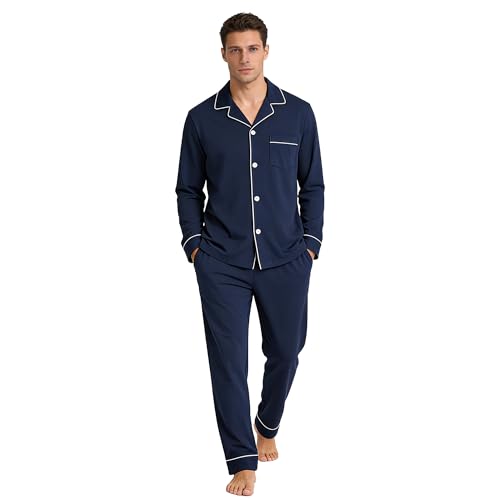 Cotton; construction not stated
U2SKIIN men’s 100% cotton button-down set
A complete button-down cotton outfit for men.
Check on AmazonContinue with the relevant guide
Back to Everyday decisions · Explore cotton pajamas
Sources and editorial method
This is a researched selection guide. We have not performed hands-on wear, washing or laboratory tests on the featured products.