Everyday decisions
What Makes Cotton Pajamas Worth a Higher Price?
As an Amazon Associate I earn from qualifying purchases. Purchases take place on Amazon.
The harder cotton-pajama comparison is often between a basic-looking set and a more expensive one that looks almost the same. One may provide better fit information or a construction detail you value; another may simply have more elaborate branding. Without inspecting the evidence, the price difference does not tell you which is true. This guide builds a value decision around benefits that can be named and checked. It does not invent current prices, estimate untested garment lifespans or assume a premium cotton label automatically creates a better purchase for every wearer.
Quick Answer
A higher price is easier to justify when it buys a benefit you will use: a suitable proportion, documented material, comfortable construction or a feature missing from cheaper alternatives. Price alone does not prove softness, durability or better sleep. Compare the actual garments and current total purchase costs, then separate established benefits from claims and unknowns before deciding what the premium is worth to you.

In this guide
- Write the proposed benefit in a complete sentence
- Information has value when it resolves your main uncertainty
- Construction inspection: look for the feature's execution
- Distinguish a material claim from an entire quality grade
- Compare a complete outfit with the purchase you actually need
- Put care effort into the value equation
- Use a cost-per-wear thought experiment without pretending it is evidence
- Decide what would make you walk away
Write the proposed benefit in a complete sentence
Instead of saying the expensive pair seems higher quality, finish this sentence: I would pay more because this garment provides something I need. The missing phrase might be a documented petite proportion, a front opening you prefer, a specific fabric claim or useful pocket construction. If the sentence ends only with a brand name or an attractive box, you have identified a presentation preference rather than established a garment-performance advantage.
Presentation can still matter to you, especially for a gift. The point is to keep the reason honest. You can choose a design because you like it without claiming it will last twice as long. Equally, a simpler-looking item can provide excellent personal value if it fits your routine. Separating preference from performance makes the comparison clearer and reduces the temptation to manufacture evidence for a purchase you already favor.
Information has value when it resolves your main uncertainty
A useful size chart can reduce uncertainty about a specific fit issue. If your previous pajama sleeves were too short, a relevant garment measurement is more informative than a general relaxed-fit description. If you need a different rise, an inseam alone will not answer the question. Paying more for a product with evidence that addresses your known problem may be reasonable, but only when the information actually refers to the selected item.
Latuza B0FC5PD1FJ is described as a petite cotton long-sleeve pajama set. Petite wording makes it relevant to a proportion-focused search, but it does not provide the actual sleeve, rise or torso dimensions in the available title. A buyer should not pay a premium solely because the word appears. The value case becomes stronger when the exact chart shows a proportion that solves the problem identified in the current garment.
U2SKIIN B0FXFX9985 uses organic cotton, tall, pockets and adjustable-waist wording for women's pajama bottoms. Those are several possible reasons to investigate it. They do not establish a particular inseam, a certification audit or measured pocket capacity. Decide which feature matters to you and ask for the evidence that would confirm it. A long list of promising descriptors is not the same as several confirmed benefits.
Construction inspection: look for the feature's execution
When you can handle a garment, examine how a seam behaves while the cloth lies naturally and during gentle ordinary movement. Look for puckering that bothers you, a rough internal edge or a bulky intersection in a contact area. A garment that feels uncomfortable in its current construction does not become better value because the stitching looks elaborate. Your inspection should connect the observed detail to the way you wear the outfit.
Check closures as working parts. Do buttons pass through their holes without an awkward struggle? Does the front remain arranged as you want when you sit? Does a drawstring adjust in a useful range for you? These are meaningful observations about the present garment. They do not support an invented prediction that the buttons will survive a particular number of washes or that one seam technique guarantees a longer lifespan.
Inspect finishing where it changes use. A pocket that is easy to reach, a hem that sits comfortably and a label location you do not notice can justify preference. Decorative piping or embroidery may appeal visually but add structure where you would rather have less. More finishing is not automatically better finishing. The relevant question is whether the design detail is executed in a way that serves your particular needs.
Distinguish a material claim from an entire quality grade
A 100% cotton statement addresses composition, not every quality dimension of the finished pajamas. Cotton type, construction, processing, cut and components remain separate questions. The CottonWorks shrinkage guidance shows why construction and processing matter to dimensional behavior. There is no sound basis for assigning one universal shrinkage expectation from fiber percentage alone, much less using that expectation to calculate a guaranteed lifespan advantage.
Organic wording likewise needs its own interpretation. If a named certification is part of the price justification, check the exact scheme and product evidence. Do not treat any organic-sounding title as a verified certificate, and do not equate a certification claim with your preferred texture. Our label and certification guide explains that narrower verification task. A documented claim can matter to your values without proving the garment will feel softer than every alternative.
Compare a complete outfit with the purchase you actually need
A full set may appear more expensive than a single pant because it contains more clothing. Before comparing value, align the purchase units. U2SKIIN B08P6MS568 is a 100% cotton button-down set, while a bottom-only product such as the tall U2SKIIN listing addresses a different gap. If your current tops work well, the bottom-only route may be the more useful purchase even when a complete set appears attractive per piece.
Conversely, a cheap multipack of bottoms does not resolve a shortage of suitable tops. Count how many included pieces you would genuinely use. A package that contains several unwanted colors or an unsuitable cut can have a low apparent unit cost and poor practical value. Use the rotation calculation to identify the missing pieces before you judge a bundle by its quantity.
Put care effort into the value equation
The purchase price is only one input into convenience. If a garment's labeled care does not fit your laundry setup, you may wear it less often or repeatedly postpone washing it. Do not assume every cotton construction permits the same handling. LAKE's fabric guide provides a manufacturer example of different care directions across its cotton fabrics, illustrating why actual instructions matter more than a universal cotton routine.
You do not need to convert every minute of laundry into a monetary calculation. Simply ask whether the care is something you are prepared to do. An outfit with a texture you particularly enjoy may be worth extra handling; another may not be. This is a tradeoff you can assess now, unlike a durability promise based on an untested assumption about how many years the garment will remain in service.
Use a cost-per-wear thought experiment without pretending it is evidence
If you want a numerical comparison, use the current prices you personally see and make all wear counts hypothetical. Divide the purchase cost by a chosen number of future wears to explore the consequences. Then try a lower wear count for an outfit you are uncertain you will use. The result shows how sensitive value is to actual use; it does not predict how long the product will last.
Do not insert a claimed lifespan to make the expensive item win. Without suitable evidence, saying a premium pair lasts twice as long merely moves the assumption into the arithmetic. A more honest conclusion might be that the extra cost is worthwhile to you for confirmed fit, while durability remains unresolved. Precision in a spreadsheet cannot repair uncertainty in the input.
Decide what would make you walk away
Before ordering, name the unresolved issue that could invalidate the premium. It might be missing garment measurements, unclear composition for the selected color or seller terms that do not accommodate your needs. Use the listing workflow to resolve it. If it remains unanswered, account for that uncertainty instead of letting the higher price function as reassurance.
Then compare with the simplest garment that meets the same practical requirement. Browse the relevant pure-cotton options or adult collection and keep your must-have benefit fixed. You may find that the premium is justified, or that a less costly option meets the need equally well. Either conclusion is useful when it follows a clear comparison rather than the assumption that expensive and better mean the same thing.
Questions about this decision
Does a premium cotton name prove the pajamas will last longer?
No. The finished garment’s construction, processing, fit, care and use also matter, and a name alone does not provide a tested lifespan. Treat the documented fiber claim as one part of the evidence rather than a complete durability rating.
How can I compare a set with a cheaper pair of pants?
First decide which pieces you actually need. Compare the complete cost of filling that gap, including any separate top you would otherwise buy. A set and a bottom-only listing are different purchase units, so the headline prices are not directly equivalent.
Is cost per wear useful before I own the garment?
It can be a scenario exercise if you label the wear counts as assumptions. It cannot establish product durability or guarantee savings. Try several plausible usage levels and keep unverified lifespan claims out of the calculation.
Final Verdict
Pay more for an advantage you can identify, verify and use. Better information about the proportion you need, a comfortable construction detail or a documented material requirement can make a real difference to your decision. Price, branding and generous adjectives cannot establish those benefits on their own. Compare equivalent purchase needs, acknowledge care effort and leave untested lifespan claims out of the arithmetic. When the premium has a specific purpose, you can explain why it is worthwhile; when it does not, choosing a simpler suitable garment is a well-reasoned outcome rather than a compromise in standards.
Explore the listed examples
As an Amazon Associate I earn from qualifying purchases. Purchases take place on Amazon.
Cotton; construction not statedLatuza petite long-sleeve cotton set
A petite proportion search requiring long sleeves.
Check on Amazon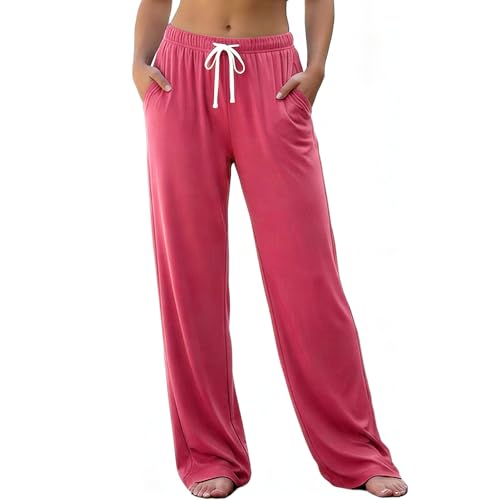 Cotton; construction not stated
U2SKIIN organic-labeled tall cotton pants
Someone starting a search for tall cotton sleep trousers.
Check on Amazon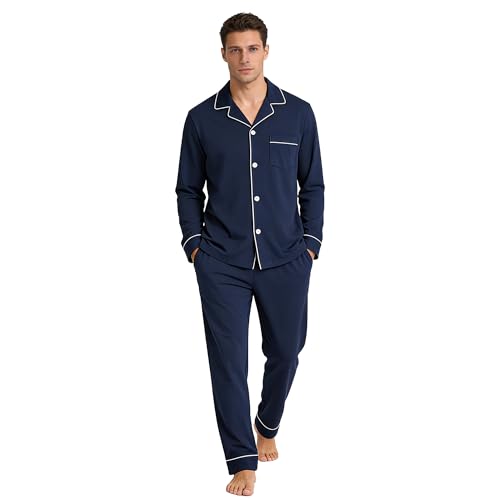 Cotton; construction not stated
U2SKIIN men’s 100% cotton button-down set
A complete button-down cotton outfit for men.
Check on AmazonContinue with the relevant guide
Back to Everyday decisions · Explore cotton pajamas
Sources and editorial method
This is a researched selection guide. We have not performed hands-on wear, washing or laboratory tests on the featured products.