Everyday decisions
How to Check Cotton Pajama Listings Before Buying
As an Amazon Associate I earn from qualifying purchases. Purchases take place on Amazon.
You find a cotton pajama set, change the color, select a size and reach the purchase button. The page may still look familiar, but the chosen variation deserves another look. A shared listing can contain different descriptions, photographs or options, and the most prominent wording may not answer the question that matters to you. This guide is an online verification workflow, from search result to final selection. It does not replace a fiber-label explainer or pretend that every missing detail can be resolved from pictures. Its purpose is to catch mismatches before they become an unwanted purchase.
Quick Answer
Lock the exact garment, color and size first, then check composition, included pieces, measurements, construction photographs and care instructions for that selection. Resolve contradictions before ordering. Finally, review the current seller and transaction terms at the destination. A search title, product-family photo or cotton keyword is insufficient proof that the item in your basket matches the pajama you intended to buy.
In this guide
- Step 1: record the item you actually intend to assess
- Step 2: resolve the cotton claim for that selection
- Step 3: decide which size-chart numbers answer your fit problem
- Step 4: use each photograph to answer one construction question
- Step 5: obtain the care information before assuming convenience
- Step 6: handle contradictions instead of averaging them
- Step 7: review the transaction separately from the garment
- Step 8: make one final pass after the last selection change
Step 1: record the item you actually intend to assess
Write down the product name, selected color, selected size and identifying model information available at the destination. Save the relevant selection in a way you can revisit, without assuming a general link will always reopen to the same variation. This creates a stable reference while you compare alternatives. Otherwise, it is easy to remember a favorable detail from one option and apply it unconsciously to another.
Check whether the listing is for a complete set, a single bottom or a multipack. The image may show styling items that are not included. A title containing set does not by itself settle how many tops and bottoms arrive; inspect the described contents. If a picture shows several colors, determine whether that is a bundle or a display of choices. Your comparison should begin with the actual purchase unit, not the most appealing visual arrangement.
Step 2: resolve the cotton claim for that selection
Look for composition information that refers to the chosen garment and variation. Cotton in a title can indicate a blend or a main-fabric description without supplying a percentage. If pure cotton is your requirement, seek the explicit statement and check whether both pieces of a set are covered. Do not fill a missing percentage with an assumption merely because the item appeared in a cotton search.
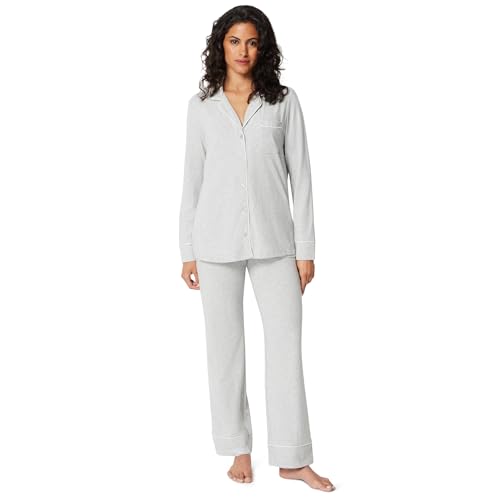
Amazon Essentials B08XR16MCL is described as a cotton-modal long-sleeve set. That wording is a clear reason not to categorize it as verified 100% cotton. Amazon Essentials B0FT2JT714 uses cotton stretch-poplin wording, which likewise does not establish a pure-cotton composition. These examples show why a search result can be relevant to a cotton discussion without meeting a shopper's strict all-cotton requirement.
For a different example, SWOMOG B0G6321MHS explicitly includes 100% cotton in its set title. That is a documented listing claim worth checking against the selected destination's details; it is not permission to invent the composition of every thread, button or trim. If component exclusions matter, use the fiber-label guide to understand the terms and seek the specific information rather than broadening the claim yourself.
Step 3: decide which size-chart numbers answer your fit problem
Find out whether the chart gives body measurements or garment measurements. They answer different questions. A body chart suggests the intended wearer range, while actual garment dimensions help you compare the item with clothing you already own. If that distinction is not clear, ask before interpreting a number. Do not compare a body waist measurement directly with a laid-flat elastic-waist width as if they used the same method.
Focus on the measurements that could disqualify the outfit. Someone worried about sleeve length needs more than a hip range; someone whose sets fit on top but not at the seat needs information about both halves. Use a familiar garment as a comparison only when the measurement methods are compatible. A numerical chart can look precise while remaining unhelpful to your particular issue.
Do not create a universal size-up instruction to compensate for missing data. It can change several proportions at once, and children's snug-fit sleepwear must not inherit adult loose-fit assumptions. The adult measuring guide provides a more complete process. In this workflow, the decision is whether the available chart provides enough relevant evidence to choose confidently or whether a key fit question remains open.
Step 4: use each photograph to answer one construction question
The front view may show the closure, neckline and general silhouette. A rear view can reveal a different shape or seam placement. Detail images may show pockets, fabric texture and finishing. Assign a question to each view instead of treating a large image gallery as automatically thorough. Ten lifestyle photographs can leave the inside label and pocket location just as uncertain as one.
For SWOMOG's button-down example, determine whether the displayed top opens the way you need and whether the pants pocket is shown. Do not expand the title's pocket wording into a specific count or capacity. For the Amazon Essentials cotton-modal set, look at the notch collar and full-length format identified in its description, while leaving unshown interior details unresolved. Connect each observation to the exact example rather than borrowing features from a similar model.
Be cautious about using a photograph as a measuring instrument. Camera angle, garment styling and the model's proportions can affect apparent length and width. A close-up can suggest texture without proving a fiber percentage or comparative softness. If the decision depends on a number, seek a measurement. If it depends on internal construction, seek an interior view. The right kind of evidence matters more than the number of images.
Step 5: obtain the care information before assuming convenience
Read the cleaning and drying instructions for the chosen item. The FTC's care-label guidance explains why care information belongs to the garment and relevant components. Do not substitute a generic cotton routine when the listing fails to show its instructions. Ask for the label information if care compatibility is important to your purchase.
Think about whether your equipment and drying space can support that routine. A garment can be attractive and correctly sized while still being inconvenient for your household. If you rely on a shared laundry arrangement, verify the handling you can actually provide. This does not require assuming the most restrictive possible care; it requires knowing the actual instruction rather than guessing in either direction.
Step 6: handle contradictions instead of averaging them
If the title says one thing and the composition field says another, the answer is not to choose the version you prefer. Check whether the information refers to different variations or garment pieces. Ask the seller or manufacturer for clarification that identifies the selected product. Keep the question narrow: which fiber percentages apply to this color and size, or does this price include one complete set or only the pictured bottoms?
If the contradiction remains unresolved and concerns a must-have requirement, stop treating the item as a confirmed match. You can choose an alternative with clearer evidence or decide that the uncertainty is acceptable to you. What you should not do is silently convert the ambiguity into a confident product claim. A careful shortlist can include an unresolved candidate, but its status should remain visible until the decision is made.
Step 7: review the transaction separately from the garment
Check the current seller, selected price, shipping information and applicable return or exchange terms at the purchase destination. Those details can change and may differ across sellers or variations. A favorable product assessment does not establish current stock or guarantee arrival. CottonPajamas.net is an affiliate information site; it does not take the order, ship the pajamas, provide the manufacturer's warranty or process returns.
Review any gift or personalization options as part of that transaction check. Do not assume the same terms apply once an item is altered or ordered through a different seller. If timing matters, use the retailer's current information and account for the uncertainty appropriate to your situation. Keep the product evidence and seller terms conceptually separate so a familiar brand does not become a reason to skip the actual order details.
Step 8: make one final pass after the last selection change
Return to the selected color and size immediately before ordering. Verify that the composition, included pieces and seller are still the ones you assessed. This last pass is especially useful after comparing multiple options or using a page that changes its default selection. You are not repeating the whole research process; you are checking that the object of the research remains the object of the purchase.
When the item arrives, compare its identifying information and garment labels with what you selected before deciding how to proceed under the seller's terms. Keep care and product information available if you retain it. A listing audit cannot guarantee satisfaction, but it can turn a vague cotton-pajama purchase into a traceable decision with clear requirements. Start from the pure-cotton collection or another relevant category, then apply the workflow to the exact destination that interests you.
Questions about this decision
What if the title says cotton but no percentage appears?
Treat the percentage as unresolved. Cotton wording may describe a blend or main fabric without establishing an all-cotton garment. Look for variation-specific composition or ask for it. If 100% cotton is essential, do not mark the item as a confirmed match until the evidence supports that requirement.
Can I use the model’s height to estimate my pajama inseam?
It is an unreliable substitute for garment measurements. Pose, styling, selected size and body proportions can alter the apparent length. Ask for the relevant inseam or compare a properly described garment measurement with a pair you own rather than deriving a number from the photograph.
Why should I check the seller after choosing the product?
The garment and the transaction are separate parts of the purchase. Current price, fulfillment information and applicable terms belong to the selected seller and order. A familiar product title does not establish those details or mean every seller offers the same process.
Final Verdict
Finish with a selected item that still matches the evidence you reviewed. Record the variation, verify the cotton claim, use measurements relevant to your body and resolve construction or care questions before the order. The cotton-modal, stretch-poplin and explicitly 100% cotton examples show why similar search results need different interpretations. Keep seller terms separate from product quality and recheck the selection after any change. You cannot remove every uncertainty from online shopping, but you can identify the ones that matter and avoid replacing missing information with a confident assumption at the purchase button.
Explore the listed examples
As an Amazon Associate I earn from qualifying purchases. Purchases take place on Amazon.
Cotton; construction not statedAmazon Essentials cotton-modal long-sleeve set
A coordinated long-sleeve outfit when pure cotton is not essential.
Check on Amazon poplin
Amazon Essentials stretch-poplin pajama set
A button-front woven set with stretch identified in its name.
Check on Amazon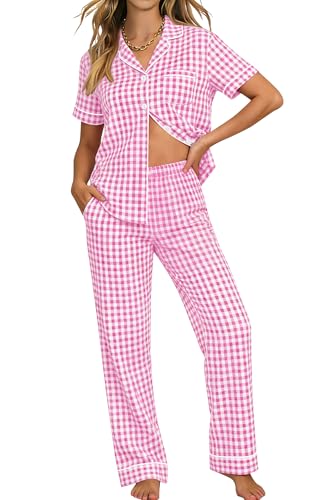 Cotton; construction not stated
SWOMOG 100% cotton short-sleeve button set
A short-sleeve button-front cotton outfit with a named pocket.
Check on AmazonContinue with the relevant guide
Back to Everyday decisions · Explore cotton pajamas
Sources and editorial method
This is a researched selection guide. We have not performed hands-on wear, washing or laboratory tests on the featured products.