Laundry & repair
How Often Should You Wash Cotton Pajamas? Build a Wear-Based Routine
As an Amazon Associate I earn from qualifying purchases. Purchases take place on Amazon.
A person who puts pajamas on at midnight and changes at seven has a different laundry decision from someone who works from home in them all day. Counting nights alone hides that difference. The useful question is how much wear the garments have had and what has collected on them since the last wash. You can create a sensible schedule without declaring every pair dirty after one night or trying to stretch every set through a full week. Start with a reference interval, then let a few observable conditions decide when it should be shortened.
Quick Answer
The American Cleaning Institute suggests washing pajamas after three or four wears as a general starting point. Change sooner when they are sweaty, soiled or carrying product residue, and count daytime lounging as wear too. Use your routine and garment condition to adjust the interval; a suggested number of wears is not a medical guarantee or a reason to ignore a dirty pair.
In this guide
What the three-to-four-wear suggestion actually means
The American Cleaning Institute's wear-frequency guidance places pajamas at roughly three or four wears and notes that showering before bed can influence the interval. This is household laundry advice. It is not a statement that the fourth night is safe for everyone or that the fifth automatically creates a health problem. Conditions differ too much for that interpretation.
Use the suggestion as a reminder to inspect and change, not as permission to ignore a spill or a sweaty night. If you prefer freshly washed pajamas each evening and can care for them as instructed, that is a valid personal routine. If you wear a clean, dry pair briefly in a cool room, you may decide on a different schedule. Neither decision needs a fabricated cleanliness score.
For tracking purposes, define a wear in a way you will actually remember. One ordinary night is an easy starting unit. A long Sunday spent cooking, cleaning and lounging in the same set is additional use even if bedtime has not arrived. There is no reliable universal conversion saying eight daytime hours equal exactly two nights. Record the situation in plain language instead of assigning false precision.
Four reasons to bring the change forward
The fabric is noticeably sweaty or damp from wear
If the pajamas feel damp when you take them off, choose a clean replacement rather than expecting that pair to carry the same schedule as a dry one. Lay the used pieces out to dry before they enter a closed laundry container, then wash them. Drying between wears and cleaning are separate actions. A garment becoming dry again does not remove what was deposited during wear.
You have transferred lotion, oil or another product
A visible greasy patch or a tacky collar is a reason to deal with the garment now. Products vary: a small amount that has absorbed before dressing may leave no obvious mark, while an accidental spill creates a localized stain. Do not cancel a necessary skincare routine to protect pajamas. Instead, select a manageable clothing rotation and follow the product's directions. Our body-oil and lotion stain guide addresses the cleaning task separately.
The set has become your daytime outfit
Food preparation, household chores and sitting outdoors introduce different kinds of contact from sleeping. If the trousers have a cooking splash or dirt at the hem, the fact that you only slept in them once is irrelevant. Change the affected piece. Where clothing serves both roles frequently, it can help to distinguish an indoor lounging outfit from the pajamas reserved for bed.
There is visible soil or an unexpected smell
These are clear reasons to wash rather than keep counting. Smell is useful as a warning but cannot certify that a garment is clean. Perfumed laundry products can also make odor a confusing measure. Inspect the areas that touch the body most closely and the surfaces exposed to spills. If an odor persists immediately after laundering, address the wash or drying problem rather than repeatedly shortening your wear interval.
Three household examples, with different decisions
The sleep-only pair: Imagine a person who changes into pajamas after an evening shower, wears them only in bed and wakes with the fabric dry. They choose a three-wear reminder and inspect the set each morning. On an unusually warm night, they change early. The schedule is helpful because it is easy to remember, but it remains responsive to the actual garment.
The weekend set: Someone wears the same trousers from Friday evening through most of Saturday, including breakfast preparation and an afternoon on the porch. Calling that “one night” understates the use. They put the trousers into the laundry after the day, while judging the top on its own history. They do not need to wait for their usual third bedtime to justify washing.
The limited-laundry week: A household can use a washer only on Sunday. The wearer needs clean changes during the week, so the plan is to switch garments as needed and hold the used ones for the scheduled wash. Restricted access changes the number of spare garments needed; it does not make a visibly soiled pair suitable for extra nights. The key decision happens when changing clothes, independently of the eventual machine date.
These are planning examples, not measured hygiene comparisons. Your own routine may combine parts of all three. If a week includes travel or a hot spell, adjust the rotation for that week rather than rewriting a permanent rule around an exceptional night.
Shirts and bottoms do not always reach laundry day together
A pajama set is sold as a pair, but use can differ between its pieces. You might wear the shirt for an hour before bed and sleep in a different top, or keep the bottoms on through breakfast. Judge each piece honestly. Matching colors are not a reason to rewear a stained top or unnecessarily launder unworn trousers every time.
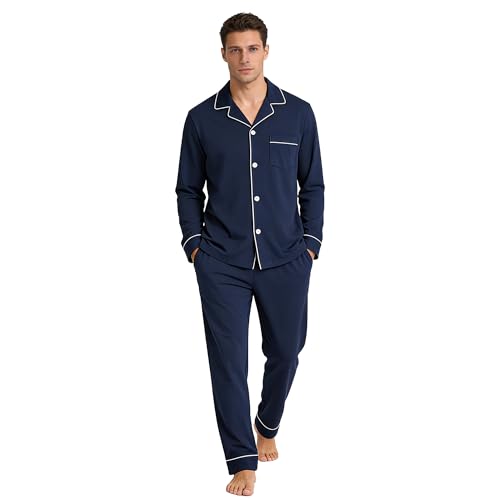
Consider how the purchase format fits your habits. U2SKIIN's listed men's button-down 100% cotton set supplies a coordinated top and bottom. Nautica's listed men's woven 100% cotton pajama pant is a bottom-only option. Neither is verified here to tolerate a particular number of washes better; the practical distinction is whether you want to replace both components together or rotate trousers with tops you already own.
The men's cotton-pajama collection includes those different buying formats. If your shirts and trousers routinely need changing at different times, separates may make the system easier. Before buying multiples, verify the exact care requirements: a bigger pile of items that need a drying method you cannot provide will not solve the access problem.
Give worn-but-reusable pajamas an identifiable place
A chair holding several sets makes counting difficult. Designate one hook, rail or open space for the pair you intend to wear again, and keep it separate from clean folded clothing and items waiting for washing. This is an organizational aid, not a treatment that restores freshness. If you cannot remember whether something is clean or worn, the storage arrangement needs to be simpler.
Use a small tally only if forgetting is a recurring issue. A note reading “two nights, sleep only” is more informative than a calendar date alone. Avoid creating a monitoring system that becomes more work than laundry. Families can use separate spaces for each person's clothes instead of attempting to keep everyone's wear count in one mental list.
Do not fold a recently damp garment directly into the clean drawer. For used pieces waiting to be washed, let obvious moisture dissipate in an appropriate open space before placing them in the laundry basket. The lingering-odor guide explains how to distinguish wear-related odor from a problem that develops after washing.
Let the schedule determine your rotation
Once you know how frequently you actually change, work backward from laundry access and drying time. Suppose you usually change every other night and wash weekly: map the upcoming nights on paper, mark the wash date and add the period when the freshly washed clothes will still be drying. Then keep a spare for a spill or unexpectedly sweaty night. This is more reliable than buying a standard bundle and hoping it suits your routine.
The detailed arithmetic belongs in how many cotton pajama sets you need. Here the aim is to establish the wear interval that feeds that calculation. Review it after a normal week, when you can see which component ran out first and whether the laundry deadline created pressure to rewear something you would rather change.
Special circumstances involving illness, caregiving or instructions from a clinician can call for different practices; this everyday wardrobe schedule does not replace them. Likewise, a baby's spill or diaper leak should be addressed directly rather than fitted into an adult three-wear rule. Keep ordinary scheduling advice within its intended role: helping you maintain a comfortable supply of clean sleepwear.
Questions about this decision
Does showering before bed mean I can wear pajamas all week?
No fixed week-long allowance follows from showering. It may change how quickly the pajamas need laundering, but sweat, products, daytime use and spills still count. Use an inspection and change routine that fits the whole situation instead of treating a shower as a reset for the clothing.
Should I count naps as another wear?
Count the actual use rather than automatically adding a full night for every nap. A brief rest in an otherwise lightly worn set is different from a hot afternoon that leaves it sweaty. If naps are part of a daily routine, include them when deciding whether your normal change interval is working.
What if my pajamas smell fine but the neckline looks greasy?
Treat the visible buildup as a reason to wash. Fragrance and the absence of a strong smell do not establish that the cloth is free of soil. Identify the mark, choose a compatible treatment and let the garment’s condition override a calendar target.
Final Verdict
Choose a wear-based habit you can remember, with room to change early. The three-to-four-wear reference is useful for ordinary planning, but the pajamas themselves and how you use them should settle the decision. Keep clean changes available, distinguish sleeping from all-day lounging, and stop counting when sweat or visible soil makes washing the obvious next step. A workable routine is one that leaves you with an acceptable pair tonight without turning every morning into a hygiene debate or every laundry delay into a reason to keep wearing the wrong set.
Explore the listed examples
As an Amazon Associate I earn from qualifying purchases. Purchases take place on Amazon.
Cotton; construction not statedU2SKIIN men’s 100% cotton button-down set
A complete button-down cotton outfit for men.
Check on Amazon woven
wovenNautica men’s woven 100% cotton pajama pants
Woven pure-cotton pants instead of a knit or complete set.
Check on AmazonContinue with the relevant guide
Back to Laundry & repair · Explore cotton pajamas
Sources and editorial method
This is a researched selection guide. We have not performed hands-on wear, washing or laboratory tests on the featured products.