Laundry & repair
How to Wash Cotton Pajamas Without Guessing the Settings
As an Amazon Associate I earn from qualifying purchases. Purchases take place on Amazon.
The washer's cotton setting looks like an obvious choice until the pajamas in your basket include a delicate knit, a buttoned poplin shirt and pants with a different care label. They may all contain cotton, yet one cycle is not automatically suitable for the whole pile. A reliable routine starts at the basket and ends when the waistband is dry enough for the drawer. The sequence below is for ordinary washable adult pajamas. It helps you make the small decisions that prevent avoidable laundry mistakes without turning every wash into a separate project.
Quick Answer
Start with the instructions on both pieces of your pajama set. Group garments with compatible colors and care requirements, treat any marks, measure detergent for the actual load, and select the permitted wash cycle and temperature. Plan the drying method before starting. Cotton content alone does not tell you whether a particular set belongs in a tumble dryer.
In this guide
Make a wash plan for the complete garment
Read the top and bottom separately, including any instructions attached near the side seam. A fiber label answers what the cloth contains; a care label gives directions for the finished garment. Elastic, printed decoration and contrast trim are reasons to read the whole instruction rather than stopping at the word cotton. The FTC's care-label guidance explains that instructions must account for garment components and relevant warnings. Photograph a legible label now if you expect the printing to fade with use.
Write down three decisions before adding water: how it may be washed, which additives are permitted, and how it should be dried. If the tag says flat dry and your only available space is occupied, postpone the wash or clear the space. Starting first and improvising a hotter dryer setting later makes the drying instruction harder to honor. If wording or symbols are unreadable, seek the maker's instructions for that precise style; a similar-looking item is an uncertain substitute.
The first wash is a useful baseline
Before laundering a new set, try it on indoors according to the retailer's conditions, then record whether the sleeves, rise and leg length already feel marginal. If you expect a purchase to be returned, check the retailer's rules before washing it. CottonPajamas.net supplies buying information and affiliate links; the seller's terms govern purchases. A wash should not be used to resolve an obviously unsuitable size.
For a keeper, photograph the fit or measure the garment flat at a few repeatable points. You do not need a laboratory record: an inseam measurement and a note about where the cuff falls can help explain a later change. Keep an unfamiliar strongly colored garment out of the pale load while you learn how it behaves. Remove packaging clips and empty every pocket; a tissue hiding behind a pocket bag can complicate an otherwise straightforward wash.
Build the load around compatible needs
Separate clothes that require conflicting settings. A cold, gentle pajama top and a heavily soiled household textile are poor partners if cleaning the latter requires a treatment the former cannot tolerate. Our starting point follows the American Cleaning Institute's sorting guidance: consider color, care requirements and soil level together. The goal is a workable group of clothes, not an impractical rule that every pajama set needs its own machine.
Examine fastenings and ties before loading. Secure a loose drawstring so it cannot disappear into its channel, while avoiding a tight knot that will be hard to undo wet. Close zippers on neighboring garments and separate items with exposed snagging hardware. If a button is already hanging by a thread, repair it before it joins a moving load. Turning printed pieces inside out can reduce direct surface rubbing, but does not change any temperature or bleach restriction.
Leave room for the clothes to move according to the machine manual. If you need to push the pajama bundle down to fit the rest in, remove some items and reassess. A bag can help contain a delicate item, but packing several garments tightly into one mesh bag defeats the point of giving them space. Keep the top and trousers identifiable so the flat-dry piece does not migrate into the dryer with everything else.
Choose settings in this order: cycle, temperature, dose
Translate the instruction into your machine's controls
Select a cycle that matches the garment's instruction, then inspect what the washer has chosen automatically. Machines may bundle water temperature, spin and duration under a single cycle name. A button marked cotton does not promise a universally suitable combination. Check the manual if the available controls are unclear, especially when a setting cannot be changed independently.
Cold water can be an appropriate routine choice when the item and detergent permit it, but it is not a guarantee against shrinking, dye release or unresolved stains. A warm-wash allowance also does not mean that hotter is always better. Think of the care direction as a constraint within which you choose a routine that cleans your particular load. Save persistent stains for a targeted treatment rather than escalating every load automatically.
Use a measurable amount of a compatible detergent
Follow the detergent package and washer instructions for the quantity, concentration, load size and water conditions you have. The upper rim of a cap is not necessarily the dosing mark. If you recently switched products, reread the directions instead of keeping the old scoop habit. Use an HE-compatible detergent where the machine requires it. The ACI's laundry-product overview distinguishes product formats and uses; it does not establish one teaspoon or capful amount for every wash.
For a small load, choose a format whose dosing directions actually cover it. Do not cut or open a single-dose packet to manufacture a smaller dose. Additional perfume, softener or a laundry booster is a separate decision, not a mandatory part of washing cotton. When a set has no special problem, begin with a routine you can evaluate rather than several new additives whose individual effects will be impossible to identify.
Where listing details help—and where they stop
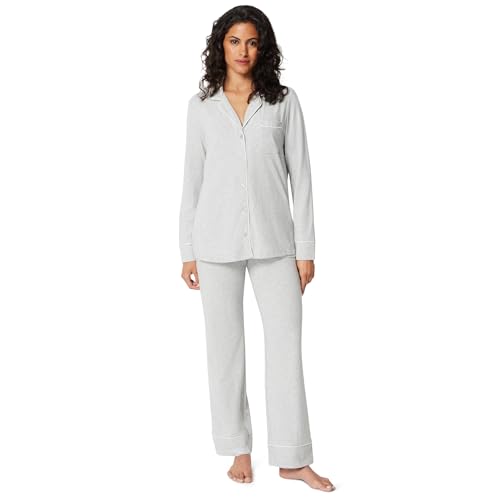
The Amazon Essentials women's cotton-modal notch-collar set is described as a blend with full-length elastic-waist pants. U2SKIIN's men's button-down set is listed as 100% cotton. Those descriptions help distinguish the items when organizing your wardrobe, but neither listing title supplies a wash temperature or dryer permission. Confirm the instructions on the item you receive before giving either set its permanent laundry routine.
A practical counterexample comes from LAKE's own fabric guide: its CloudPima care calls for cold delicate washing and flat drying, while its cotton poplin instructions permit low tumble drying. That contrast explains why transferring care between cotton fabrics is unreliable. LAKE is cited here for manufacturer care evidence, not presented as a verified affiliate product. Explore our pure-cotton collection for composition-led browsing, then make care compatibility part of the final selection.
Finish the job while the pieces are still separate
Take out one piece at a time and inspect any area you treated before washing. A disappearing wet mark is not certain proof that the dry fabric will look clear. If a stain remains, keep the piece out of the dryer and use the relevant stain instructions. See our oil and lotion troubleshooting guide for greasy marks rather than repeatedly washing the complete household load.
Arrange seams and hems gently while the garment is damp. This means smoothing ordinary folds into their intended position, not pulling the cloth into a different size. Follow flat-, line- or tumble-drying directions for each piece. When tumble drying is permitted, do not leave the pajamas running simply because a thicker item in the same load is still wet. For a limited drying area, the indoor drying guide covers rack layout and timing in more detail.
Check pockets, layered cuffs and the waistband before folding. The shirt front can feel dry while these areas remain damp. Let the whole garment finish drying before storage. Finally, compare fit with your initial notes. A small wrinkle is a different problem from a shorter inseam or a tight thigh; separating those observations helps you choose the next action instead of blaming the entire wash routine.
Keep a routine you can repeat
A useful laundry note is short: which pieces belong together, the selected settings, the measured detergent dose and the drying destination. Put it where anyone doing the laundry can see it. If another household member handles the transfer to the dryer, mark the exception explicitly. “Pajama shirt on rack” is more actionable than “be careful with my clothes.”
Change one variable when something goes wrong. A stiff result calls for a different investigation from twisted seams or an oily collar. Our cotton-pajama care hub separates those tasks so a simple wash remains simple. Retain a routine that produces clean, comfortable, correctly fitting pajamas; there is no benefit in adding treatments merely because a new laundry tip looks popular.
Questions about this decision
Should I wash a new cotton pajama set before wearing it?
A first wash according to the garment instructions is a reasonable choice before regular wear. Complete your fit and purchase-condition checks first, because laundering can affect return eligibility. Record any important measurements before washing so you can distinguish an initial sizing problem from a later dimensional change.
Can the shirt and trousers share a wash if their labels differ?
Only if there is a method suitable for both pieces and the rest of the load. Different instructions are a reason to compare the full wash and drying requirements. A shared wash does not automatically mean a shared drying method; separate pieces at the machine if necessary.
Is a quick cycle enough for sleepwear?
It depends on the machine, load and soil. Consult your machine manual for the quick cycle’s intended use. A small, lightly worn load and trousers with established oily marks are different tasks. Pretreat appropriate stains and choose a permitted cycle that suits the actual work rather than the shortest available timer.
Final Verdict
Make washing predictable by assigning each pajama set a clear route from basket to storage. Compatible sorting, deliberate machine settings and a measured detergent dose matter more than choosing a cycle by its cotton label. The most easily missed decision is often drying: know where each piece is going before you start. After the first successful wash, keep a brief record and repeat what works. If fit, texture or staining changes, investigate that specific symptom instead of making the whole routine hotter, longer or more complicated.
Explore the listed examples
As an Amazon Associate I earn from qualifying purchases. Purchases take place on Amazon.
Cotton; construction not statedAmazon Essentials cotton-modal long-sleeve set
A coordinated long-sleeve outfit when pure cotton is not essential.
Check on Amazon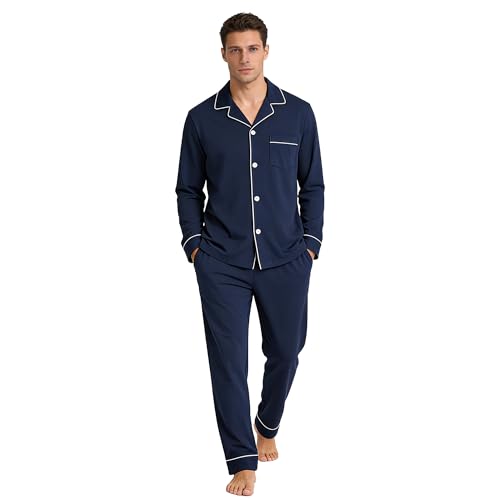 Cotton; construction not stated
U2SKIIN men’s 100% cotton button-down set
A complete button-down cotton outfit for men.
Check on AmazonContinue with the relevant guide
Back to Laundry & repair · Explore cotton pajamas
Sources and editorial method
This is a researched selection guide. We have not performed hands-on wear, washing or laboratory tests on the featured products.