Laundry & repair
Body Oil and Lotion Stains on Cotton Pajamas: A Targeted Removal Plan
As an Amazon Associate I earn from qualifying purchases. Purchases take place on Amazon.
An oily collar is rarely as obvious as a coffee spill. It may first appear as a slightly darker band when you hold the pajama shirt near a window, while a blob of lotion can leave a sharp mark within minutes. The stain's history matters: a fresh localized deposit and many nights of accumulated wear are different cleaning jobs. This guide helps you identify what you are treating, choose a reasonable first attempt and recognize when more treatment is likely to damage the garment instead of improving it. It focuses on adult washable sleepwear and ordinary body-product marks.
Quick Answer
Identify the source and remove any surface excess without spreading it. For washable pajamas, use a garment-compatible laundry pretreatment or suitable liquid detergent according to its directions, then wash within the item's care limits. Inspect before heat drying. Colored lotion, longstanding collar buildup and an unknown oily mark may need different judgments; no method guarantees that every stain or color change will disappear.
In this guide
- Name the mark before touching it
- Choose the path that matches the stain's history
- Handle a fresh spill without enlarging the job
- Pick one compatible laundry product and use its actual directions
- Wash the garment, then inspect the same area in useful light
- Apply the plan to real pajama constructions
- Reduce repeat stains without redesigning your personal-care routine
- Decide when a faint mark is preferable to damaged fabric
Name the mark before touching it
Ask what was on the skin or hands when the stain appeared. Plain body oil, a creamy lotion, tinted moisturizer and ointment can leave different mixtures on fabric. Keep the product container available if you have it; the name and any clothing precautions are useful when asking its maker for stain advice. An orange or white mark from a skincare product is not automatically an ordinary oil stain.
Look at the distribution. A smooth dark patch at a recent spill has a clearer history than a yellowish collar after months of use. A recurring mark where the drawstring touches the waistband might involve a laundry additive or dye rather than skin oil. If you cannot identify the source, begin with a cautious garment-compatible approach and avoid escalating to a substance-specific chemical treatment based on a guess.
The American Cleaning Institute's stain guide treats collar soil, cosmetics and grease or oil as distinct entries. Its recommendations support pretreatment before laundering for these common categories. They do not prove that every lotion behaves alike or that a color change has a recoverable surface deposit. Preserve that distinction when examining your pajamas.
Choose the path that matches the stain's history
| What happened | First priority | Important limitation |
|---|---|---|
| A visible blob of lotion just landed on the pants | Lift the excess and keep it from spreading to another layer | Rubbing a larger area can make the treatment area bigger |
| A collar has gradually become darker | Inspect the whole affected band and target the accumulated soil | One spot treatment may miss adjacent buildup |
| A tinted product left both grease and color | Identify the exact product and assess the oily and colored components separately | Removing the greasy feel may leave pigment behind |
| A mark appeared only after laundering | Check for an additive deposit or transferred color | The original assumption of body oil may be wrong |
| The stain has already been tumble dried repeatedly | Set a realistic salvage limit before starting | Several more hot washes are not a reliable recovery strategy |
Do not combine paths into a single stronger treatment. For example, a pale patch where the original garment color has disappeared is not a darker soil mark to be dissolved. Compare it with an unstained area and consider whether the color itself has changed. Photograph the dry mark before treatment so you can assess progress without relying on memory.
Handle a fresh spill without enlarging the job
Lay the affected area flat and separate it from the other side of the garment. If there is a visible mound of lotion, lift it gently with a suitable blunt edge or absorb excess with a clean white cloth. Work carefully rather than pushing the substance along the fabric. Keep transferring to a clean part of the cloth so you are not redepositing what you removed.
Avoid vigorous scrubbing, especially on a soft surface or loosely constructed fabric. Your immediate objective is to remove material resting on the garment, not to abrade the yarns until the patch looks lighter. Do not take a stiff brush to a small mark merely because the overall pajama label says cotton.
If the stain occurred while dressing, change into another garment before working on it. This lets you see both sides and prevents a wet treatment from being held against the body. It also makes it easier to honor the laundry product's directions. There is no practical benefit in trying to perform a full stain-removal sequence while still wearing the trousers.
Pick one compatible laundry product and use its actual directions
For ordinary washable garments, a laundry pretreatment intended for oily marks or an appropriate liquid laundry detergent is a reasonable first route. Check the product's fabric exclusions and instructions for testing a concealed area. Treat the exact color and trim you own, not a different item of the same brand. A successful hidden test reduces one uncertainty; it does not promise the entire visible stain will lift.
Use the specified amount and contact time, and do not allow a treatment to dry on the cloth if the directions tell you otherwise. Where the package gives different directions for pretreating and machine washing, keep them distinct. The amount placed on a collar does not replace a correctly measured wash dose unless the manufacturer explicitly says so.
Tide's oil-stain guidance reinforces two useful limits: laundering should follow garment instructions, and a stain that remains should be addressed before drying. Its page concerns cooking oil and a particular recommended process, so it is background for handling oily stains rather than proof about an unknown cosmetic formulation. For body lotion, the product maker may have more specific information.
Do not put ordinary dishwashing liquid into an automatic washer. A household tip involving a hand treatment does not establish that a product is suitable for a washing machine. Choosing a laundry product with clear pretreatment instructions avoids that ambiguity. There is no need to mix cleaners or create a stronger homemade formula for this task.
Wash the garment, then inspect the same area in useful light
Choose a wash method allowed for the pajamas and suitable for the treatment used. The stain does not give you permission to exceed the cloth's temperature limit. A cotton body may share the garment with elastic, trim or a printed surface that also matters. When instructions are unclear, ask the manufacturer rather than assuming the highest available setting will be safe.
After washing, inspect the affected panel before transferring it to a tumble dryer. Oily marks can be difficult to judge on wet cloth. If the result is uncertain, use a permitted air-drying method and compare the dry area with the photograph taken earlier. Do not iron a questionable patch to make the assessment easier. You want to see whether the stain remains without adding heat as a new variable.
If the mark has clearly improved and the fabric remains sound, a second label-compatible treatment may be worthwhile. If nothing changes, reconsider the stain identity. The problem may include pigment, altered dye or old discoloration rather than removable oil alone. Record what you used before contacting a textile-care professional so they do not have to guess about earlier treatments.
Apply the plan to real pajama constructions
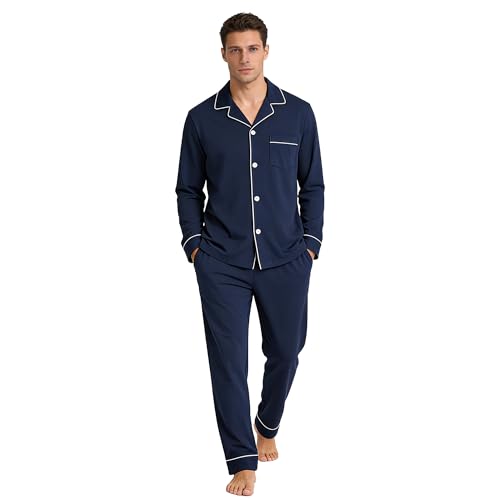
The U2SKIIN men's 100% cotton button-down set provides a useful collar-and-front example: inspect the band that contacts the neck and any spot near the opening, rather than treating the whole top indiscriminately. Its listing title does not disclose laundering directions, stain resistance or colorfastness. Those details must come from the actual garment and appropriate product instructions.
SWOMOG's listed 100% cotton short-sleeve button-down set in pink-and-white plaid introduces a different treatment question. A pale ground and colored pattern occupy the same garment; treating it as an entirely white fabric could jeopardize the colored parts. The title identifies the pattern and cotton claim, not which bleaching treatment is safe. Our pure-cotton collection supports fiber-focused shopping, but care compatibility remains a separate selection check.
For an elastic waistband, examine both the outer fabric and the folded inner area. If a lotion mark lies directly over several layers, avoid saturating the channel without a plan to rinse and dry it properly. The presence of cotton on the outside does not justify treating hidden components as if they were an untrimmed cotton cloth.
Reduce repeat stains without redesigning your personal-care routine
Follow the lotion's own application instructions and let it settle as directed before dressing. If transfer still occurs, use a pajama rotation that makes changing the affected piece easy. A spare shirt can be more practical than repeatedly trying to preserve a coordinated set through several nights of visible collar buildup.
Check the likely contact areas before laundry day so a small mark does not go unnoticed through repeated heat drying. Our wear-based washing schedule addresses when to change. If the main symptom is smell without a visible oily deposit, use the separate odor diagnosis rather than assuming a stain remover is the solution.
Do not stop a prescribed or otherwise necessary skin treatment just to protect clothing. For products with special clothing or laundering precautions, follow those directions and seek qualified advice where appropriate. This article is about caring for fabric, not changing medical treatment. A darker pajama color may make a mark less visible, but it does not remove transferred product or establish easier laundering.
Decide when a faint mark is preferable to damaged fabric
A pajama shirt can remain comfortable and useful with a small permanent stain. Set your stopping point before attempting repeated salvage: visible fiber wear, a growing pale area, damaged elastic or no improvement after a reasonable directed attempt are reasons to reassess. More aggression can trade a cosmetic mark for a structural problem.
If only one component is affected, continue using the other and consider whether a separate replacement suits your wardrobe. Look through the women's collection or the men's collection with that specific need in mind. Replacing a whole set is a purchase choice, not an automatic requirement when one collar has a stain.
Questions about this decision
Can body lotion leave a stain even when it looks colorless?
An apparently colorless product can still leave a visible deposit or darker-looking area on fabric. Identify the product and use a compatible laundry treatment rather than treating every mark as dye. Judge the fully dry result, since an oily patch may be less obvious while the garment is wet.
Should I bleach a yellow pajama collar?
Do not assume bleaching is permitted or that yellow means one specific kind of soil. Inspect the history, the garment’s colors and its care restrictions first. Start with a suitable treatment for the identified deposit; permanent color change and removable collar soil are different problems.
What if the oily stain has already been through the dryer?
A directed salvage attempt may still be worth considering, but full recovery is uncertain. Use the same garment and product compatibility checks, inspect before further heat and stop if the fabric or original color starts deteriorating. Do not escalate automatically to hotter cycles.
Final Verdict
Treat an oily pajama mark as a specific small job: identify it, contain it, pretreat it with a suitable laundry product and inspect the dry result before adding more heat. Fresh lotion, accumulated collar soil and colored cosmetics should not be forced into one universal recipe. Preserve the cloth and its trim while judging whether another attempt has a reasonable chance of helping. When a faint stain remains on an otherwise comfortable set, continued use can be a better outcome than repeated treatment that leaves the garment visibly worn or the color damaged.
Explore the listed examples
As an Amazon Associate I earn from qualifying purchases. Purchases take place on Amazon.
Cotton; construction not statedU2SKIIN men’s 100% cotton button-down set
A complete button-down cotton outfit for men.
Check on Amazon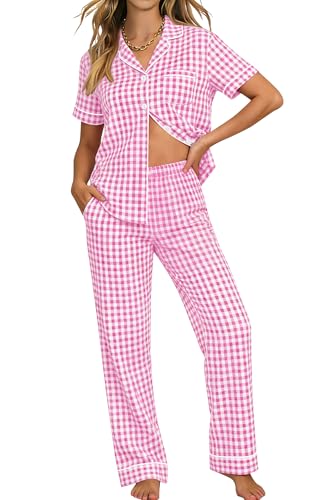 Cotton; construction not stated
SWOMOG 100% cotton short-sleeve button set
A short-sleeve button-front cotton outfit with a named pocket.
Check on AmazonContinue with the relevant guide
Back to Laundry & repair · Explore cotton pajamas
Sources and editorial method
This is a researched selection guide. We have not performed hands-on wear, washing or laboratory tests on the featured products.