Laundry & repair
Lingering Odor in Cotton Pajamas: Trace the Laundry Stage That Fails
As an Amazon Associate I earn from qualifying purchases. Purchases take place on Amazon.
The pajamas smell acceptable when you fold them, yet something seems wrong as soon as you take them out the next evening. Or the opposite happens: a damp smell is already present as the machine door opens. Those two timelines deserve different investigations. Starting with the moment the odor appears can save you from washing the same clothes repeatedly while overlooking the rack, hamper or drawer. This is a practical troubleshooting guide for ordinary laundry odors. It does not claim that a pleasant smell proves disinfection or that cotton itself prevents unwanted odor.
Quick Answer
Identify when the odor appears: before washing, immediately afterward, during slow drying or only after storage. Inspect the pajamas and compare other items from the same load. Correct the matching problem using garment and appliance instructions, then evaluate a fully dry piece. Persistent odor needs investigation; extra perfume, hotter settings or several mixed cleaners are not dependable substitutes for finding the source.

In this guide
- Build a timeline before choosing a treatment
- Route A: the odor is present before washing and remains in one area
- Route B: several items smell wrong straight out of the washer
- Route C: the smell develops while the pajamas are drying
- Route D: the pajamas smell fine until they enter the drawer
- Make a small trial that produces an interpretable result
- Keep the successful correction modest
Build a timeline before choosing a treatment
Keep one affected piece identifiable through the next laundry cycle and note four checkpoints: before washing, as it leaves the machine, when completely dry, and after a period in its normal storage place. Compare it with another item from the same load if possible. You do not need to describe the smell precisely; “present before storage” is already a useful distinction.
Inspect the inside collar, underarms, waistband and pocket bags separately. An isolated area can point toward accumulated wear or product transfer, while a similar odor across unrelated clothes suggests a shared stage worth examining. This comparison identifies where to look next, not the chemical or biological cause of a smell.
Leave fragrance products unchanged or omit an optional scent additive during the investigation if garment instructions permit. Adding a new strong perfume makes before-and-after comparison less informative. The objective is to learn whether the underlying problem remains, not whether another scent can sit on top of it.
Route A: the odor is present before washing and remains in one area
Inspect that location for visible body oil, lotion or other deposits. A pajama neckline can have a different soil history from the hem; a whole garment is not necessarily equally dirty. If you find a mark, use a treatment suited to the substance and cloth instead of repeatedly sending an untreated problem through a short cycle. The ACI's stain guide distinguishes collar soil, cosmetics and oily stains rather than treating them as one category.
For a washable garment, choose a compatible laundry pretreatment according to its own instructions. The dwell time, concentration and color test belong to that product's directions. More time or more product is not automatically an improvement. The oil and lotion article gives the detailed inspection sequence when a greasy patch accompanies the smell.
Then reassess the normal load. Were heavily used pajamas squeezed in with too many other items? Was the detergent dose measured for that load, and did the machine cycle match the soil and the clothing requirements? Correct an identifiable mismatch before buying an odor-specific additive. You need a cleaning process that suits the garment, not a succession of stronger-looking labels.
If the pieces routinely become heavily used before laundry day, change the wear schedule as well. The washing-frequency guide helps separate nights slept from hours spent lounging. This does not mean every persistent smell is the wearer's fault; it simply checks whether the cleaning task has become larger than the selected routine.
Route B: several items smell wrong straight out of the washer
Look beyond the pajamas when unrelated garments share the same result. Review product type, placement and quantity against the washer's manual. If the machine requires HE detergent, use a compatible product. Compare the actual load with the cycle's intended capacity and use. An unfamiliar shared machine may have different controls from the one you normally operate.
Inspect accessible parts of the appliance as the manufacturer permits. A dispenser with visible buildup, a gasket holding debris or a known missed maintenance cycle gives you a concrete next step. Follow that machine's cleaning instructions, including the specified cleaner if one is required. Do not use a clothing load as the appliance-cleaning cycle or combine household cleaners to improvise one.
Note how long the wet load waited after the cycle ended. A washer finishing at midnight when nobody can unload it until the following afternoon creates an avoidable delay. Adjust the start time to when you can move the clothes promptly. If the load already smells unpleasant after waiting, evaluate it for rewashing rather than treating the dryer as a guaranteed remedy.
Choose one correction for the next ordinary load and compare the result. If appliance maintenance and correct dosing do not resolve a recurring machine-wide issue, consult the manufacturer's support information or a qualified service professional. Replacing the pajamas before checking a shared process may simply give you a new set with the same problem.
Route C: the smell develops while the pajamas are drying
Examine the physical layout. Are the trouser legs folded over one another? Are sleeves tucked inside the shirt? Does the waistband stay wet long after the center panel feels dry? Give layered areas attention rather than judging readiness from the easiest surface to reach. A drying arrangement that worked for a short summer set may be less suitable for a heavier winter garment.
The ACI's laundry guidance says clothes should be completely dry before folding and putting them away. To make that workable, plan space and airflow that suit the permitted drying method. If a garment calls for flat drying, support it appropriately instead of hanging a heavy wet piece from its shoulders. Change the layout or timing rather than overriding the care instruction because the rack is inconvenient.
Consider the whole drying area too. Laundry positioned in a room that already smells musty gives you a second source to investigate. Compare a piece dried in another suitable place if one is available. Do not assume that a new detergent can solve every environmental problem around the laundry. Our non-tumble drying guide goes further into practical rack arrangements.
Two catalog examples illustrate useful inspection points without establishing drying performance. Amazon Essentials' listed 100% cotton flannel pants have an elastic waist and drawstring; the women's cotton-modal set includes a notch-collar shirt and elastic-waist trousers. Those layered construction areas deserve a dryness check. Their listing titles do not provide measured drying times or odor-resistance claims.
Route D: the pajamas smell fine until they enter the drawer
Remove the contents and inspect the storage space before returning clean clothes. Compare whether other garments from the same drawer share the problem. A scented sachet, previously stored clothing or the cupboard itself may complicate the observation. Keep a freshly washed, fully dry pair in a different clean storage place temporarily and compare its condition with the usual drawer result.
Do not put the test garment beside a worn pair and then treat the outcome as a clean comparison. Keep worn-but-reusable pajamas, laundry awaiting washing and freshly laundered garments distinct. The point is not elaborate storage equipment; it is knowing which stage each item belongs to.
If the space is damp or has an unresolved building issue, address that before using it for freshly cleaned clothing again. Fragrance does not repair a moisture problem. Seasonal pajamas also need to be clean and thoroughly dry before long storage; avoid sealing a set simply because the outside of the shirt feels dry. Our flannel collection is useful for shopping, but owning an extra winter pair will not correct unsuitable storage.
Make a small trial that produces an interpretable result
Suppose a pajama shirt smells acceptable when it leaves the washer but develops an odor on a crowded rack. For the next label-compatible wash, keep the detergent and cycle constant, arrange that piece with adequate supported space, and record when it becomes fully dry. If the outcome changes, drying deserves continued attention. If it does not, review the earlier checkpoints rather than adding three treatments at once.
Or imagine that the waistband alone smells after every wash while the rest of the trousers is acceptable. Inspect the waistband for soil and deposits, confirm it is fully drying and consider a compatible targeted treatment. The observation does not justify bleaching the whole set. A localized problem needs an answer that respects the elastic, stitching and surrounding color.
These trials cannot establish that a garment is sanitized, nor identify a medical cause of odor. They are ways to manage everyday clothing. If a garment has visible damage, persistent unexplained staining or a problem that remains after reasonable care, ask the manufacturer or a textile-care professional about its realistic limits. Stop before repeated aggressive treatments create a second problem.
Keep the successful correction modest
Once you identify a workable change, write it as an action: unload before dinner, open the pocket bags on the rack, measure the detergent for this load, or keep clean pajamas out of the affected drawer. A short instruction is easier to maintain than a special multi-product routine used only when the smell becomes unbearable.
For future purchases, consider care compatibility alongside fabric and fit. A set whose drying instructions you can reliably follow may be easier to live with than one needing space your home cannot provide. Start at the cotton-pajama homepage for garment choices, but do not interpret cotton, organic or soft wording as an odor-control feature.
Questions about this decision
Why do my pajamas smell only after I put them away?
Compare the drawer or cupboard with an alternative clean storage location and verify that the waistband, cuffs and pockets were completely dry before folding. If several garments from one space share the smell, investigate the space as well as the clothes. A pleasant scent when warm from drying is not the only useful checkpoint.
Can I use a hotter wash to remove every pajama odor?
No single hotter setting can promise that, and the garment may not permit it. Determine whether the issue starts during wear, washing, drying or storage, then correct that stage. Temperature changes should remain within the item’s instructions and address an identified cleaning need.
Does an odor-removing laundry product disinfect cotton pajamas?
Do not equate odor wording with a disinfecting claim. The exact product label determines its intended use and any supported claims. This guide addresses ordinary cleaning and storage; it does not treat a fresh smell as evidence of germ removal or recommend adding disinfectants routinely.
Final Verdict
Find the failing stage before trying to overpower the smell. The most useful evidence is often the timing: one affected collar, an entire wet load, a slow-drying waistband or a drawer that changes otherwise acceptable clothes. Make the matching correction and check a fully dry result. When the same process keeps producing a problem, investigate the process before replacing the pajamas. A successful routine should leave the garment comfortable and acceptable to wear, with a cause you understand well enough to prevent the issue from returning.
Explore the listed examples
As an Amazon Associate I earn from qualifying purchases. Purchases take place on Amazon.
flannelAmazon Essentials 100% cotton flannel pants
A cotton flannel bottom for someone who prefers a relaxed leg.
Check on Amazon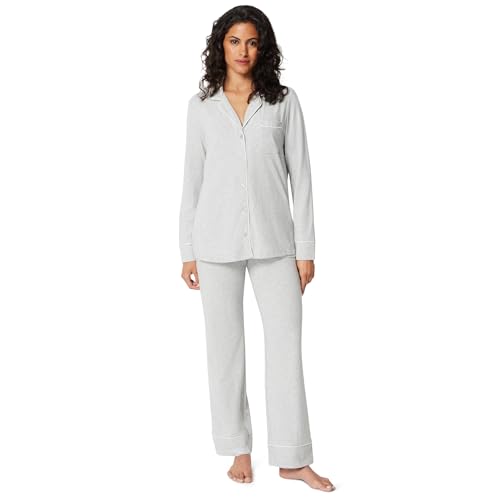 Cotton; construction not stated
Amazon Essentials cotton-modal long-sleeve set
A coordinated long-sleeve outfit when pure cotton is not essential.
Check on AmazonContinue with the relevant guide
Back to Laundry & repair · Explore cotton pajamas
Sources and editorial method
This is a researched selection guide. We have not performed hands-on wear, washing or laboratory tests on the featured products.