Laundry & repair
Drying Cotton Pajamas Without a Tumble Dryer: A Space-by-Space Plan
As an Amazon Associate I earn from qualifying purchases. Purchases take place on Amazon.
The sleeves feel dry, but the waistband is still cool and damp. That familiar mismatch is the real challenge of drying pajamas without a machine: a garment is not one uniform sheet of cloth. Pockets, cuffs, elastic casings and doubled fabric create different drying zones, and a small apartment gives you limited places to separate them. A workable plan starts before the wet set leaves the washer. This guide helps you choose where the pieces will go, support their weight and determine when they can return to the drawer. It does not assign an overnight drying guarantee to any fabric or model.
Quick Answer
Choose the drying arrangement the garment permits, then give each piece support and space. Flat-dry items need their weight distributed; line-dry items need secure, appropriate support without heavy folds. Open pockets and separate overlapping layers. Indoor drying takes a workable room and time, so assess airflow, humidity and the slowest-drying waistband rather than relying on a fixed number of hours.

In this guide
Reserve the space before starting the load
Look at the dry rack or surface first. Can the shirt and both pant legs occupy separate areas without stacking fabric? Is there room to walk past safely, and will doors still open? A large laundry load can create a drying bottleneck even when the washer easily holds it. If a flat-dry set needs most of your available surface, plan a smaller wash or use two sessions rather than discovering the space problem afterward.
Next, decide how long that space can remain in use. A rack you must fold away before dinner may be unsuitable for a set that has just finished washing. Avoid planning on an exact drying time copied from another household: room conditions, garment thickness, remaining water and spacing differ. Work backward from when you need the pajamas and keep a dry alternative available if your schedule leaves little margin.
- Shared room: agree where the rack can remain and keep walking routes and doors clear.
- Flat support: reserve enough area for the whole garment, including sleeves, rather than borrowing a narrow edge.
- Drips: consider the surface below the wet set and prevent contact with nearby electrical equipment.
- Timing: allow the space to remain available beyond an optimistic drying estimate.
Do not use a heater as an improvised drying rack. An arrangement should fit the room without interfering with the equipment around it.
Match support to the actual drying instruction
Flat drying and hanging are not interchangeable conveniences. LAKE's manufacturer fabric guide gives a useful example: its cotton Pima knit and cotton poplin have different drying directions. That illustrates why the fiber name alone cannot choose the method for your pajamas. It does not establish instructions for the Amazon products discussed below. LAKE's fabric-specific care descriptions provide the comparison.
When flat drying is specified, arrange the garment in its natural shape on a suitable clean support. Keep sleeves and legs from hanging off an edge under their wet weight. If you use an absorbent towel beneath it, check that the towel is not remaining saturated and holding the underside wet. A suitable mesh surface may expose more of the underside, but it still needs to support the full garment without allowing sections to sag.
Where line or rack drying is allowed, distribute the load across enough support to avoid concentrating the entire weight at a narrow point. Consider broad bars, the position of folds and whether hanging from a waistband distorts it. A shirt on a narrow hanger can develop shoulder marks, especially while wet. The right arrangement is the one that respects the garment's shape, not merely the one that fits the largest number of items on a rack.
Separate the layers that dry last
A long trouser leg folded tightly over one bar creates several contacting layers. Spread the two legs and move the fold if the underside stays damp. Open pockets so their bags are not trapped against the body of the pants. Unbunch cuffs and smooth the fabric inside a waistband casing gently. These actions expose hidden wet areas without requiring you to pull the garment larger.
For a button-front shirt, open the front enough that the two panels do not lie as one heavy stack. Arrange the collar so its layers can dry rather than folding it tightly against the back. If the set has a matching belt or other removable accessory, dry it separately when the instructions allow. Small pieces can stay damp unnoticed if they are rolled inside the shirt.
Check the reverse as well as the visible surface. If the top of a flat-dried knit is dry but the underside is damp, carefully reposition it while supporting the whole garment. Do not lift a heavy wet shirt by one sleeve to flip it. The task is to change contact points while keeping its dimensions as close to the natural arrangement as possible.
Work with the room instead of adding heat by default
Choose a room with a practical route for moisture to leave, using ventilation appropriate to your home and conditions. If opening a window brings in damp outdoor air or is otherwise impractical, it may not help the way you expect. A fan can move air around exposed surfaces, while a suitable dehumidifier may be useful in a persistently damp room. Follow the appliance instructions and keep cords and equipment clear of wet garments.
None of those options supplies a universal drying-time promise. Observe the actual result: is the inner waistband becoming drier, or is the entire room and load staying damp? If your setup repeatedly fails to dry a modest load in the time available, reduce the load size, change the room or choose a garment with a care routine you can accommodate. Repeating the same overcrowded arrangement is unlikely to solve a space problem.
Do not use a blast of strong heat to compensate for poor spacing. Cotton garments can change dimensions through processing and care, and a restricted drying instruction should not be overridden for convenience. The separate shrinkage guide covers that issue. Here, widening the spaces and checking folded areas is the more relevant first adjustment.
Three realistic arrangements
In a small apartment with one folding rack, give a pajama shirt one end and spread the legs across separate bars at the other. Keep heavy towels out of the same narrow section. Rotate which surface contacts the bars if needed. If the garment must dry flat and the rack cannot support that arrangement, use an appropriate flat support instead of letting it collapse through the gaps. The rack's existence does not make every garment a rack-dry garment.
With an outdoor line, consider the forecast, the security of the line and the garment's instructions about exposure. Secure the item in a way that avoids excessive local strain and inspect it after bringing it in. An outdoor surface can feel dry while thick areas still contain moisture. Do not assume that an afternoon outside guarantees the set is ready for a closed storage bin.
In a room used for sleeping, avoid scheduling the wettest part of the load for the moment you need the room clear. A morning wash may be easier to manage than a late-night load, depending on your day and environment. If the room stays uncomfortably damp or clothes remain wet repeatedly, change the arrangement. Drying a set at home should not require pretending your room behaves like a commercial drying cabinet.
Use garment features to estimate effort, not exact hours
The Ekouaer two-piece jogger set is listed as 100% cotton. Its jogger format prompts you to inspect the ankle area and waistband when deciding whether drying is complete; the catalog does not provide cuff construction, fabric weight or care instructions. Do not translate jogger into a guaranteed thick cuff. Inspect the delivered garment and use its actual features to plan support.
Amazon Essentials men's poplin pants are listed with pockets, elastic and drawstring. Those named components create specific places to examine during drying, but there is no verified dry-time comparison against the Ekouaer set. Likewise, a shorter ENJOYNIGHT capri set does not automatically dry faster than every full-length set; fabric and retained water remain unknown. The capri collection changes coverage options, not measured drying performance.
When buying for a home without a dryer, ask for the drying instruction before asking which cotton is best. Then consider how many layers, how much hanging length and how much flat space the design needs. A beautifully comfortable set that requires a surface you never have may become frustrating. A care method that fits your room is a useful product feature in its own right.
The last inspection happens before storage
Check the waistband, inside pockets, cuffs and overlapped seams directly rather than judging from a dry sleeve. If any area remains damp, leave the garment arranged for further drying. Fold only when the whole set is ready. Putting partly damp clothing into a bag for later does not finish the process; it simply hides the parts that still need attention.
Keep a note of arrangements that work well for your particular sets. You do not need a spreadsheet of drying minutes, only a useful reminder such as flat support required or open pocket bags. Over time this can make load planning easier. Our pajama rotation guide helps plan enough spare clothing around your actual laundry interval.
Questions about this decision
Can wet cotton pajamas hang from a regular clothes hanger?
Only if the garment permits hanging and the hanger supports it without distorting the shoulders or other areas. A wet knit may need flat support instead. Do not choose a hanger solely because it saves floor space; observe where the weight is concentrated.
Why do pockets stay damp after the legs dry?
Pocket bags and their attachment points create overlapping fabric, so the exposed leg is not a reliable indicator for the whole garment. Open the pocket area when practical and check it directly before folding. A damp hidden layer needs more time and exposure.
How long should cotton pajamas take to air dry indoors?
There is no useful universal number. Construction, water remaining after washing, room humidity, spacing and airflow all affect the result. Plan extra margin, assess the slowest areas and change a setup that repeatedly leaves clothing damp rather than treating a guessed deadline as proof of dryness.
Final Verdict
Successful air drying is mostly a matter of planning the support and the space. Reserve room for the full set, separate its overlapping layers and keep wet weight from pulling it out of shape. Inspect the waistband and pockets before storage, even when the broad fabric panels feel ready. If drying regularly interferes with your schedule, change the load size or garment-care choice instead of rushing with unapproved heat. A repeatable arrangement that fits your home makes dryer-free pajama care much less uncertain.
Explore the listed examples
As an Amazon Associate I earn from qualifying purchases. Purchases take place on Amazon.
Cotton; construction not statedEkouaer 100% cotton jogger pajama set
A matching outfit for someone specifically seeking jogger bottoms.
Check on Amazon poplin
Amazon Essentials cotton-poplin straight-fit pants
A woven trouser with named waist adjustment and pockets.
Check on Amazon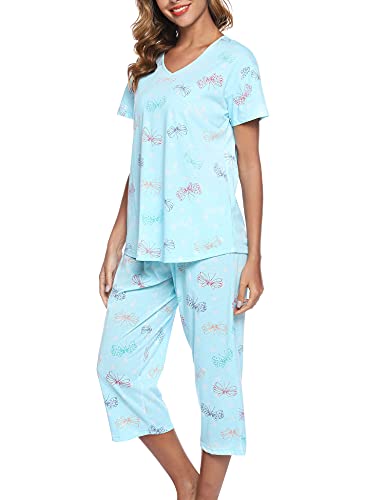 Cotton; construction not stated
ENJOYNIGHT cotton capri pajama set
A coordinated capri outfit with a short-sleeve top.
Check on AmazonContinue with the relevant guide
Back to Laundry & repair · Explore cotton pajamas
Sources and editorial method
This is a researched selection guide. We have not performed hands-on wear, washing or laboratory tests on the featured products.