Laundry & repair
Color Bleeding and Dye Transfer on Cotton Pajamas: What to Do Next
As an Amazon Associate I earn from qualifying purchases. Purchases take place on Amazon.
A pale pajama sleeve turning pink is an unmistakable laundry surprise. A blue panel becoming unevenly lighter is a different problem, even if both happened in the same wash. The first may involve color moving onto the garment; the second may involve color leaving it. Knowing which direction the change went determines whether stain-removal advice makes sense. Start by separating the pieces and documenting what you can see, then choose a response that protects the colors you still want to keep. This guide covers prevention and a realistic salvage decision without promising that every original shade can be restored.
Quick Answer
Separate the affected pajamas from the suspected dye source and keep them out of heat drying while you assess the damage. Check whether color was added to the cloth or the original color was lost. Rewashing or a compatible dye-transfer treatment may help added color, but no product can be assumed safe for every print, trim or cotton blend, and recovery is uncertain.
In this guide
- At the washer: separate, inspect and postpone heat
- Decide whether this is added color, lost color or a deposit
- The salvage decision depends on the whole color layout
- Use two catalog examples to ask better questions
- Prevent another transfer without creating an impossible sorting system
- Fading needs preservation decisions, not stain-removal promises
- Set a stopping point for salvage
At the washer: separate, inspect and postpone heat
Take the affected pajamas out of contact with the suspected source item. Check the rest of the load, including pale pocket linings and inside seams where transferred color may be easier to see. Do not move everything automatically into the dryer while you decide what happened. Retaining a clear picture of the wet result makes the next choice more informed.
Photograph the affected areas and the load's strongly colored items. Record the settings and any product you added, particularly if this was the first wash of a new purchase. If the garment's own contrasting trim appears to be the source, that is useful information for the manufacturer or seller. The source does not have to be another piece of clothing.
For a washable item, a prompt separate rewash using an allowed method can be a reasonable early response to loose transferred color. Inspect again before drying. Tide's dye-transfer guidance uses treatment and rewashing within the garment's care directions. Its product-specific soaking instructions should not be copied to a different cleaner with a different concentration or label.
Decide whether this is added color, lost color or a deposit
Added color may look like a new tint on an originally pale area, an irregular colored smear or a panel that has taken on the hue of another item. Compare an affected area with a protected seam allowance if there is one. The comparison can support your interpretation, although it cannot identify the dye or guarantee a treatment will remove it.
Lost color appears as a lighter area where the original shade is missing. A pale splash or broad fading is not necessarily a removable stain. Applying a remover designed to take color away cannot recreate the missing dye. If the garment was exposed to an unsuitable cleaning product, retain that information before considering any further treatment.
A deposited product may look like a whitish streak or cloudy patch and can be confused with fading. Inspect the dry texture once a permitted drying method is appropriate, and review dosing or direct additive contact. Our stiffness and residue guide helps with a coated or chalky result. Do not use dye remover just because the surface looks different.
The salvage decision depends on the whole color layout
Plain pale fabric without contrast details
A solid pale garment may offer a simpler assessment than a multicolor print, but pale does not automatically mean bleach-safe. Confirm the finished garment's restrictions, including any trim. The FTC care-label guidance explains the importance of warnings when a care process could harm a garment. Cotton content is only part of that decision.
The ACI's dye-transfer entry discusses packaged color removers for affected white fabrics, used as directed. That is a possible treatment category to investigate, not a blanket recommendation for off-white pajamas, elastic components or a garment with colored stitching. Read the exact product's permitted uses before deciding it belongs in your salvage plan.
Colored solids
With a colored garment, the desired original dye and the unwanted transferred color occupy the same fabric. A treatment capable of removing color may affect both. A concealed-area test is useful where the product directs it, but an apparently acceptable test does not establish that a large visible patch will return evenly to its previous shade.
Set a modest objective: reduce the unwanted tint without creating a more conspicuous light area. If the product is not intended for that colored fabric, stop there. A faint transfer mark may be less noticeable than an irreversible pale patch produced by an incompatible treatment.
Prints, stripes and contrasting piping
A white ground does not make a printed set an all-white load. Treat the colored motif, trim and stitching as part of the garment you are trying to preserve. A stripe that releases color onto the adjacent pale area creates an especially difficult situation: you want to remove the transferred dye while retaining it in the original stripe.
For complex prints, consult the maker or a textile-care professional when ordinary compatible rewashing does not help. The question is whether the proposed treatment can distinguish the unwanted color from the intended design. If nobody can establish that, experimentation carries a clear cosmetic risk even when the fabric itself remains intact.
Use two catalog examples to ask better questions
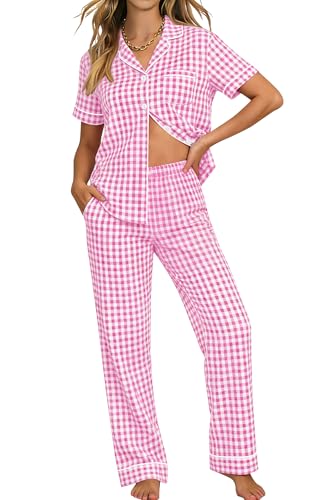
SWOMOG's listed 100% cotton button-down set in pink-and-white plaid is an example of a pale ground combined with intentional color. The title confirms that pattern description, not colorfastness or safe bleach use. If a customer owned this exact variation, the care instruction and treatment compatibility would matter more than the word white in the listing.
Amazon Essentials' men's cotton poplin pants in a cornflower-blue thin stripe provide another mixed-color example. Their listed pockets, elastic waist and drawstring also mean the finished garment contains layered details beyond a single flat panel. Neither these pants nor the SWOMOG set has been wash-tested by CottonPajamas.net. They are useful listing distinctions, not evidence that either model bleeds.
Browse the poplin collection for construction-based options and the pure-cotton collection for declared fiber content. Do not use either category as a proxy for dye performance. Stronger evidence would be an exact manufacturer care statement or product-specific testing, not the presence of cotton in a search result.
Prevent another transfer without creating an impossible sorting system
Keep unfamiliar dark or vivid garments away from pale pajamas during their early washes, particularly when the instruction calls for separate washing. Group laundry by compatible care and color behavior once you know the items. The ACI's laundry basics recommends considering color and care together and paying attention to new strongly colored pieces. One successful mixed load does not guarantee that every future combination will behave the same way.
Build a simple household handoff rule for exceptions. A separate small basket or a note identifying the new set is more reliable than expecting the person who unloads the washer to remember a conversation from last week. If the pajama top and bottom have different care instructions, keep that distinction visible too.
Remove a finished wet load promptly enough that you can separate and inspect it. Avoid storing damp contrasting pieces pressed together in a pile while deciding what to wash. Think about handwashing as well: a basin holding a dark top against pale trousers is still a place where color contact can occur. A hand method does not automatically eliminate transfer risk.
Cold washing may be compatible with your pajamas, but it should not be treated as a guarantee that every unstable dye will remain in place. Follow the item's wash instruction and retain sensible color separation. Likewise, a color-catching accessory should not replace a manufacturer's separate-wash direction or justify adding an untested red garment to whites.
Fading needs preservation decisions, not stain-removal promises
When the problem is gradual loss of color, inspect what the routine is asking of the garment. Are you exceeding the permitted temperature, leaving a treatment on longer than directed or repeatedly concentrating effort on one patch? Correct the identifiable mismatch. Turning the item inside out can reduce direct rubbing of its visible surface, but it does not reverse a shade already lost.
Decide how much appearance matters for this pair. Pajamas used only at home may remain perfectly useful with a softened shade, while a coordinated set chosen for a particular occasion may have a different cosmetic requirement. That is a preference decision. Avoid presenting ordinary fading as proof that the entire garment is unusable.
Home redyeing is a separate alteration project, not a dependable restoration step. Thread, trim and elastic may respond differently from the cotton body, and the resulting shade may be uneven. Before attempting it, obtain instructions appropriate to the exact dye and garment construction. A replacement bottom or continued wear of the faded piece may be simpler.
Set a stopping point for salvage
Stop when the original pattern starts losing color, the affected area enlarges, the fabric surface deteriorates or correctly directed attempts produce no useful improvement. Do not keep escalating cleaner strength in response to disappointment. Ask the actual retailer or manufacturer about an unexpected first-wash result, with photos and care details ready; CottonPajamas.net does not handle returns or warranty decisions.
For routine care after the incident, return to a manageable process from how to wash cotton pajamas. A dye-transfer accident should leave you with one clear prevention change, such as separating a new print, rather than a permanent seven-product laundry ritual.
Questions about this decision
Can I use color remover on white pajamas with colored piping?
Do not treat them as plain white fabric. The remover may affect the piping or other intentional color. Check both the finished garment’s instructions and the product’s permitted uses. If compatibility with the contrasting parts cannot be established, ask for professional or manufacturer advice before proceeding.
Will salt or vinegar permanently set the dye in a new pajama set?
Do not assume a household soak establishes colorfastness for an unknown dye and finish. Follow any separate-wash instruction, keep the new piece away from pale items and ask the manufacturer about recurring bleeding. Adding a kitchen ingredient does not supply product-specific dye-performance evidence.
Why did only one panel change color?
Possible clues include contact with another item, the garment’s own contrast details or a localized product deposit. Inspect both sides, compare protected areas and reconstruct the load before choosing treatment. A panel that gained a new tint needs a different assessment from one that lost its original dye.
Final Verdict
Separate the load and establish which color changed before reaching for a remover. Added dye may respond to appropriate rewashing or a compatible treatment, while missing original color requires a different expectation. Prints and contrast trim make salvage harder because the colors you want to keep share the same garment with the unwanted mark. Protect those remaining features, stop when treatment causes new damage and keep a practical sorting rule for the next wash. Recovering every shade is uncertain; preventing a repeat should be the part of the outcome you can control.
Explore the listed examples
As an Amazon Associate I earn from qualifying purchases. Purchases take place on Amazon.
Cotton; construction not statedSWOMOG 100% cotton short-sleeve button set
A short-sleeve button-front cotton outfit with a named pocket.
Check on Amazon poplin
Amazon Essentials cotton-poplin straight-fit pants
A woven trouser with named waist adjustment and pockets.
Check on AmazonContinue with the relevant guide
Back to Laundry & repair · Explore cotton pajamas
Sources and editorial method
This is a researched selection guide. We have not performed hands-on wear, washing or laboratory tests on the featured products.