Laundry & repair
Washing Cotton Pajamas at a Laundromat: Plan the Load and the Trip
As an Amazon Associate I earn from qualifying purchases. Purchases take place on Amazon.
At home, you may know which button starts the gentle cycle without looking. At a laundromat, a similar name can appear on a different machine with unfamiliar options, a payment timer and a queue behind you. That changes the job. The challenge is not discovering a special recipe for public washers; it is making the right garment decisions while working with equipment and space you do not control. This guide concentrates on preparation, controls, load economics and the trip home. Detailed stain chemistry and the basic cotton-washing routine belong elsewhere, so you can use this page as a practical visit plan.
Quick Answer
Prepare a compatible load at home, photograph the pajama care instructions and read the shared machine's controls before paying. Do not let a large drum or a bundled dryer cycle determine the garment's treatment. Measure the detergent for the product, load and machine, inspect finished laundry promptly, and plan clean transport plus an alternative drying arrangement for pieces that cannot tumble dry.
In this guide
- Sort the decisions before sorting the basket
- Read the machine before adding clothes or payment
- Pay for the right space rather than filling every inch
- Detergent concentration matters more than cap size
- Make the dryer decision while the washer runs
- Bring the laundry home in the condition you intended
- Which pajama features complicate a shared-laundry visit?
Sort the decisions before sorting the basket
- Group pajamas by compatible wash method, then consider colors and surfaces.
- Photograph the actual care instructions; keep separate records if the top and bottoms differ.
- Check whether any piece requires work before the trip or drying at home afterward.
- Pack known detergent directions, clean transport and a plan for damp garments.
Keep those instructions easy to find on your phone. Beside an unfamiliar machine, an accessible photograph is more useful than a vague memory that the set is cotton.
Identify anything that needs treatment before the trip. A stain requiring a controlled application is easier to assess with adequate light and time than on a narrow folding table while a cycle is waiting. Use the appropriate treatment guide at home and bring the garment ready for its permitted wash. Do not carry an open mixture or pour an improvised remedy into unfamiliar dispensers at the last moment.
Decide which items must return wet for drying elsewhere. Bring a separate arrangement for them, and make sure the drying space will be available when you get home. A flat-dry pajama top cannot be made tumble-dry compatible simply because the laundromat bundles washer and dryer credit. For the cleaning sequence itself, keep the main cotton pajama washing guide as the reference.
Read the machine before adding clothes or payment
Locate the temperature selection, cycle description and detergent instructions. Look for a model-specific instruction panel or ask the attendant about an unclear control. Do not assume that gentle, delicate and hand-wash labels mean the same mechanical action across machines. A garment requiring hand washing does not automatically qualify for a machine button with a comforting name.
Check whether optional settings can be changed before or after payment and whether the machine automatically adds any laundry products. If dosing is automatic, understand what it supplies before adding your own detergent. If the interface does not reveal a treatment you need to avoid, use another suitable machine or ask for help. Guessing at the controls to keep the line moving is not a good trade for an uncertain load.
Inspect the accessible drum and the area where you will place clothes for visible debris, forgotten items or obvious residue. Report a problem to staff rather than attempting to service the machine yourself. A clean-looking drum is not a certification of sanitation; this inspection is about visible condition and avoiding preventable contact with leftover objects or spills. No medical or disinfection claim follows from selecting a hot cycle.
Pay for the right space rather than filling every inch
A commercial washer can make it tempting to combine all the week's clothing into one load. Capacity does not make unlike care requirements compatible. Sleepwear, towels, jeans and delicate pieces may call for different handling even when they physically fit. Start with the pajama requirements, then add only suitable companions. The cost of a second smaller load may be easier to accept than a damaged favorite set.
If you have a choice of sizes, pick a suitable machine for the actual compatible load. Follow its loading guidance and leave the items able to move. Do not force tightly packed clothing into the drum because the advertised weight sounds larger than your basket. A volume estimate from a shopper is not the same as the machine's defined capacity measurement.
For a very small pajama-only group, consider coordinating it with other compatible laundry or waiting until you have a useful load, provided the clothing's condition and your rotation allow. That is a planning decision, not a reason to keep wearing soiled pajamas. The rotation guide can help create enough margin that every laundry trip is not an emergency.
Detergent concentration matters more than cap size
Bring the product directions or a photograph of them, especially if you carry detergent in a smaller container. A capful is not a universal unit across concentrated liquids. Match the product to the machine's requirements and measure for the load and stated soil conditions. Do not add extra simply because the drum looks more industrial than your home washer.
Whirlpool identifies excessive detergent and non-HE detergent in HE machines among possible contributors to visible residue. That is useful context for shared equipment, but it does not establish the detergent dose for a different manufacturer's commercial model. Use the instructions for the actual product and machine. Whirlpool's residue guidance explains the general issue.
Keep detergent and other laundry products in their appropriate compartments. If the drawer labels are worn, ask instead of guessing. Do not assume that a previous user's choice of compartment was correct. Also avoid topping up an unknown leftover product with your own. A straightforward known process is easier to evaluate if the result later looks coated or smells unexpectedly strong.
Make the dryer decision while the washer runs
Read the available dryer settings and compare them with each piece's permitted drying method. Commercial equipment can have different control layouts from home machines, and a timed package may exceed what your small set needs. Plan to remove the pajamas appropriately instead of giving every item the longest purchased cycle. Price structure is not a care instruction.
If tumble drying is prohibited, reserve a clean way to carry the wet item and head to the planned drying setup. Support it when moving it rather than lifting a water-heavy knit by the neckline. Do not seal it in a bag and leave it through the rest of a long errand day. Our dryer-free drying plan covers how to arrange the pieces once home.
For tumble-permitted clothing, separate articles that finish at very different stages when practical. Inspect thick pockets and waistbands rather than assuming a dry shirt proves the pants are ready. Follow the laundromat's rules for accessible lint filters and ask staff about anything outside ordinary user operation. Do not dismantle or alter shared equipment to make it match a preferred routine.
Bring the laundry home in the condition you intended
Use a clean bag or basket for finished pajamas rather than returning them against the same dirty surfaces that carried the unwashed load. A separate liner can be helpful if you have only one basket. Before folding on a shared table, check its visible condition and use your own clean surface barrier if needed. These are practical handling choices, not a promise of sterile laundry.
Count both pieces, check the drum for smaller items and inspect the pajamas before leaving. A fresh mark or leftover item is easier to investigate while the machine and staff are still available. Photograph an unexpected result and note the machine and settings if you need to discuss it. Avoid running repeated paid cycles without first understanding what went wrong.
Keep damp items separate from fully dry ones during transport. At home, finish their drying immediately in the prepared area, then inspect slow-drying layers before storage. The trip is part of the laundry process: a well-chosen cycle followed by hours compressed in a wet bag is not the finished result you planned.
Which pajama features complicate a shared-laundry visit?
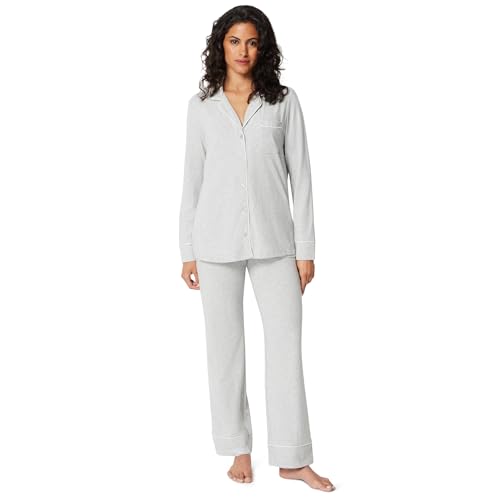
Amazon Essentials women's cotton-modal set has a notch-collar shirt and full-length elastic-waist pants in its verified title. That identifies several layers to check at drying time but does not supply a wash program. Amazon Essentials men's 100% cotton flannel pants have an elastic waist and drawstring; again, the title does not establish commercial-machine compatibility. Do not choose one of these products on a claimed laundromat-performance ranking that we have not measured.
Before buying, prioritize a clearly documented care method that the equipment you use can actually provide. A restricted flat-dry set may still work if you have room at home; a vague listing may require questions before purchase. Browse the men's collection or women's collection for style and fit, then use care compatibility as a final filter. Convenience is about the complete trip, not whether the title calls the garment easy care.
Questions about this decision
Should I choose hot water because the washer is shared?
Do not override the garment's permitted temperature solely because the equipment is public. This guide does not establish a sanitizing process. Choose a suitable machine in acceptable visible condition and use the allowed garment-care method; ask the attendant about equipment concerns.
Can I put pajamas in a larger load to save money?
Only when the added items have compatible care, color and surface requirements and the machine is loaded within its guidance. A larger drum does not remove those constraints. Plan compatible groups before the trip so the payment decision does not dictate fabric treatment.
What if the laundromat only offers a dryer setting I cannot verify?
Ask staff for the machine instructions or choose the drying alternative you prepared. Do not infer the heat level from the cycle name. If the garment requires flat drying, take it home supported and finish that process promptly.
Do I need separate bags for clean and dirty pajamas?
Separate clean transport is useful, though it can be a clean liner inside the same basket rather than another bulky container. Keep finished garments away from visible dirt and spills, and separate damp pieces from dry ones until the drying process is complete.
Final Verdict
A good laundromat visit is decided largely before the machine starts. Bring the instructions, build compatible loads and know where each piece will dry. Spend a minute understanding unfamiliar controls rather than letting capacity, payment bundles or a queue choose the treatment. Then inspect the result and transport it in a way that preserves the work. When a pajama set's requirements repeatedly clash with the available equipment, use that experience to guide the next purchase. The useful standard is a reliable routine you can complete, not a special public-laundry formula.
Explore the listed examples
As an Amazon Associate I earn from qualifying purchases. Purchases take place on Amazon.
Cotton; construction not statedAmazon Essentials cotton-modal long-sleeve set
A coordinated long-sleeve outfit when pure cotton is not essential.
Check on Amazon flannel
Amazon Essentials 100% cotton flannel pants
A cotton flannel bottom for someone who prefers a relaxed leg.
Check on AmazonContinue with the relevant guide
Back to Laundry & repair · Explore cotton pajamas
Sources and editorial method
This is a researched selection guide. We have not performed hands-on wear, washing or laboratory tests on the featured products.