Fabric notes
Cotton vs. Polyester Pajamas: Match the Fabric to Your Routine
As an Amazon Associate I earn from qualifying purchases. Purchases take place on Amazon.
The question often begins with a disappointing pair of pajamas: one stays damp, another clings, and a third comes out of the laundry looking untidy. Cotton versus polyester seems like a straightforward way to avoid repeating the mistake. It helps, provided you identify which problem you are solving. A fiber change may affect the result, but so can a different cut, a lighter fabric or a more suitable washing routine. This comparison separates those issues and gives you a practical way to choose between pure cotton, polyester and a declared blend without expecting one material to win every category.
Quick Answer
Cotton and polyester offer different starting points, but the finished fabric matters more than a simple natural-versus-synthetic verdict. Cotton is absorbent; polyester fabrics often emphasize wrinkle resistance and easy maintenance. Compare thickness, construction, fit and actual drying instructions. A blend can be useful, but its fiber percentages must be disclosed rather than assumed.
In this guide
- Choose the problem before choosing the fiber
- Moisture language needs four separate questions
- Wrinkle resistance has a real tradeoff value
- Use these cotton examples as distinct starting points
- Static, cling and surface feel need a garment-level check
- Laundry convenience means the whole cycle
- Three realistic choices
- Make the blend decision explicit
Choose the problem before choosing the fiber
Write down the main reason you are replacing your pajamas. Is it a damp feeling, dislike of a slick surface, excessive creasing, difficult drying, or a waistband that never sits comfortably? The first four can involve fabric choice; the last is primarily a garment-design issue. A useful comparison starts by refusing to let fiber content take responsibility for everything.
Also note what works in the pair you already own. If the shape is excellent, look for a similar cut in a different declared material. If the fabric is pleasant but the sleeves are too narrow, a new size or style may be more helpful than switching fibers. This keeps the purchase focused instead of turning it into an experiment with several moving parts.
A household that launders all sleepwear in one weekly load has different priorities from a traveler washing a single set in a sink. Neither routine is the correct one for everyone. Describe yours realistically, including the drying method you actually use, and compare products against it.
Moisture language needs four separate questions
Absorbency, movement of moisture through cloth, airflow and drying speed are different properties. CottonWorks treats these as distinct testing areas rather than one all-purpose cooling score. That matters when a listing uses breathable or moisture-wicking as if either word proves the whole garment will stay dry. CottonWorks quality-assurance guidance.
- Does the cloth take in moisture?
- Does moisture spread through it or remain localized?
- How readily can air move through the actual construction?
- How does the garment dry under the conditions in which you use it?
Cotton can absorb moisture, but that does not determine whether the fabric feels smooth, crisp or slippery against the skin. It does not mean a cotton pajama cannot become damp, nor does it establish a particular drying time. Conversely, a polyester label does not tell you that the garment has a tested moisture-management finish. Performance language needs evidence for the finished fabric.
If dampness is the main complaint, avoid comparing a thick cotton flannel with a very light polyester short set and attributing every difference to fiber. Coverage and fabric bulk have changed too. A more informative shortlist keeps garment format similar while you investigate the material and its stated characteristics.
Wrinkle resistance has a real tradeoff value
University of Georgia Extension identifies cotton as absorbent and notes polyester's wrinkle resistance, alongside potential static and oily-soil issues. Those are broad fiber-related tendencies, not measured results for the pajamas in this guide. They suggest what to investigate rather than which product to buy automatically. UGA fiber comparison.
If a pajama is worn only in bed, wrinkles may have little practical cost. You might fold it loosely and be satisfied. If you prefer a neat set for breakfast, video calls from home or shared accommodation, appearance after laundering may matter more. Decide whether you would iron or steam it, tolerate creases, or choose another fabric.
A polyester blend may be worth considering when reduced maintenance is a high priority. However, the word blend is incomplete without percentages and care directions. An item containing several fibers cannot be evaluated by assuming it combines every desirable property and none of the limitations of its ingredients.
Use these cotton examples as distinct starting points
| Verified catalog description | Why it belongs in the comparison | What it does not prove |
|---|---|---|
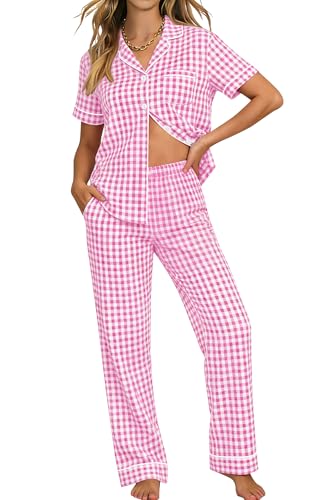
| SWOMOG short-sleeve button set, B0G6321MHS | Title explicitly states 100% cotton in a two-piece format | Measured cooling, drying speed or fabric weight |
| Amazon Essentials men's flannel pant, B07BJKKD2T | Title identifies 100% cotton flannel with a relaxed fit | That all cotton pajamas feel like flannel |
| Amazon Essentials women's cotton-modal set, B08XR16MCL | Shows why named blends must remain distinct | Any polyester content or a full blend ratio |
The flannel example is especially important. Cotton is not one uniform thin cloth. A brushed or substantial garment can meet a different need from a short-sleeve set, even with the same headline cotton percentage. Browse the flannel collection when that is the construction you want, not merely because you have decided cotton sounds preferable.
We do not have a verified polyester comparator in this article's linked selection, so the cards are cotton-side examples rather than a claimed head-to-head product test. The cotton-modal item is not a substitute for polyester evidence. If you are comparing it specifically, use the separate cotton and modal guide.
Static, cling and surface feel need a garment-level check
Do not confuse static cling with a close fit. A garment may sit against the body because of its cut, its drape, the surrounding textiles or static. If your existing pajamas cling, notice when it happens: immediately after drying, during movement, or throughout wear. That observation helps you ask a better question about the replacement.
Surface feel also varies within both fiber categories. Smooth, brushed, textured and densely constructed cloth can produce very different impressions. When shopping online, close-ups and a detailed description are more informative than a distant photograph, but they still cannot reproduce touch. Use your known fabric preferences as a reference rather than trusting soft as a complete specification.
Pay attention to the inside of the garment. A contrast seam, bulky pocket bag or rigid button placket may be more noticeable than the main fabric. If the catalog does not show those areas, ask for the relevant detail. Choosing cotton cannot solve an irritating design feature that remains unchanged.
Laundry convenience means the whole cycle
Easy care is not just whether the washing machine is allowed. Consider sorting, stain treatment, drying space and whether the garment needs reshaping or ironing. A pajama that fits smoothly into your routine is more likely to be worn than one whose maintenance you postpone.
Use the actual care label to determine the method. Avoid transferring a familiar cotton wash setting to a blend or assuming polyester can tolerate any dryer temperature. Trims, dyes and garment construction can impose their own limits. Our washing guide explains a care-label-first process without prescribing one cycle for every set.
If body oils or lotions are part of your routine, consider stain handling as well as ordinary washing. Do not wait for a fiber comparison to promise stain immunity. Both the soil and the finished fabric matter, and persistent problems deserve a targeted treatment approach rather than harsher washing by default.
Three realistic choices
You dislike the feel of your current synthetic pajamas
Try a clearly described cotton garment in a familiar silhouette. Keep the sleeve and trouser lengths similar so that you can judge the change more meaningfully. An explicit 100% cotton statement is useful if excluding polyester is the goal. Do not assume a generic cotton title excludes every other fiber.
You want fewer wrinkles and less handling
Look at the maintenance directions of actual polyester or blended candidates, alongside cotton options you like. Choose based on the method you can consistently follow. If you will never iron sleepwear, a fabric that needs pressing to meet your appearance expectations is a poor match, even if it has an appealing fiber story.
You are trying to stay comfortable in a warm room
Compare lighter constructions, room through the body and less coverage before expecting a material name to solve the entire situation. Keep bedding and room conditions in mind. No normal pajama should be presented as a treatment for night sweats or a guarantee of better sleep.
Make the blend decision explicit
A cotton-polyester blend can be a deliberate compromise, not a hidden downgrade. The important question is whether the compromise is yours to choose. Look for complete composition, then decide which attributes you are willing to trade. If pure cotton is essential, an unclear blend belongs outside your shortlist.
For your final comparison, give each candidate a short note: desired feel, suitable cut, manageable care and remaining uncertainty. Choose the garment with the strongest match to your priorities, not the longest list of unverified benefits. The pure-cotton selection is the appropriate next stop when the fiber requirement itself is settled.
Questions about this decision
Does cotton mean pajamas will always stay dry?
No. Absorbency and drying are different properties. Cotton can take in moisture and still feel damp under some conditions. A specific drying or moisture-management claim requires product evidence; sleeve length, fabric thickness and the room also affect the experience.
Is a cotton-modal set a cotton-polyester blend?
Not on the evidence of that name. Modal and polyester are different fibers. The Amazon Essentials cotton-modal set is described here exactly that way, with its ratio unspecified. Do not add polyester merely because the product is a blend.
Can I choose polyester pajamas purely to avoid ironing?
Wrinkle resistance can be a sensible priority, but check the finished garment's instructions and your expectations. Polyester content does not eliminate every crease or guarantee any drying method. Compare the actual item with cotton alternatives rather than relying on the material name alone.
Final Verdict
Choose cotton or polyester by the problem you need the pajama to solve. Cotton offers a useful starting point for someone who values an absorbent cotton feel; a polyester or declared blend may suit someone prioritizing a particular maintenance routine. Neither name guarantees comfort in every bedroom. Keep fit and construction comparable, investigate the claims that matter, and accept blends only when their composition is clear. The best result is a garment that matches your preferences through ordinary wear and laundry, not a theoretical winner in every fabric category.
Explore the listed examples
As an Amazon Associate I earn from qualifying purchases. Purchases take place on Amazon.
Cotton; construction not statedSWOMOG 100% cotton short-sleeve button set
A short-sleeve button-front cotton outfit with a named pocket.
Check on Amazon flannel
Amazon Essentials 100% cotton flannel pants
A cotton flannel bottom for someone who prefers a relaxed leg.
Check on Amazon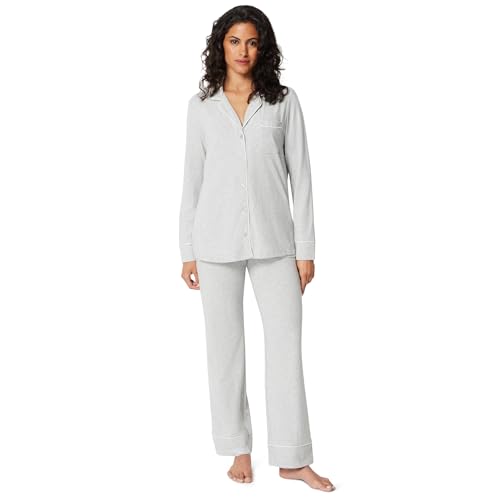 Cotton; construction not stated
Amazon Essentials cotton-modal long-sleeve set
A coordinated long-sleeve outfit when pure cotton is not essential.
Check on AmazonContinue with the relevant guide
Back to Fabric notes · Explore cotton pajamas
Sources and editorial method
This is a researched selection guide. We have not performed hands-on wear, washing or laboratory tests on the featured products.