Fabric notes
Cotton Gauze and Muslin Pajamas: Layers, Texture and Opacity
As an Amazon Associate I earn from qualifying purchases. Purchases take place on Amazon.
The appeal of gauze pajamas is easy to see: a softly rumpled surface, a relaxed shape and an impression of lightness. The details are less obvious. A set called muslin may also say double gauze, and linen-like can appear beside a 100% cotton claim. None of those combinations needs to be confusing once you separate fiber, structure and appearance. This guide follows the questions most useful for buying the finished garment: what the layers mean, how to judge coverage, where textured cloth can feel bulky, and what must be confirmed before treating a breezy-looking set as an everyday favorite.
Quick Answer
Gauze and muslin wording can overlap in pajama listings, so investigate the actual construction instead of relying on the name alone. Double gauze describes a layered fabric direction, but it does not guarantee opacity, a fixed thickness or a particular drying time. Confirm composition, inspect texture and seams, and choose enough room for the garment to move comfortably.

In this guide
- One listing can use several names for different reasons
- The XINJU set is a clear naming example
- Layers do not provide an automatic coverage guarantee
- Feel the texture where seams collect it
- Gauze needs a fit plan, not an oversized guess
- Decide whether you want texture before reaching for an iron
- Plan for laundering without inventing a shrinkage number
- Choose among three textured and smooth directions
One listing can use several names for different reasons
In pajama shopping, muslin and gauze sometimes appear together rather than as mutually exclusive categories. Do not assume two sellers use the terms with identical precision. Read the construction details, fiber statement and photographs as a group. The name is a starting clue, not a complete technical specification.
Double gauze points toward a fabric made with two layers. Kokka's own double-gauze range describes two delicate cotton layers, providing a concrete manufacturer example of that construction. It does not establish the weight, opacity or finishing of an unrelated pajama set. Kokka double-gauze fabric information.
Muslin alone does not tell you whether a pajama has one layer or more, nor does cotton establish the number of layers. Ask the seller to explain the garment when that distinction matters. A useful answer should describe the actual cloth rather than merely repeat that it is soft and breathable.
The XINJU set is a clear naming example
XINJU B08V1T64CP provides a concrete catalog example of 100% cotton double gauze. The label-reading guide explains its additional linen-like wording; here, the useful question is how the layered construction suits your preferred texture and coverage.
That makes the XINJU double-gauze product page a relevant place to investigate this style. It does not give us permission to invent a fabric weight, a shrinkage percentage or a claim that the set is opaque. Those questions remain dependent on the selected garment's further details.
Latuza's cotton seersucker capri set, ASIN B0F37SR7Q8, offers a separate textured option. Its button-up top and capri format are named, but seersucker should not be relabeled double gauze. The two may appeal to a shopper who enjoys texture while representing different fabric descriptions and potentially different fit needs.
A smoother woven reference is Jockey's 100% cotton poplin pant, ASIN B0GNG38X2R. Comparing it with a gauze set can help clarify whether your real preference is for cotton itself or for the rumpled surface. The format differs, so treat it as a texture direction rather than a complete head-to-head outfit match.
Layers do not provide an automatic coverage guarantee
Two layers can sound reassuring, but you still need to assess the finished cloth. The density of each layer, the way they sit together, the color and the amount of tension across the body all matter to what you can see through a garment. A double-gauze title is not a substitute for an opacity check.
Look first at the areas most likely to be pulled close: hips, thighs, chest and the seat. A garment that appears opaque when hanging freely can reveal more when stretched across a body. That is one reason to choose adequate room instead of relying on the layers to hide a too-close fit.
For a garment you can inspect, evaluate it under the lighting in which you expect to wear it. Bedroom lighting, a bright hallway and daylight can create different impressions. Use an ordinary, non-destructive check and follow the retailer's rules if a return is still being considered.
Do not assume that a darker color solves every coverage issue, or that every pale gauze is unusable. The specific cloth decides the result. If privacy outside the bedroom is a priority, our opacity guide provides a fuller inspection method.
Feel the texture where seams collect it
A softly textured body fabric can become bulkier at a hem, collar or waistband because several folded layers meet. Examine those junctions rather than judging only the broad panel. A pajama can look light while having a substantial placket or a thickly gathered waist.
Pay particular attention to side seams and the inside of the trousers. If you sleep on your side, a seam that seems unimportant while standing can become more noticeable. If you curl your legs, gathered cloth behind the knees may matter. These are personal contact preferences, not faults automatically associated with gauze.
Also consider whether the texture is pleasant on both sides. The exterior's visual crinkle may not tell you exactly what touches the skin. Close-up interior photographs are useful, but they still cannot reproduce touch. If surface feel is your strongest requirement, acknowledge that uncertainty before buying from a limited description.
Gauze needs a fit plan, not an oversized guess
A relaxed-looking fabric does not mean any oversized cut will be comfortable. Excess sleeve length, a low crotch or too much cloth at the waist can be inconvenient. The aim is room where movement needs it, not the largest available size.
Compare the garment dimensions with a comfortable woven pajama you own. Focus on rise, hip and thigh room, shoulder placement and sleeve length. If the seller provides only body measurements, understand that they are not the garment's dimensions. Our measurement guide explains that distinction.
Do not count on the cloth stretching enough to rescue an undersized choice. If a particular product claims stretch, investigate what that means and whether another fiber is included. Cotton content and a rumpled surface do not establish measured elasticity or reliable recovery.
These are adult fit considerations. A soft gauze appearance is not evidence that a garment is appropriate children's sleepwear, and adult loose-fit advice should not be transferred to children. Child sleepwear needs its own product-specific category and fit review.
Decide whether you want texture before reaching for an iron
Some shoppers buy gauze for its relaxed surface and then worry that it looks wrinkled after washing. Before trying to flatten it, compare the result with the intended product appearance and the care instructions. A deliberately textured garment does not have to look like a pressed poplin shirt to be ready to wear.
If you want a consistently smooth finish, another fabric may fit your expectations better. Buying textured cloth and repeatedly trying to remove its character can create unnecessary work. Conversely, if you enjoy the crinkle, ordinary folding may be enough for the look you want, provided the garment is clean and properly dried.
Use only the pressing or steaming method permitted for the finished item. Do not assume that a 100% cotton title authorizes any heat level, especially around buttons, elastic or other trims. The care label remains more useful than a general rule about the fiber.
Plan for laundering without inventing a shrinkage number
CottonWorks identifies construction, processing and finishing among the factors affecting shrinkage. The practical lesson is that a cotton percentage alone cannot predict how much a particular pajama will change size. A double-layer description does not provide that missing measurement either. CottonWorks shrinkage guidance.
Obtain the washing and drying directions before buying if preserving a particular length is important. Avoid choosing a garment that is already marginally short while assuming every cotton item will behave like another set you own. If the manufacturer gives product-specific size or care guidance, keep it attached to that item.
When drying, arrange the garment according to its instructions and allow the thicker areas to finish drying before storage. Waistbands, folded hems and overlapping pieces deserve attention. Do not promise that gauze will dry within a certain number of hours simply because the title sounds airy.
For a dimensional-change problem after laundering, use the shrinkage guide. This article's task is to help you anticipate the ownership questions, not to offer a universal recovery method for every muslin or gauze set.
Choose among three textured and smooth directions
| Direction | Investigate it when | Keep this distinction clear |
|---|---|---|
| Double-gauze cotton | You like a layered, softly textured appearance | Layer count is not an opacity or temperature rating |
| Seersucker cotton | You want a different named textured cloth | Seersucker is not a synonym for muslin |
| Poplin cotton | You prefer a more defined woven surface | A smooth appearance still needs composition and fit evidence |
Use the table to identify your fabric direction, then return to the actual garment. A capri set may be attractive because of its length, a poplin separate because you already own a suitable top, or a gauze set because you enjoy the surface. Those are specific reasons that make a purchase more predictable.
The fabric topic hub connects the construction comparisons, while the pure-cotton collection helps when composition is the settled requirement. Avoid treating every textured cotton item as interchangeable simply because each photographs well in a relaxed bedroom setting.
Questions about this decision
Are muslin and double gauze always the same thing?
No universal equivalence should be assumed from pajama titles. Some listings use both terms, including the XINJU example, but the actual layers and construction need to be described. Ask about the finished fabric rather than relying on a name that different sellers may use differently.
Does double gauze mean I will not need to check opacity?
No. Layer count alone cannot establish coverage. Evaluate the actual fabric, color and fit, especially where it lies closely across the body. If the description lacks that information, keep opacity as an open question rather than treating two layers as a guarantee.
Should I iron all the crinkles out of gauze pajamas?
First decide whether the texture is part of the intended appearance and read the garment's pressing instructions. If you bought the fabric for its relaxed surface, flattening every crinkle may be unnecessary. If you consistently want a smooth look, a different cotton construction could be more suitable.
Final Verdict
Choose gauze or muslin pajamas because the actual texture, layers and cut suit you, not because the name promises effortless lightness. XINJU's title offers a clear cotton double-gauze example, while seersucker and poplin provide distinct alternatives worth understanding. Check coverage where the garment fits closely, inspect the bulk at seams and accept only a care routine you can maintain. When you like the fabric's natural-looking rumple and have enough documented room to move, the choice becomes practical. When you want smoothness or guaranteed opacity, investigate those requirements directly.
Explore the listed examples
As an Amazon Associate I earn from qualifying purchases. Purchases take place on Amazon.
gauzeXINJU 100% cotton double-gauze set
A textured cotton set for readers investigating double gauze.
Check on Amazon seersucker
Latuza cotton seersucker capri set
A textured woven-style option with cropped pants.
Check on Amazon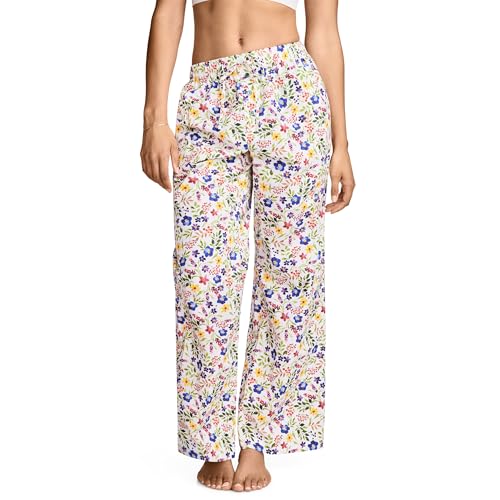 poplin
Jockey women’s 100% cotton poplin pants
Pure-cotton poplin trousers as a replacement or mix-and-match bottom.
Check on AmazonContinue with the relevant guide
Back to Fabric notes · Explore cotton pajamas
Sources and editorial method
This is a researched selection guide. We have not performed hands-on wear, washing or laboratory tests on the featured products.