Fabric notes
Cotton vs. Linen Pajamas: Texture, Creases and the Right Kind of Room
As an Amazon Associate I earn from qualifying purchases. Purchases take place on Amazon.
If you enjoy a linen shirt, linen pajamas may seem like an obvious next purchase. Yet clothing worn under bedding asks different things of its fabric: seams stay in contact longer, trouser knees bend repeatedly, and a texture you like outdoors may feel different at bedtime. Cotton presents several alternatives, from smooth woven cloth to jersey and textured gauze. This guide helps you decide which qualities you are really seeking. It separates genuine linen content from a linen-like appearance and treats wrinkles, drape and room as practical preferences rather than automatic signs of either quality or discomfort.
Quick Answer
Cotton and linen are different plant fibers, and cotton-linen blends need their own percentage check. Choose the actual cloth by texture, room through the garment and your tolerance for creases. Linen-like wording does not establish linen content. A textured cotton gauze or seersucker can be an alternative worth investigating, but it should be described accurately.

In this guide
- Identify whether you want linen fiber or a linen look
- A cotton example that makes the distinction visible
- Let your existing clothes provide a texture reference
- Room matters differently from stretch
- Creases are part of the ownership decision
- Blends need a specific reason to be on your list
- Temperature expectations should remain modest
- Choose a fabric you can live with after the first wear
Identify whether you want linen fiber or a linen look
The Alliance for European Flax-Linen and Hemp distinguishes flax as the plant and fiber from linen as the resulting textile terminology. Cotton is a different fiber. A cotton-linen garment therefore needs a blend statement, while a cotton garment advertised as linen-like may simply be describing texture or appearance. Alliance flax and linen terminology.
Ask yourself which part of linen appeals. It may be an irregular-looking surface, a relaxed drape, an association with summer clothing, or a preference for flax fiber itself. Only the last requires actual linen content. Naming the preference opens up relevant alternatives without pretending they are the same material.
If fiber identity is essential, do not settle for a title that says linen style. If appearance is the main goal, it is reasonable to investigate cotton gauze, seersucker or another documented texture. The important point is to choose knowingly rather than discovering that the material story was only a styling phrase.
A cotton example that makes the distinction visible
XINJU’s linen-like double-gauze set remains a cotton option, so it cannot satisfy a requirement for actual linen fiber.
Latuza's seersucker capri set, ASIN B0F37SR7Q8, names cotton, a button-up top and capri bottoms. It provides another textured-cloth direction, but the retrieved title does not give the exact cotton percentage. The short trouser length is also part of its appeal and should not be confused with a fiber advantage.
Jockey's poplin pant, ASIN B0GNG38X2R, explicitly states 100% cotton poplin. That is a more straightforward woven-cotton reference for someone who wants a different surface from gauze or seersucker. None of these catalog examples establishes a linen option, and we do not invent one to make the comparison look complete.
Explore the XINJU double-gauze set as a linen-like cotton example and the Latuza seersucker set as a separate texture. The distinction between them is useful even before you decide whether a genuine linen garment is necessary.
Let your existing clothes provide a texture reference
Find a garment whose surface you enjoy, then notice why. Is it smooth against the inside of the arm? Does it have a dry or softly raised feel? Do you like a visible texture but dislike feeling it against the skin? These questions are more specific than asking whether cotton or linen is softer.
Do the same with a garment you rarely wear. Perhaps its seams are the problem rather than its fabric, or perhaps you dislike how it stiffens after your usual laundry routine. Identifying the cause prevents you from rejecting an entire fiber because one item was poorly suited to you.
When evaluating a new pajama, give the inside surface more weight than the styled exterior. A decorative texture can look attractive without telling you how the back of the fabric feels. If only distant product photographs are available, treat touch as unresolved. You can still shortlist the item, but do not assign it a softness score you cannot support.
Room matters differently from stretch
A woven pajama needs enough room for sitting, bending and turning. Do not assume that a relaxed linen aesthetic means the garment is generously cut. The photograph may show a model wearing a larger size, or the trousers may be roomy at the ankle while remaining close through the seat.
Compare the rise, hip room, thigh width and sleeve dimensions where available. If the fabric is not described as stretch, do not plan on it yielding enough to correct a tight fit. Equally, avoid choosing excessive width merely to compensate for a short rise or a restrictive armhole.
The same principle applies to woven cotton. Jockey's poplin pant may appeal as an explicit cotton option, but its label does not tell us the dimensions of the chosen size. Use the pajama measurement method to compare the garment with something that already fits. Material choice should follow a plausible fit, not replace it.
Creases are part of the ownership decision
University of Georgia Extension notes wrinkling as a characteristic to consider for both cotton and linen, with linen particularly prone to it. That broad tendency is useful background; finishing and garment construction still affect the actual result. UGA fiber characteristics.
Decide what a crease means to you. For private sleepwear, it may be irrelevant. For a set you want to wear while hosting guests, it may affect whether you reach for it. If you love a relaxed, textured appearance, pressing every fold could be work you neither need nor want to do.
Ask whether you are buying the garment for its freshly styled appearance or for how it will look in your real routine. Product photography often presents fabric under ideal conditions. A more useful expectation includes sitting, folding, laundering and putting it away. There is no universal requirement that pajamas look freshly pressed.
If wrinkles do matter, confirm the item's ironing or steaming directions before purchase. Do not apply a high-heat method just because the fiber is cotton or linen. Trims and blends can change the appropriate care. Our wrinkle guide handles that practical decision in more detail.
Blends need a specific reason to be on your list
| Candidate | Why you might consider it | Question to resolve |
|---|---|---|
| Explicit cotton pajama | You already like a particular cotton construction | Does the cut and texture match that reference? |
| Explicit linen pajama | You specifically want flax-derived cloth | Are composition, fit and care adequately documented? |
| Cotton-linen blend | You like the actual mixed fabric | What are the percentages and finished-garment instructions? |
| Linen-like cotton | You want a textured appearance while retaining cotton | Is the description clearly a style claim? |
A blend is not automatically the perfect middle point. Its feel and behavior depend on the proportions and construction. Do not assume it has exactly half the creasing, half the texture or the best features of each fiber. Those attractive ideas need actual garment evidence.
If a blended candidate is described well and suits you, there is no reason to reject it for being a mixture. But if you are trying to avoid a particular fiber, the full composition remains decisive. Linen-like and linen blend are different routes, and the product should say which route it takes.
Temperature expectations should remain modest
Neither a linen name nor a cotton name is a bedroom temperature setting. Coverage, thickness, construction, fit and bedding all remain relevant. A full-length set and a capri set can feel different partly because one covers more of the leg. Keep that obvious difference in the comparison.
If you tend to feel warm, investigate the cloth rather than relying on summer styling. Ask whether a lining is present, whether the top is substantial, and whether the fit leaves comfortable space. Do not infer measured breathability from a loose-looking photograph or from a pale color palette.
If you prefer more coverage, a longer garment may still be right even in a relatively light cloth. The useful aim is to balance your own preferences rather than maximize a single adjective such as airy. The capri collection helps explore one coverage option without pretending every item has the same material performance.
Choose a fabric you can live with after the first wear
Before buying, picture the set after a normal week: where it will dry, how it will be folded, and whether you will mind its relaxed appearance. If your imagined routine involves care you consistently avoid, change the candidate rather than assuming a new fabric will change your habits.
For someone new to textured pajamas, start with a clearly described garment and a familiar cut. That makes the surface feel the main new variable. If you already know you love linen against the skin, focus on finding a documented linen item whose dimensions and care suit sleepwear use.
The gauze and muslin guide is the next step when linen-like cotton remains appealing. If you want actual linen, keep that requirement explicit and do not accept a cotton alternative merely because its photographs evoke the same mood.
Questions about this decision
Does linen-like mean a pajama contains flax fiber?
No. It can describe appearance or texture. The XINJU example explicitly combines linen-like wording with a 100% cotton double-gauze description. A genuine linen or cotton-linen garment needs a composition statement that names linen rather than only suggesting its look.
Is a cotton-linen blend automatically less wrinkled than linen?
You cannot predict the exact result from the blend name alone. Percentages, construction and finishing matter. Compare the actual garment's appearance and care requirements, and avoid assuming a mixture provides a fixed compromise between two broad fiber tendencies.
Should woven linen pajamas fit like a stretchy T-shirt?
Do not expect the same behavior unless the particular garment documents appropriate stretch. A woven pajama generally needs its cut to supply comfortable movement room. Check the rise, hips, sleeves and other relevant dimensions rather than relying on the fabric to compensate for a close fit.
Final Verdict
Choose linen when you want the actual fiber and have found a garment whose texture, cut and care work for you. Choose cotton when a specific cotton construction gives you the feel you prefer, whether that is poplin, jersey or textured gauze. A cotton-linen blend is another option to evaluate on its own evidence. The useful purchase is the one that remains appealing after sitting, washing and ordinary creasing. Keep linen-like styling separate from linen content, and let a realistic week of ownership finish the comparison.
Explore the listed examples
As an Amazon Associate I earn from qualifying purchases. Purchases take place on Amazon.
gauzeXINJU 100% cotton double-gauze set
A textured cotton set for readers investigating double gauze.
Check on Amazon seersucker
Latuza cotton seersucker capri set
A textured woven-style option with cropped pants.
Check on Amazon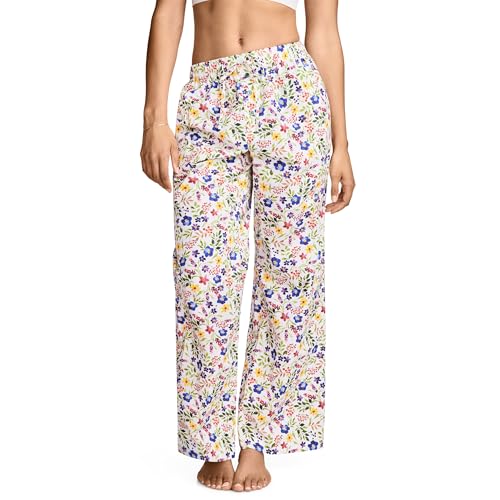 poplin
Jockey women’s 100% cotton poplin pants
Pure-cotton poplin trousers as a replacement or mix-and-match bottom.
Check on AmazonContinue with the relevant guide
Back to Fabric notes · Explore cotton pajamas
Sources and editorial method
This is a researched selection guide. We have not performed hands-on wear, washing or laboratory tests on the featured products.