The fitting room
When a Pajama Set Fits on Top but Not on the Bottom
As an Amazon Associate I earn from qualifying purchases. Purchases take place on Amazon.
The top looks right, the pants pull when you sit, and ordering the next size leaves you with a shirt that hangs off the shoulders. This is not an unusual failure of online pajama shopping: a matched set ties two garments to one size choice even when your body does not fit that combination. Repeating the same purchase in another letter may preserve the mismatch. A better approach is to decide whether the problem is size, cut or the restriction imposed by buying both pieces together, then choose the least complicated way to resolve it.
Quick Answer
When a pajama set's two halves need different sizes, compare separates first. If you prefer a fixed set, identify which part is restrictive and whether another cut could solve it without adding unwanted bulk elsewhere. A drawstring can adjust a waistband but cannot enlarge a tight seat or top. Alteration is most plausible for localized excess, not missing fabric.

In this guide
- Put each half on a separate scorecard
- Case one: a suitable top, pants that pull at the seat
- Case two: comfortable pants, a restrictive shirt
- Case three: both pieces fit in width but only one fits in length
- Build around a separate pant or a complete set
- Use alteration only when the change is specific
- Ask which inconvenience will repeat
- Keep a record of the combination that works
Put each half on a separate scorecard
Evaluate the top without letting the pants influence your judgment. Record whether the shoulders, chest, armholes, sleeves and body length work. Then assess the pants at the waist, seat, thigh, rise and hem. Mark each area as comfortable, too restricted or more generous than you want. A single “set too small” note loses the information needed to improve the next choice.
Also distinguish appearance from use. A loose shirt may look different from the photograph while remaining comfortable, which can be acceptable if you like that style. Pants that require adjustment whenever you sit present a more concrete fit problem. The aim is not to make every panel equally close to the body; it is to identify which compromises you actually mind.
Once the two scorecards are complete, look for a pattern. Is one whole garment wrong while the other works? Or is there one specific restriction, such as a narrow thigh, within an otherwise satisfactory pair? The first pattern favors separate sizing. The second may be solved by a different cut rather than a different overall size.
Case one: a suitable top, pants that pull at the seat
Imagine a button-front shirt that closes comfortably and lets the wearer reach forward. The pants pass over the hips, but sitting drags the back waistband downward. Loosening a drawstring may reduce waist tension without addressing the force from the seat. The next question is about hip room and rise, not whether the shirt needs to become larger.
Compare pants with a different seat and thigh arrangement. If the original pair was relatively straight through the upper leg, another cut may fit the same general waist range more comfortably. Ask for the relevant garment dimensions when available. Do not assume the word relaxed publishes a standardized amount of extra room.
If the set cannot be purchased in mixed sizes, consider keeping the desired top format and finding separate bottoms. A plain navy pant and a printed shirt can form a deliberate combination. It is more useful to coordinate pieces you enjoy wearing than to preserve an exact print match at the expense of seated comfort.
Case two: comfortable pants, a restrictive shirt
A different wearer may find the trouser waist and hips ideal while the top gaps across the bust or binds at the upper arm. Buying a larger complete set could solve the shirt and introduce a waist that needs heavy gathering. Start by identifying whether the restriction is across the chest, through the shoulders or within the sleeve.
A pullover and a button-front top may arrange their room differently. Changing the top format can be worth comparing, but no format universally solves a full bust or broad shoulder. A stretchy pullover can still be narrow at its hem, while an open-front shirt can have restrictive arms. Judge the actual cut, not the garment category's reputation.
Separate top sizing lets the wearer retain well-fitting pants. If the retailer sells only complete sets, calculate the practical cost of that restriction. Buying two sets to combine sizes leaves two additional pieces that may not be useful. It is not automatically a better value just because the matching fabric looks convenient.
Case three: both pieces fit in width but only one fits in length
A long torso with regular-length legs, or the reverse, can create a mismatch even when chest and hip measurements fall in one chart row. The needed change is distribution of length. Moving up a size may mainly add width, and a tall set may add length to a part that did not need it.
Find the harder-to-fit half first. U2SKIIN's women's tall-marketed organic cotton bottoms are a real catalog example of a separate lower garment. The title does not supply an inseam, so it still requires measurement verification. Its value in this decision is that the pants do not force you to choose a matching tall shirt.
Likewise, a petite set can be unhelpful if only the legs need shortening and the torso needs regular length. A straightforward hem alteration may work when everything above it fits. Compare petite proportion choices and tall length choices according to the specific mismatch.
Build around a separate pant or a complete set
Nautica's men's woven 100% cotton pajama pant is sold as a bottom, while U2SKIIN's men's 100% cotton button-down pajamas are a set. These are two different purchasing structures, not just competing fabrics. The separate pant leaves the top open to independent choice; the complete set provides coordination while tying the two pieces to its available sizing arrangement.
For women's separates, Jockey's 100% cotton poplin pant listing offers another bottom-only example. Its title does not establish the precise waist construction, hip dimensions or matching top availability. Treat it as a starting point for a lower-half comparison, not as a confirmed fix for a particular shape.
These choices illustrate the decision without inventing exact garment dimensions. The men's collection and women's collection can help you compare set and separate formats. Make sure the piece count is clear on the selected listing; a product photograph showing a shirt does not necessarily mean that shirt is included.
Use alteration only when the change is specific
Shortening a simple hem or reducing localized excess can be more plausible than trying to enlarge a tight garment. But the actual seam, trim and construction decide the job. Piping, cuffs, pockets close to a side seam and decorative borders may change the labor or finished appearance. A tailor should see the garment before you count on an alteration.
Taking in a waist does not automatically correct a low crotch or excess hip volume. Narrowing a shirt may shift the relation between armholes and body. Enlarging a restricted seat would require available fabric that product listings rarely document. Avoid buying an uncomfortable set on the assumption that tailoring can solve anything.
Do not use shrinking as a way to size the larger half down while preserving the smaller half. You cannot count on a precise dimensional change, and the garment may change in several directions. CottonWorks' dimensional stability overview explains why construction and processing affect shrinkage. A controlled alteration and a hotter wash are different kinds of intervention.
Ask which inconvenience will repeat
Buying separate pieces can involve more comparison at the start. A poor matched set can involve tugging, rolling and readjusting every time it is worn. Consider the recurring experience rather than the convenience of a single product page. A coordinated outfit does not need identical labels to be a complete solution.
There are reasonable occasions to accept a looser half. If the pants fit and you actively like an oversized top that stays comfortably arranged, the set may work. If a larger top slips at the neckline or sleeves interfere with ordinary tasks, the excess is no longer merely a style preference. Describe the effect, not just the amount of spare cloth.
Before an exchange, reread your two scorecards and select the one change most likely to resolve the mismatch. That might be another cut, a separate bottom, a different sleeve format or a shorter hem. Changing several things blindly makes it harder to learn why the next option succeeds or fails.
Keep a record of the combination that works
Once you find suitable pieces, record their model names, selected sizes and useful garment measurements. Note their washed condition and care requirements. A later repurchase should still check the current product details, but this record gives you a stronger reference than remembering that one brand “ran big.”
The measurement guide can help create that note. Include the fact that top and bottom differ if they do. Separate sizes are not an error to hide; they are information that makes future choices more accurate.
Questions about this decision
Should I always size a pajama set to my larger measurement?
The restrictive dimension deserves attention, but that rule is incomplete if the resulting other half becomes unusable. Evaluate the whole combination. A size that accommodates the hips but leaves an unstable neckline may be a reason to choose separates or another cut.
Can a drawstring make oversized pajama pants fit properly?
It can reduce the waist opening within the design’s adjustment range, but it does not remove extra rise, seat volume or leg length. Heavy gathering can also feel bulky. Use a drawstring for reasonable waist adjustment, not as a substitute for the rest of the pant fitting.
Is it worth buying two sets to mix the sizes?
Only if the resulting pieces and actual total cost make sense for you. First investigate separately sized garments. Buying two sets solely to create one outfit can leave unused clothing, and the retailer may not allow returning a mixed or incomplete set.
Final Verdict
A mismatched pajama set is a two-garment problem, so evaluate and solve it that way. Keep the half that works as your reference, identify whether the other needs more room, a different cut or a different length, and compare separate pieces before committing to a compromise. The Nautica, Jockey and U2SKIIN examples demonstrate that your purchase can be organized around an individual bottom rather than a compulsory set. Choose alterations for defined, realistic changes. The aim is a coordinated outfit you can wear comfortably, even when the labels inside its two halves do not match.
Explore the listed examples
As an Amazon Associate I earn from qualifying purchases. Purchases take place on Amazon.
wovenNautica men’s woven 100% cotton pajama pants
Woven pure-cotton pants instead of a knit or complete set.
Check on Amazon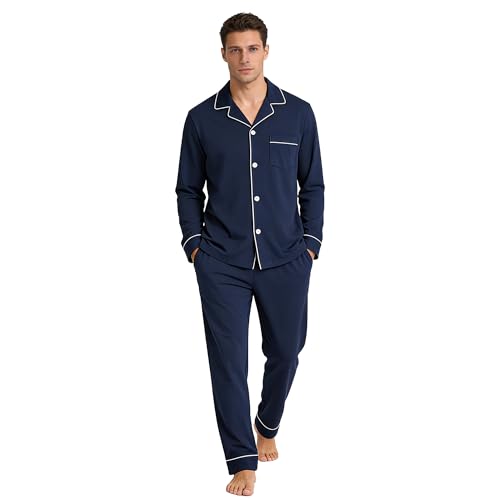 Cotton; construction not stated
U2SKIIN men’s 100% cotton button-down set
A complete button-down cotton outfit for men.
Check on Amazon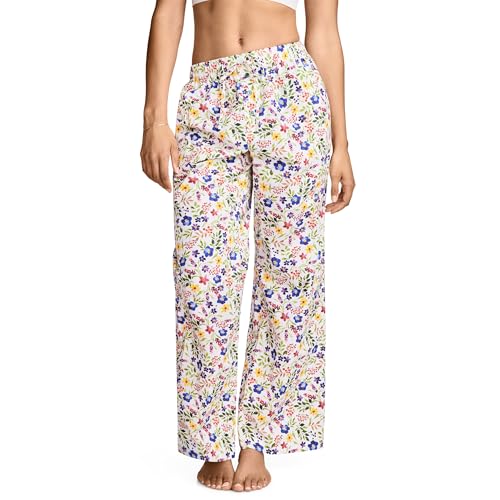 poplin
Jockey women’s 100% cotton poplin pants
Pure-cotton poplin trousers as a replacement or mix-and-match bottom.
Check on Amazon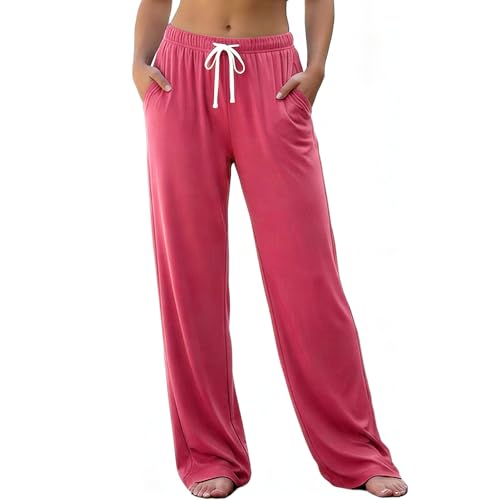 Cotton; construction not stated
U2SKIIN organic-labeled tall cotton pants
Someone starting a search for tall cotton sleep trousers.
Check on AmazonContinue with the relevant guide
Back to The fitting room · Explore cotton pajamas
Sources and editorial method
This is a researched selection guide. We have not performed hands-on wear, washing or laboratory tests on the featured products.