Fabric notes
Cotton Poplin vs. Cotton Sateen Pajamas: Crisp or Smooth?
As an Amazon Associate I earn from qualifying purchases. Purchases take place on Amazon.
You can want cotton pajamas and still dislike half the cotton fabrics you encounter. A crisp shirt-like cloth may feel orderly to one person and too structured to another, while a smoother surface may seem elegant or simply too slick. Poplin and sateen help describe that choice, but neither word completes it. This guide uses surface, drape and garment construction to make the comparison practical. It also explains why stretch poplin and cotton sateen need careful naming, so that a preference about weave does not accidentally become an unsupported claim about fiber purity or tested performance.
Quick Answer
Poplin and sateen describe different woven-fabric directions, not different cotton percentages. Poplin is a useful starting point for a more defined, crisp impression; sateen may appeal for a smoother, more lustrous surface. Evaluate the actual cloth, cut and composition. A stretch-poplin set may be blended, and a sateen label does not by itself prove cotton content.
In this guide
- Choose the surface you want to live with
- Poplin has both pure-cotton and stretch versions
- Sateen must still identify its fiber
- Match drape to the parts of the garment
- Surface smoothness brings handling questions
- Appearance after washing matters more than studio sheen
- A practical comparison for three different shoppers
- What to record before the final choice
Choose the surface you want to live with
Picture the pajama after you have worn it for an evening, rather than only in a product photograph. Do you want a shirt that keeps a defined outline, or one that falls into smoother folds? Do you prefer a matte impression, or is some sheen part of the appeal? These questions identify the result you want before fabric names complicate the decision.
Poplin is generally associated with a plain-weave direction, while sateen uses a satin-type structure. CottonWorks describes the greater interlacing of plain weave and the longer surface floats associated with satin structures. Those differences help explain a contrast in surface and drape, but the finished cloth still varies. CottonWorks basic woven designs.
Do not turn those tendencies into a promise that every poplin is stiff or every sateen is slippery. Yarn, thickness and finishing can change the impression. A specific product description and a close view of the actual garment are more useful than a rigid rule based on one word.
Poplin has both pure-cotton and stretch versions
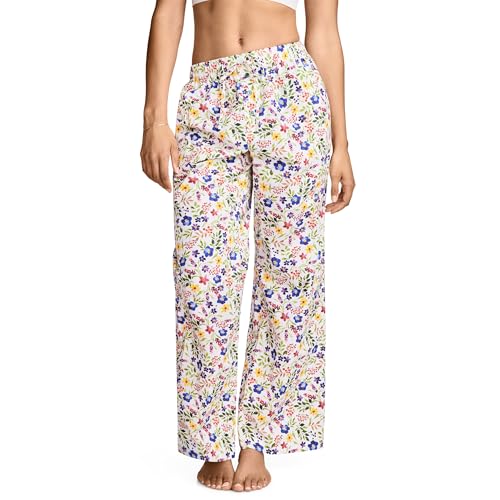
Jockey's women's poplin pant, ASIN B0GNG38X2R, explicitly states 100% cotton. It is a clear example of a poplin item with a percentage claim. That still leaves its fabric weight, selected-size dimensions and care method to be checked. The weave name does not supply those missing measurements.
Amazon Essentials' women's stretch-poplin set, ASIN B0FT2JT714, describes a cotton stretch-poplin fabric, a long-sleeve button-down shirt and pants. We treat the stretch version separately rather than shortening its name to pure cotton poplin. Its retrieved title does not identify the blend ratios or a measured amount of stretch.
Amazon Essentials' men's poplin pants, ASIN B0FHPZ6497, name a straight fit, pockets, an elastic waist and a drawstring. They offer another poplin format but do not state a cotton percentage in the retrieved title. A useful comparison preserves all three evidence levels instead of giving every poplin product the strongest claim found anywhere in the group.
| Example | Composition wording | Format |
|---|---|---|
| Jockey poplin pant | 100% cotton | Women's separate |
| Amazon Essentials stretch-poplin set | Cotton stretch poplin; full breakdown not supplied here | Long-sleeve shirt and pants |
| Amazon Essentials men's poplin pants | Cotton poplin; percentage not supplied here | Straight-fit separate with named waist features |
Use the Jockey poplin page if a stated pure-cotton separate is your starting requirement. Use the stretch-poplin set page if the shirt-and-pants format interests you and you can clarify the full composition before deciding.
Sateen must still identify its fiber
Sateen is not a synonym for 100% cotton. If a product is being compared as cotton sateen, its composition needs to support the cotton part of that description. A glossy appearance cannot settle it, and a silk-like adjective cannot establish silk either.
This article does not insert an unverified sateen product into the affiliate selection. The linked catalog examples are poplin items. You can use them as one side of the comparison while investigating a specific sateen garment whose composition and details are available. The absence of a matching product is better kept visible than filled with an invented recommendation.
If you encounter a product described only as satin, decide first whether you are asking about fiber or surface. Our cotton and silk comparison explains that distinction. Here the purpose is narrower: comparing two cotton woven-fabric directions once the actual cotton claim has been established.
Match drape to the parts of the garment
The shirt front
A more defined front can be appealing if you like a traditional pajama-shirt look. Check how the button placket sits and whether it pulls across the chest. A smooth drape can also look attractive, but it does not compensate for inadequate room. The shape should work when you sit and reach, not only when standing still.
The trouser leg
Look at whether the leg hangs freely or collects in folds around the knees and ankles. A fluid-looking cloth in an overly long trouser can still bunch. A crisper cloth with appropriate length may feel less intrusive. This is why inseam and rise deserve attention alongside weave.
The collar and cuffs
These areas can include extra layers, seams or stiffening. A smooth body fabric does not guarantee a flexible collar. If you sleep with an arm under your head or dislike fabric around the neck, inspect those parts specifically. The most visible area in a photograph may not be the one you notice most while wearing the set.
Surface smoothness brings handling questions
A longer-float woven surface can be more vulnerable to catching or snagging than a tightly interlaced construction, depending on the actual fabric. CottonWorks discusses snagging among the considerations for satin structures. Treat this as a reason to examine the garment and your use, not as a prediction that every sateen pajama will snag.
Think about contact with rough furniture, exposed fasteners, jewelry or pet claws. If those are routine in your home, a delicate-feeling surface may deserve more careful consideration. You do not need to perform destructive tests; you need to decide whether the cloth seems compatible with ordinary wear in your environment.
Inspect an arriving garment for pulled threads before removing tags or washing it. If you see an issue, use the retailer's process rather than trimming a thread and hoping the surface is unaffected. CottonPajamas.net does not handle the sale or returns, so the seller's current terms remain the relevant ones.
Appearance after washing matters more than studio sheen
Ask how much neatness you expect between washes. Some wearers enjoy the relaxed creases of cotton pajamas. Others want a set that looks polished whenever it comes out of a drawer. Neither preference is wrong, but the second may create more maintenance work.
Read the finished garment's pressing and drying directions. Do not assume that poplin tolerates any iron temperature or that sateen always needs special cleaning. Composition, finish and trims can affect the instructions. If you cannot obtain them and care is a deciding factor, treat that as a meaningful gap.
It is also worth considering storage. Folding a complete set into a crowded drawer is different from hanging a shirt and loosely arranging the trousers. Choose a fabric whose appearance you can accept under the storage conditions you actually have. A purchase should not require an imaginary dressing room to remain enjoyable.
For specific crease-removal choices, see the ironing and steaming guide. This comparison should help you anticipate the work, while the care article handles how to follow the appropriate method.
A practical comparison for three different shoppers
- The traditional-shirt wearer: begin with poplin candidates and inspect the collar, placket and trouser room. Consider sateen if its actual surface appeals, rather than assuming a shinier cloth is automatically an upgrade.
- The smooth-surface seeker: investigate a documented cotton-sateen item, but keep fit and snag sensitivity in view. A surface preference does not remove the need for adequate garment dimensions.
- The movement-first shopper: compare room in the cut and any verified stretch information. Stretch poplin is a separate option; its name is not evidence of pure cotton or quantified recovery.
These routes may lead to different products even within the same household. One person may value a neat woven shirt, while another wants a simple separate with a familiar waist. The goal is a clear reason for choosing a fabric, not agreement on a universal winner.
What to record before the final choice
For each candidate, note composition, surface impression, garment measurements, fastening details and care. Use unknown where information is missing. A table with a few honest gaps is more useful than one filled with assumed softness, breathability and durability scores.
Then identify the decisive difference. If it is a 100% cotton requirement, composition wins. If it is the way the shirt hangs, focus on drape and cut. If it is maintenance, follow the actual care method. The poplin collection provides the commercial starting point once that fabric direction is settled.
Questions about this decision
Does stretch poplin belong in a pure-cotton comparison?
Only with its composition clearly distinguished. The Amazon Essentials stretch-poplin title does not provide a complete ratio, so it should not be treated as verified 100% cotton. It can remain a useful alternative for a shopper who is open to a blend if one is disclosed and wants to investigate its actual movement.
Is cotton sateen the same as silk satin?
No. Cotton and silk are different fibers, while sateen and satin refer to related woven structures or terminology. A smooth appearance cannot identify the fiber. Look for the product's composition before deciding which comparison applies.
Will poplin always feel cooler than sateen?
There is no universal result established by those names alone. Thickness, density, fit and coverage can change the experience. Compare the actual garments and avoid treating a weave term as a measured cooling score, especially when product-specific testing has not been supplied.
Final Verdict
Use poplin and sateen to describe the woven surface you prefer, then insist that the actual garment supports the rest of the decision. Poplin offers a useful direction for a defined cotton look; a documented cotton-sateen item may appeal when smoothness and drape are priorities. Stretch poplin needs its own composition check. Keep the cut, snag considerations and care routine beside the surface preference, and do not let a glossy image settle the fiber question. A well-understood woven pajama is a better purchase than an assumed luxury upgrade.
Explore the listed examples
As an Amazon Associate I earn from qualifying purchases. Purchases take place on Amazon.
poplinJockey women’s 100% cotton poplin pants
Pure-cotton poplin trousers as a replacement or mix-and-match bottom.
Check on Amazon poplin
Amazon Essentials stretch-poplin pajama set
A button-front woven set with stretch identified in its name.
Check on Amazon poplin
Amazon Essentials cotton-poplin straight-fit pants
A woven trouser with named waist adjustment and pockets.
Check on AmazonContinue with the relevant guide
Back to Fabric notes · Explore cotton pajamas
Sources and editorial method
This is a researched selection guide. We have not performed hands-on wear, washing or laboratory tests on the featured products.