Everyday decisions
Button-Front or Pullover Cotton Pajamas? Choose by How You Wear Them
As an Amazon Associate I earn from qualifying purchases. Purchases take place on Amazon.
The decision becomes clearer if you imagine getting dressed rather than looking at two folded sets. One top opens down the front; the other must pass over your head and shoulders. Later, the same difference affects how the fabric lies when you sit, turn over or pull on another layer. Those are tangible choices, unlike assuming that one format is inherently luxurious or casual. This comparison follows the garment through dressing and use, with exact catalog examples to keep the discussion grounded. It concerns adult style preferences; it does not assign recovery, nursing or medical benefits to an ordinary pajama opening.
Quick Answer
Choose a button-front top when opening the garment fully matters more than having an uninterrupted front. Choose a pullover when you prefer fewer fasteners and are comfortable taking it over your head. Compare neckline, shoulder room, fabric give and placket placement separately. Neither format guarantees a relaxed fit, easier movement or comfort in every sleeping position.
In this guide
- Start with the route onto your body
- The placket changes what rests against you
- Gaping and neckline movement are different fit failures
- Collar choices can reverse the decision
- Use three catalog examples as a controlled comparison
- Fabric give must be assessed independently
- Maintenance is small but different
Start with the route onto your body
A true full button-front top lets you open the front and put your arms into the sleeves without pulling the whole garment over your head. That may suit your dressing preference, hairstyle or dislike of narrow neck openings. But the sleeves and shoulder area still need enough room, and closing small buttons requires a different action. An opening down the front does not automatically make a garment easy for everyone to handle.
A pullover removes a line of closures but concentrates the dressing question at the neckline and shoulders. Check whether the opening passes comfortably over your head and whether the fabric gives enough where you need it. A loose-looking body can still have a restrictive neck. Likewise, a stretchy knit can feel awkward if the sleeve cut limits how you raise your arms while dressing.
Try the actual action without forcing the cloth: put the top on, take it off and note the point that requires extra effort. If the front opens only partway, treat it as a partial-placket design rather than a full button-front. Product photographs can hide that distinction when the model wears the top closed. Ask for a clear front view and closure description if the access route is your main reason for buying.
The placket changes what rests against you
Buttons and layered fabric create a physical strip down the front. Some wearers barely notice it; others feel individual fasteners when lying on the stomach or curled into bedding. Position matters as much as button count. A smooth flat button away from a contact point may feel different from a raised one directly under pressure. A product title does not measure that experience.
A pullover offers a more continuous front, but it can still have a chest pocket, decoration, seam or thick neckline. Do not assume that removing buttons removes every possible pressure point. Inspect the exact area that contacts the bed in your usual position. If you tuck the top in, consider whether a thick lower hem becomes more noticeable at the waistband than the front closure ever would.
Try sitting and leaning back as well as lying down during an appropriate clean fitting. The button strip can bow or fold differently with posture, and a pullover can bunch across the stomach. Neither effect necessarily means the garment is wrong; the question is whether you find it distracting. A comfort preference discovered in a normal posture is more useful than judging a perfectly arranged standing photograph.
Gaping and neckline movement are different fit failures
Button gaping can appear when the front is under tension or when the spacing and overlap do not suit the wearer. Check the opening while reaching, sitting and crossing your arms. A set that closes comfortably when standing may reveal gaps during ordinary movement. Simply going up one size can make the shoulders or bottoms unsuitable, so assess the controlling measurement rather than choosing a larger label automatically.
A pullover avoids spaces between buttons but can shift at the neckline. A wide neck may move off-center or reveal an underlayer when you bend. A narrow one may feel too close even when the torso is roomy. Test the coverage you actually want at the neck rather than awarding every pullover a blanket privacy advantage.
When top and bottom proportions conflict, use the mixed-size set guide to consider separates or another cut. Closure format cannot solve a mismatch between bust room, shoulder width and trouser fit. A successful comparison holds those other variables as steady as possible so you can evaluate the opening itself.
Collar choices can reverse the decision
A button-front top may have a notch collar, a collarless neckline or another shape. A pullover may have a crew neck, V-neck or wide opening. Collar bulk can matter when adding a robe, resting on a pillow or turning the head. Do not treat every button-front as a traditional collared shirt or every pullover as a thin T-shirt.
If you enjoy the tidy appearance of a collar while lounging, ask whether you also enjoy its feel in bed. You may prefer separate sleep and evening tops, or a collarless button style. If you want a pullover for simplicity, inspect neck binding and back-neck labeling rather than relying on a smooth front photograph. Small construction details can outweigh the broad style category.
The Amazon Essentials cotton-modal set explicitly names a notch collar and long sleeves in the verified title. That helps identify its shape but does not prove the exact feel or thickness of the collar. The fabric is described as cotton modal, so this example belongs to a blend discussion rather than a 100% cotton promise. Do not let a familiar brand name substitute for the missing measurements.
Use three catalog examples as a controlled comparison
| Catalog example | Opening and stated detail | Decision it helps frame |
|---|---|---|
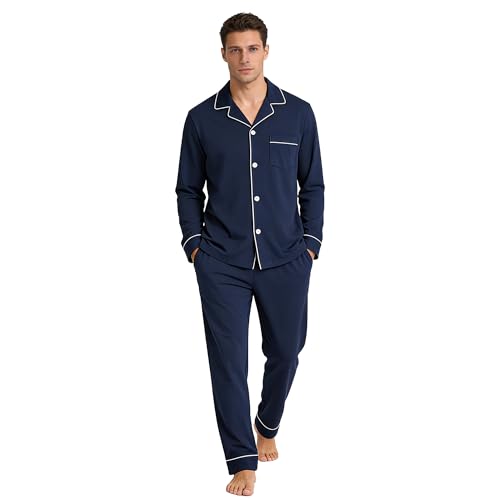
| U2SKIIN men's set | Button-down; listed as 100% cotton | Full-front style versus an over-head entry route |
| SWOMOG short-sleeve set | Button-down top, pants and pocket; 100% cotton wording | Front fasteners combined with shorter sleeves |
| PajamaGram navy set B07BC6T95D | Explicit pullover wording and cotton claim | Continuous front, with neckline fit to assess |
The titles do not establish button hardness, placket width or shoulder ease. These different sets illustrate choices; they are not interchangeable versions of one tested garment.
For the PajamaGram pullover, the retrieved title does not provide a cotton percentage. Confirm the particular variant's label if pure cotton is a requirement. For the button-front examples, confirm opening length and examine the closed placket in movement. A catalog description can establish the stated format while leaving the wearing questions unresolved; those gaps should guide the next question rather than become invented product specifications.
For broader browsing, use the women's cotton pajama collection or men's collection, then narrow by the feature that matters most. If full front access is non-negotiable, eliminate ambiguous partial openings first. If you dislike all chest hardware, inspect pockets and decoration on pullovers before deciding the format has solved the problem.
Fabric give must be assessed independently
A woven button-front and a knit pullover often look like a natural comparison, but that changes two things at once: opening and construction. If the pullover feels easier to move in, the difference may come partly from fabric and cut. If the button-front holds a crisp shape, that may reflect a woven body rather than the buttons themselves. The knit-versus-woven guide owns that construction decision.
Where possible, compare garments with similar sleeve length, fabric description and body room. You may discover that a roomy button-front meets your preference just as well as a pullover, or that the pullover neckline matters more than the lower front. Avoid drawing a universal rule from one tight shirt and one generously cut set. The size chart and actual garment behavior remain part of the evidence.
No closure format supplies a cooling, sleep-quality or mobility guarantee. Opening a shirt differently changes coverage, but actual comfort depends on many garment and room factors. If warmth is the main concern, settle fabric weight and coverage first, then choose the opening that makes the set easiest for you to use.
Maintenance is small but different
Button-front tops introduce components that can loosen, break or catch. Periodically examine attachment threads and keep any spare button identifiable. A simple fastening repair may extend useful wear, provided the surrounding cloth is sound. The repair guide covers that assessment. The presence of buttons is not a durability defect; it is an additional maintenance point.
Pullovers avoid those fasteners but still depend on neckline and seam condition. Repeated force while dressing is a sign to reassess fit rather than continue stretching the opening. Do not pull a top off by one sleeve when the neck is resisting. A format that works comfortably during ordinary dressing is likely to be less frustrating than one that requires a special maneuver every night.
Make the final selection with a short priority order: entry route, front contact, neckline behavior, fit and willingness to maintain fasteners. If two garments tie, choose the one whose small details you prefer rather than seeking a universal winner. The point of the comparison is to make a specific purchase easier, not establish that one style is objectively superior for every adult.
Questions about this decision
Are all button-front pajamas fully opening?
No. Some designs use a short button placket or decorative buttons. If full opening matters, verify the closure from neckline to hem in the exact listing. A closed model photograph and a general button-style label may leave that detail unclear.
Will a pullover pajama top always prevent chest gaping?
It removes gaps between front buttons, but the neckline can still shift or reveal more than you want when you bend. Evaluate the whole opening and its movement. Coverage depends on the exact cut and fit, not simply the absence of a button row.
Which style is better for someone who dislikes a collar?
Look at collarless designs in either format. Button-front does not necessarily mean notch collar, and a pullover can still have thick neck binding. Inspect the neck construction directly rather than rejecting an entire opening category.
Can the same pajama top work for sleeping and lounging?
Often, if its closure and neckline remain comfortable in both activities. Try the positions you actually use, including sitting and lying down. A top you like for its structured daytime appearance may or may not be the one you prefer against a pillow.
Final Verdict
Choose the opening that suits how you dress and where you feel fabric and hardware during rest. A button-front earns its place through useful access and a closure you can comfortably maintain. A pullover earns its place through an uncomplicated front and a neckline that works without strain. Keep collar shape, fabric construction and body room in the comparison so one feature does not take credit for another. The right top should make ordinary dressing and resting straightforward, with no need to overlook a recurring irritation because the style looks traditional or relaxed.
Explore the listed examples
As an Amazon Associate I earn from qualifying purchases. Purchases take place on Amazon.
Cotton; construction not statedU2SKIIN men’s 100% cotton button-down set
A complete button-down cotton outfit for men.
Check on Amazon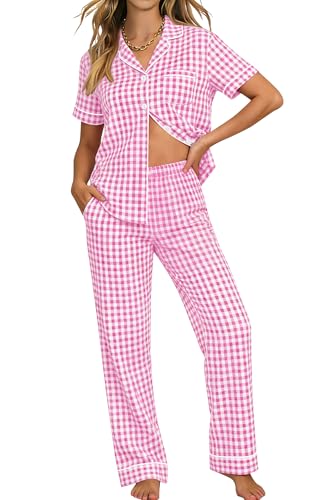 Cotton; construction not stated
SWOMOG 100% cotton short-sleeve button set
A short-sleeve button-front cotton outfit with a named pocket.
Check on Amazon Cotton; construction not stated
PajamaGram cotton pullover set
A cotton set for someone who prefers a pullover top.
Check on Amazon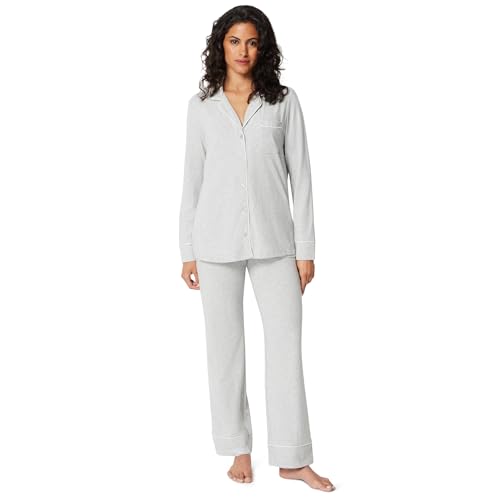 Cotton; construction not stated
Amazon Essentials cotton-modal long-sleeve set
A coordinated long-sleeve outfit when pure cotton is not essential.
Check on AmazonContinue with the relevant guide
Back to Everyday decisions · Explore cotton pajamas
Sources and editorial method
This is a researched selection guide. We have not performed hands-on wear, washing or laboratory tests on the featured products.