Laundry & repair
Repairing Cotton Pajamas Worth Keeping: Seams, Buttons and Waistbands
As an Amazon Associate I earn from qualifying purchases. Purchases take place on Amazon.
The favorite pair often earns another chance before the newer pair does. Its rise sits correctly, the legs move comfortably and the fabric already has the feel you wanted. Then a button loosens or a short seam opens. Replacing the whole set may be unnecessary, but repairing without inspecting the surrounding cloth can produce a strong stitch in a weak garment. This guide treats mending as a decision about useful remaining wear. It covers ordinary adult pajamas and practical repair choices, including when to ask a tailor. It does not promise that every hole, stretched waistband or aging fabric can be restored.
Quick Answer
Repair is most promising when a small component fails while the surrounding fabric remains sound. A loose button, short opened seam or accessible waistband may be manageable; widespread thinning is a different problem. Inspect both sides before sewing, preserve comfortable fit and consider the feel of any repair against skin. For new defects, document the condition and check the seller's options before altering anything.
In this guide
Is the failure in the thread or in the cloth?
Turn the area inside out and place it on a well-lit surface. If the stitching has opened while both fabric edges remain intact, reconnecting the seam may be a straightforward repair. If the cloth has torn alongside intact stitches, simply sewing the same line again may not address the weak material. Look beyond the visible gap: a larger area of thin or fraying fabric changes the job.
| Fault | Promising repair condition | Reason to reassess |
|---|---|---|
| Opened seam | Both fabric edges remain sound | Cloth has torn alongside the stitches |
| Loose button | Button and attachment area are intact | The placket is torn or the button is cracked |
| Failed elastic | Sound cloth and accessible construction | Replacement requires major reconstruction |
| Worn hole | Small affected area with suitable surrounding fabric | Broad thinning that a patch cannot restore |
Compare the damaged area with nearby unworn cloth without stretching either. Photograph a new defect before intervention, especially if you may raise it with the seller.
Do not interpret every open seam as a request for tighter stitching. If the garment pulls hard at that location while sitting or bending, fit may contribute to the repeated stress. A repair can reconnect fabric without creating missing room. The measurement guide helps assess that separate issue. Consider whether the repaired set will still have the movement allowance you need.
A loose button is a component job
Inspect the button, its attachment threads and the cloth beneath it. A sound button on sound fabric is a better repair candidate than a cracked button or a torn attachment point. Match a replacement to the buttonhole and thickness of the opening rather than choosing by color alone. A thicker or larger button may fasten poorly or become noticeable when you lie on your front.
For a conventional sew-through button, preserve enough room between button and cloth for the placket to close naturally. Follow a reliable sewing method appropriate to that button style, secure the thread and check the reverse for a bulky knot against the body. If you are unfamiliar with the construction, a small alteration service may be more practical than improvising around a delicate placket. The objective is secure closure with ordinary comfort.
Once attached, fasten and unfasten it several times, then sit and reach in the shirt. Check that the button does not pull the opening out of alignment. Inspect neighboring buttons too; repairing a visibly loose one before it falls off can prevent losing a difficult-to-match piece. Keep any supplied spare button with a note identifying the set, not loose in a drawer where its purpose will be forgotten.
Reclosing an opened seam without changing the fit
Bring intact seam allowances back to their original alignment and determine what type of fabric you are handling. A woven seam and a stretchy knit seam may need different stitch behavior. A rigid repair across an area that needs to extend can open again or restrict movement. If you cannot identify a suitable stitch or needle for the material, this is a useful point to involve a sewist.
Avoid taking a large new seam allowance merely to catch stronger cloth unless you have assessed the resulting fit. Removing width from a pajama leg or sleeve can solve the hole while creating tightness. A patch may preserve dimensions better in some cases, but adds material and stitching. The comfortable choice depends on where the repair will sit during sleep.
After sewing, examine the inside for rough thread ends or a hard ridge. Try the pajamas in the positions that put the area under normal use: sitting for a seat seam, bending a knee for a leg repair and crossing arms for an underarm. Do not judge the repair solely from how neatly it lies on a table. A mend must function on the body as well as look closed.
When elastic replacement is realistic
First identify how the waistband is built. Elastic moving freely inside an accessible casing presents a different task from elastic stitched repeatedly through the garment. A decorative drawstring may not substitute for failed elastic, and an elasticated band may contain more construction than the outside photograph reveals. Do not cut into the casing until you know what is inside and how you will close the opening.
If replacement is feasible, preserve the intended width, fit and behavior of the waistband rather than inserting whatever elastic is available. Compare how it sits when standing and seated before final closure. Too much tension can make an otherwise good pair unpleasant; too little can leave it unstable. The waistband comparison explains the wearing differences between adjustment systems.
For a band sewn through many times or integrated into decorative construction, professional replacement may require substantial labor. Ask what will change: visible stitch lines, height of the casing, drawstring position or fit. If the surrounding cloth is already weak, even careful new elastic may not give much additional life. It is reasonable to retire the bottoms and continue using a sound matching top.
Holes, hems and the feel of a patch
A dropped hem on sound fabric may be worth restoring because it preserves the garment's original dimensions. Check whether the fold allowance is intact and whether the original thread has simply failed. Recreating the previous hem is a different job from shortening the legs, so decide which outcome you want before sewing. If length has always been wrong, consider an intentional alteration instead of pretending it is only a repair.
For a hole away from a seam, evaluate how the repair will feel. A soft patch on an outer leg may be acceptable while the same thickness under a hip could be distracting. A decorative visible mend may suit lounge use but be less appealing for a smooth sleeping surface. Test the proposed patch material against the body before investing time in finishing it.
Extensive fabric thinning often makes a series of small repairs inefficient. New holes may develop next to a strong patch because the surrounding material remains weak. That is not necessarily poor mending; it is a limit of the original cloth. Avoid chasing every failure until the garment becomes mostly reinforcement. Keep useful sound pieces if you have a purpose for them, but do not promise a simple repair will restore broad wear damage.
Catalog details that hint at repair questions
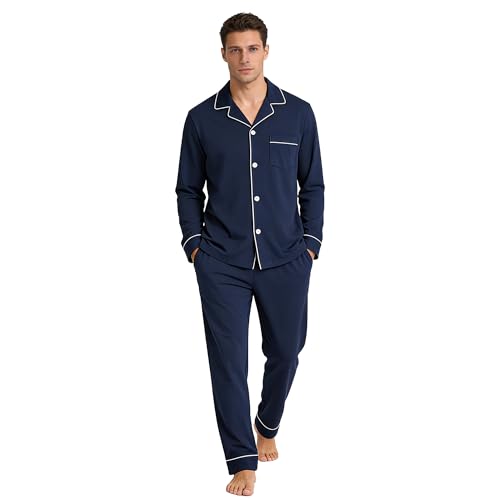
The U2SKIIN men's 100% cotton set is explicitly described as button-down, making fastening maintenance a relevant question before purchase. The title does not establish button material, attachment method, spare buttons or seam allowances. Its confirmed cotton claim also does not tell us whether a particular repair would be easy. Treat the button-front design as a component to inspect, not a repairability rating.
Amazon Essentials men's poplin pants name an elastic waist and drawstring. Those features let you ask whether the elastic is accessible and whether the cord is functional, but neither answer is present in the retrieved title. If repairability influences your purchase, seek a clear waistband interior photograph or ask the manufacturer. Browse the men's cotton pajama collection by fit and style first, then investigate construction for the final candidates.
For a set with a printed or highly textured body, consider how a visible patch would look and feel before calling it longer lasting. Repair access, ordinary replacement components and sound cloth are more useful clues than a broad premium claim. No products in this guide have undergone tear, seam-strength or repair testing by CottonPajamas.net.
Set a repair budget in money, time and comfort
Decide what the garment is worth keeping for. An unusually good fit may justify a professional waistband job; a generic worn-out pair may not. Compare the quoted work with how much sound material remains and whether the repair changes your favorite feature. A cheap mend that creates an uncomfortable seam is not automatically better value than replacement.
Keep the scope precise when asking for help: one opened seam with intact fabric, one button replacement or one waistband assessment. Bring the clean garment and explain how you wear it. Ask the repairer to assess whether there is enough sound cloth and whether the finished area will be bulky. A clear request produces a more useful answer than asking whether the pajamas can be made like new.
Questions about this decision
Can a drawstring replace elastic that no longer holds?
Sometimes a functional drawstring can still adjust the waist, but it does not necessarily reproduce the support or feel of the original elastic. Inspect how the cord is constructed and how the pants behave seated. Do not assume decorative ties can carry the job.
Should I repair pajamas that arrived with an open seam?
Document the fault and review the seller's current options before altering the garment. Sewing may affect how the seller assesses the original condition. CottonPajamas.net is an affiliate publication and does not provide the product's repair, return or warranty service.
Is iron-on patching a good option for pajama holes?
It depends on the permitted heat, the fabric and the patch's feel and attachment requirements. A fused area can be stiffer than the original cloth. Assess those points before application; it is not a universal shortcut for soft garments worn directly against skin.
When is an opened seam probably a fit problem too?
Repeated failure at a tension point, visible pulling when you sit or restricted movement suggests that restoring the original stitching may not be enough. Check room in that exact area. A tighter seam cannot supply the fabric allowance that the garment lacks.
Final Verdict
Keep the pajamas when a modest repair protects something you value: the fit, the texture or a still-sound garment. Start by separating failed stitching and components from weakened cloth, then choose work that preserves comfortable movement. A reattached button or carefully restored hem can be worthwhile; a bulky patch over extensive thinning may not be. Use a repairer when the construction exceeds your sewing experience, and be willing to keep only the usable half of a set. Repair is successful when the pajamas return to comfortable service, not merely when the hole disappears.
Explore the listed examples
As an Amazon Associate I earn from qualifying purchases. Purchases take place on Amazon.
Cotton; construction not statedU2SKIIN men’s 100% cotton button-down set
A complete button-down cotton outfit for men.
Check on Amazon poplin
Amazon Essentials cotton-poplin straight-fit pants
A woven trouser with named waist adjustment and pockets.
Check on AmazonContinue with the relevant guide
Back to Laundry & repair · Explore cotton pajamas
Sources and editorial method
This is a researched selection guide. We have not performed hands-on wear, washing or laboratory tests on the featured products.